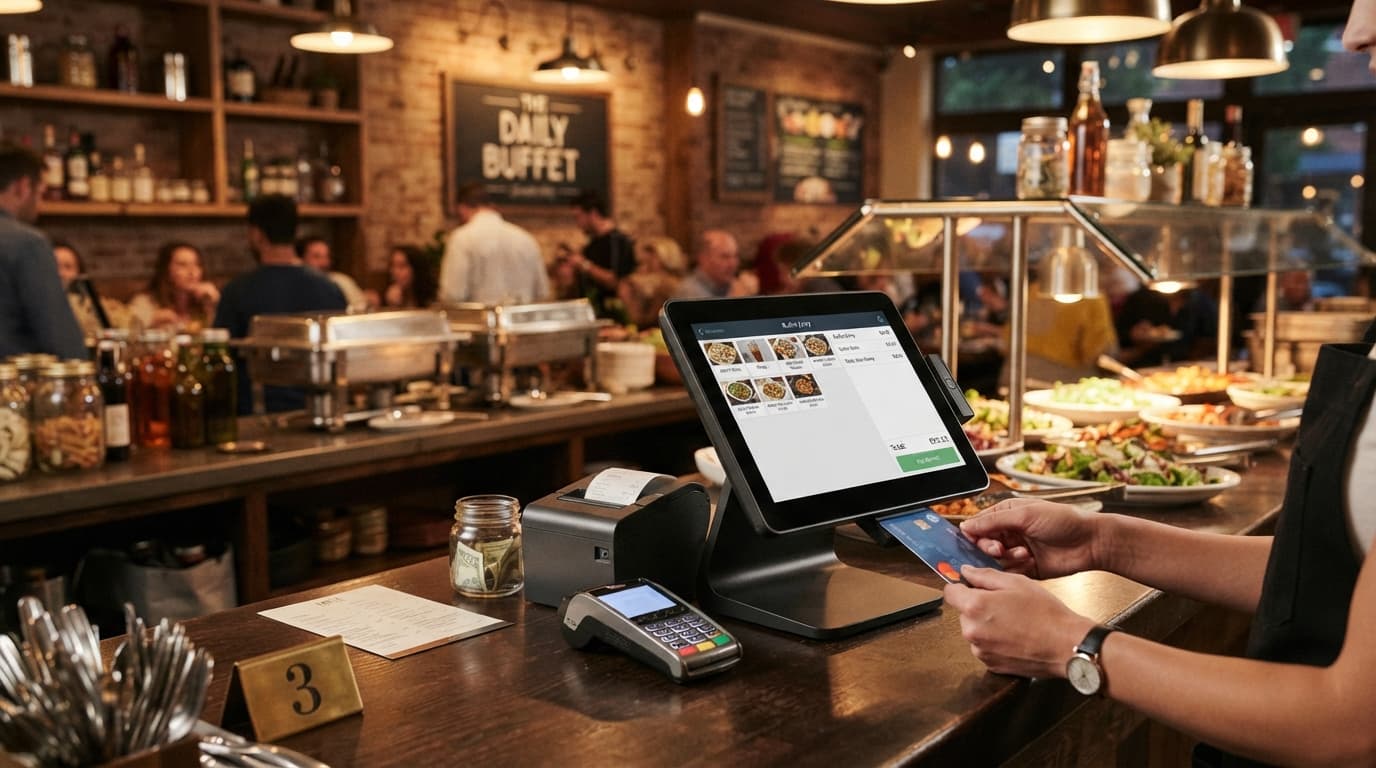
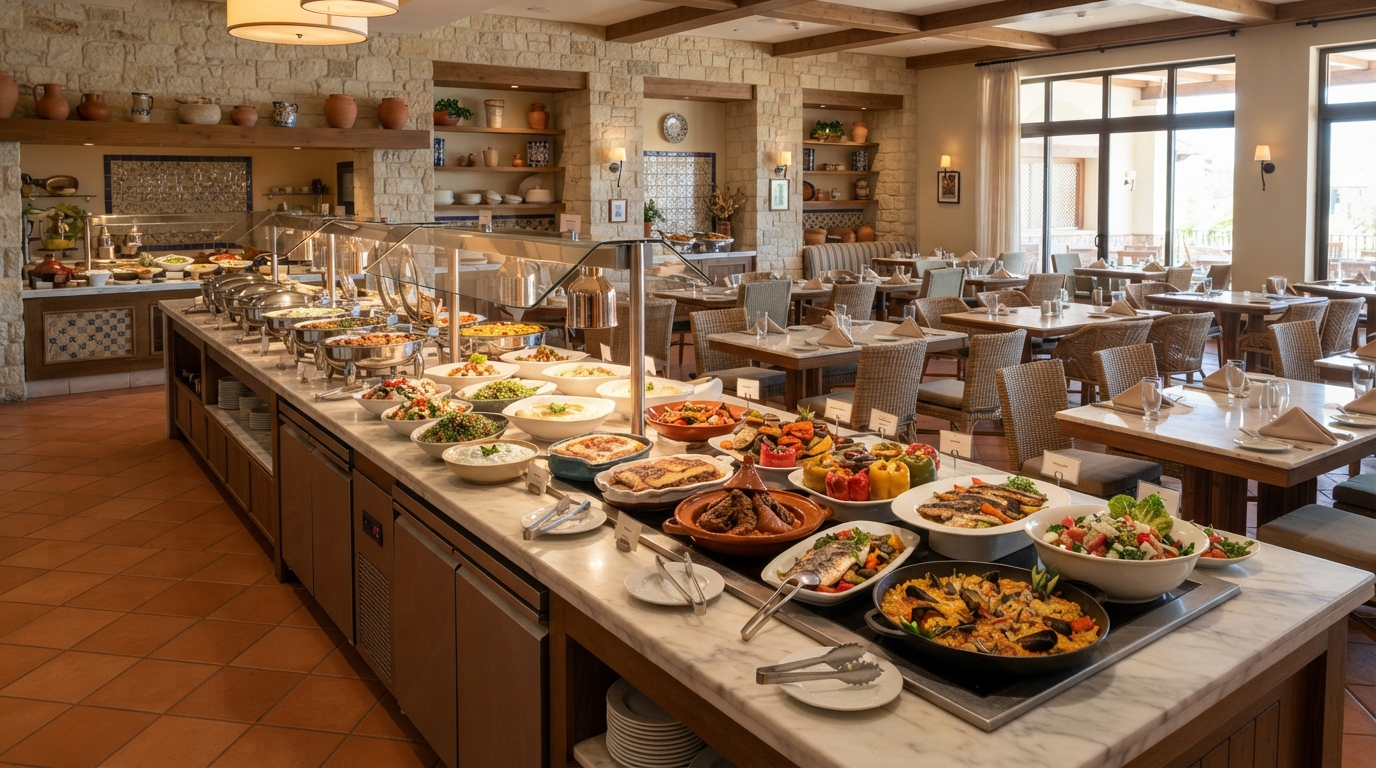
Mediterranean buffet chain Dimassi's has adopted Square's point-of-sale platform across its 24-location portfolio
The move reflects a broader trend of multi-unit restaurant operators consolidating payments, inventory and staffing onto a single cloud system
Buffet-format restaurants face distinct cost pressures that make real-time operational data especially valuable
Dimassi's Mediterranean Buffet, a regional chain built around an all-you-can-eat format, has standardized its point-of-sale operations on Square as it grows toward and beyond its current 24-location footprint. The decision reflects a wider pattern among mid-size restaurant groups: rather than building custom software or relying on legacy terminal systems, operators are increasingly outsourcing back-office complexity to cloud-based platforms that combine payments, reporting and staff management in one place.
Why Buffet Operators Face Unique Cost Pressures
Buffet-style restaurants operate on economics that differ sharply from typical table-service or quick-service models. Because customers pay a flat price regardless of how much they eat, food cost as a percentage of revenue is far more volatile and harder to predict than in menu-priced establishments.
That volatility puts a premium on granular, real-time data about foot traffic, peak hours and ingredient turnover. Operators who can see which locations are running hot on food costs, or which shifts are overstaffed relative to actual covers, can adjust purchasing and scheduling before a bad week becomes a bad quarter.
Multi-location buffet chains add another layer of difficulty, since each site can have its own supplier relationships, local demand patterns and staffing quirks. Without a unified system, head office visibility into performance across locations tends to lag by days or weeks rather than hours.
Cloud POS platforms marketed toward small and mid-size restaurant groups have positioned themselves directly against this problem, promising centralized dashboards that pull sales, labor and inventory data from every site into one view.
Dimassi's Bet on Square Reflects Buffet Tech Shift
The Broader Shift Toward Unified Restaurant Technology
Dimassi's move fits a pattern that has accelerated across the restaurant industry over the past several years. Independent and regional chains that once cobbled together separate systems for payments, reservations, payroll and inventory are consolidating onto integrated platforms, largely because the cost of maintaining disconnected software has become harder to justify as labor and food costs have risen.
Square, along with competitors such as Toast and Clover, has built its restaurant business around this consolidation trend, offering hardware and software bundles aimed specifically at operators managing several locations rather than a single storefront. The appeal for a chain like Dimassi's is less about any single feature and more about reducing the number of vendors, contracts and staff training sessions required to run day-to-day operations.
Payment security is part of that calculation as well. As restaurants process a growing share of transactions through card and digital wallets rather than cash, the exposure to fraud and disputed charges has grown alongside it, a dynamic explored in a recent discussion of rising chargeback costs for firms. Multi-location operators are particularly exposed, since a security gap at one site can affect the entire brand's reputation.
Consolidating onto a single platform such as Square also simplifies compliance and reporting obligations that scale with the number of locations a business operates, a factor that becomes more pressing as chains expand beyond a handful of sites into regional or national footprints.
What Expansion Signals for the Buffet Segment
The buffet segment overall has had an uneven run in recent years. Several well-known national chains scaled back significantly or closed locations amid rising food and labor costs, changing consumer habits, and lingering caution around shared serving stations following the pandemic. Against that backdrop, a regional operator like Dimassi's continuing to grow its footprint is notable, and suggests that smaller, more tightly managed chains may be better positioned to absorb cost volatility than larger, more sprawling brands.
Technology adoption appears to be part of that resilience story, even if it is rarely the headline reason a chain succeeds. Operators who can track margins location-by-location and respond quickly to underperforming sites are generally better equipped to expand deliberately rather than overextending into markets that cannot support the format.
None of this guarantees continued growth for Dimassi's or any other regional chain, since restaurant expansion remains capital-intensive and sensitive to local labor markets, real estate costs and consumer discretionary spending. But the decision to standardize on a single point-of-sale system before pushing further into new locations suggests a more disciplined approach to scaling than simply opening storefronts and hoping operations catch up.
Dimassi's expansion, paired with its adoption of a unified point-of-sale system, illustrates how mid-size restaurant chains are approaching growth differently than in past cycles, prioritizing operational visibility alongside new locations rather than after the fact. Whether this translates into sustained expansion will depend on execution at the store level, but the underlying strategy reflects lessons the broader restaurant industry has drawn from a difficult few years of cost pressure and shifting consumer behavior.
⭐
Business Spotlight
This article is a premium Business Spotlight feature — an in-depth profile with priority homepage placement. Contact us to be featured.
Stay Ahead of the News
Get the latest business news and company spotlights delivered to your inbox. No spam, unsubscribe any time.