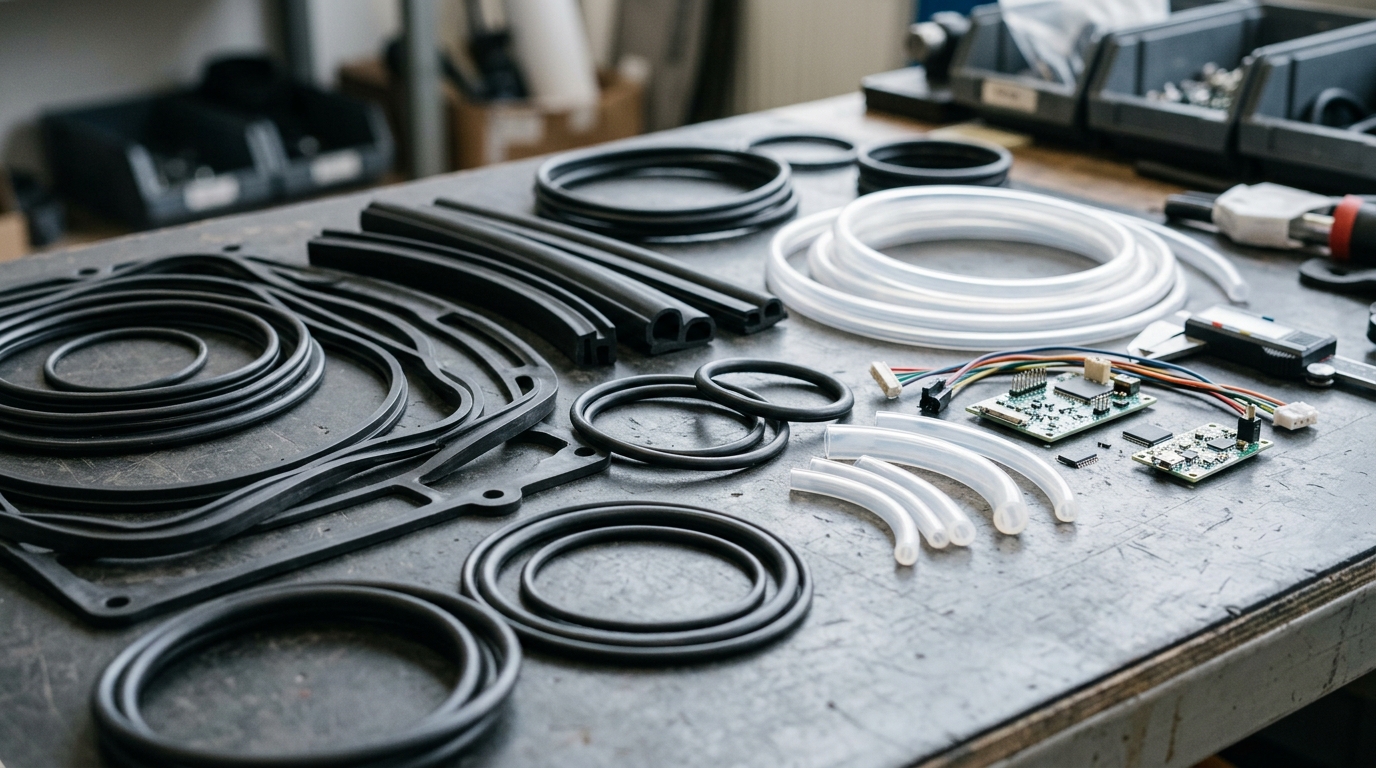
Global silicone rubber market is projected to reach $9.1 billion by 2030, according to industry forecasts
Growth is linked to expansion in electric vehicles, electronics, healthcare devices and renewable energy infrastructure
Analysts note the material's role as an unglamorous but essential input across several fast-growing industrial sectors
The global market for silicone rubber is projected to reach $9.1 billion by 2030, according to industry research, underscoring how a largely invisible industrial material has become tightly woven into the supply chains of some of the world's fastest-growing sectors. The forecast points less to a single breakthrough than to a steady accumulation of demand from electric vehicles, consumer electronics, medical devices and renewable energy equipment, all of which rely on silicone rubber's heat resistance, flexibility and durability.
A Material Embedded in Modern Manufacturing
Silicone rubber rarely appears in marketing materials or product branding, yet it sits inside countless components that consumers never see. It is used in gaskets, seals, cable insulation, medical tubing, baby products, kitchenware and industrial coatings, prized for its ability to withstand extreme temperatures without degrading.
That versatility has made it a quiet beneficiary of broader industrial shifts rather than a standalone growth story. As manufacturers across sectors push for components that last longer and perform in harsher conditions, silicone rubber has become a default choice rather than a specialty one.
The projected growth to 2030 reflects this diffusion across industries rather than concentration in any single application. Market watchers describe the trajectory as incremental and broad-based, a pattern typical of industrial materials embedded deep in manufacturing processes.
This also means the market's fortunes are closely tied to the health of the industries it feeds, making it a useful proxy for activity in electronics, automotive and healthcare manufacturing more broadly.
Silicone Rubber's Quiet Rise Tracks EV, Chip Boom
Electric Vehicles and Electronics Driving Demand
The expansion of electric vehicle production has emerged as one of the clearer tailwinds for silicone rubber demand. Battery systems, charging components and under-the-hood electronics require materials that can tolerate heat cycling and vibration, criteria silicone rubber meets more reliably than many alternative polymers.
The International Energy Agency has tracked continued global growth in electric vehicle sales in recent years, a trend that indirectly supports demand for the specialty materials used inside battery packs and power electronics. Silicone rubber's thermal stability makes it a natural fit for these applications, even though it rarely features in discussions of EV supply chains.
Consumer electronics manufacturing adds a parallel demand stream. Silicone components are used for gaskets, keypads and protective casings in devices ranging from smartphones to wearables, and the broader trend toward smaller, denser electronics has increased reliance on materials that can be molded precisely and perform reliably in tight spaces. This mirrors dynamics seen in other specialty materials markets, including the production techniques discussed in a recent look at circuit board manufacturing standards, where material choices are dictated by durability and heat tolerance rather than cost alone.
Healthcare and Renewable Energy Add New Growth Lines
Medical device manufacturing represents another steady source of demand, given silicone rubber's biocompatibility and resistance to sterilization processes. Catheters, seals, implantable device components and wearable health monitors all depend on medical-grade silicone, a segment that has grown alongside wider healthcare technology adoption.
Renewable energy infrastructure, particularly solar panel manufacturing and wind turbine components, has also added to demand. Silicone rubber's resistance to ultraviolet exposure and temperature extremes makes it suitable for outdoor installations expected to operate reliably for decades with minimal maintenance.
These applications illustrate a broader pattern in industrial materials markets: growth increasingly comes from sectors tied to electrification and sustainability commitments rather than traditional heavy industry. The same dynamic has been visible in adjacent materials markets, including the forecasted expansion detailed in coverage of the aerospace coatings market growth, where protective material demand is similarly driven by durability requirements in high-performance environments.
Raw material costs and supply chain reliability remain the clearest risks to the forecast. Silicone production depends on silicon metal and specialty chemical inputs whose pricing can be volatile, and any disruption to that supply chain would ripple through downstream manufacturers that have built products around the material's specific properties.
Taken together, the projected climb to $9.1 billion by 2030 reflects less a single growth catalyst than the cumulative weight of several industries expanding in parallel. Silicone rubber's position inside electric vehicles, electronics, medical devices and renewable energy equipment means its market trajectory will likely continue to track the fortunes of those sectors closely, offering a useful, if understated, barometer for industrial activity in the years ahead.
⭐
Business Spotlight
This article is a premium Business Spotlight feature — an in-depth profile with priority homepage placement. Contact us to be featured.
Stay Ahead of the News
Get the latest business news and company spotlights delivered to your inbox. No spam, unsubscribe any time.