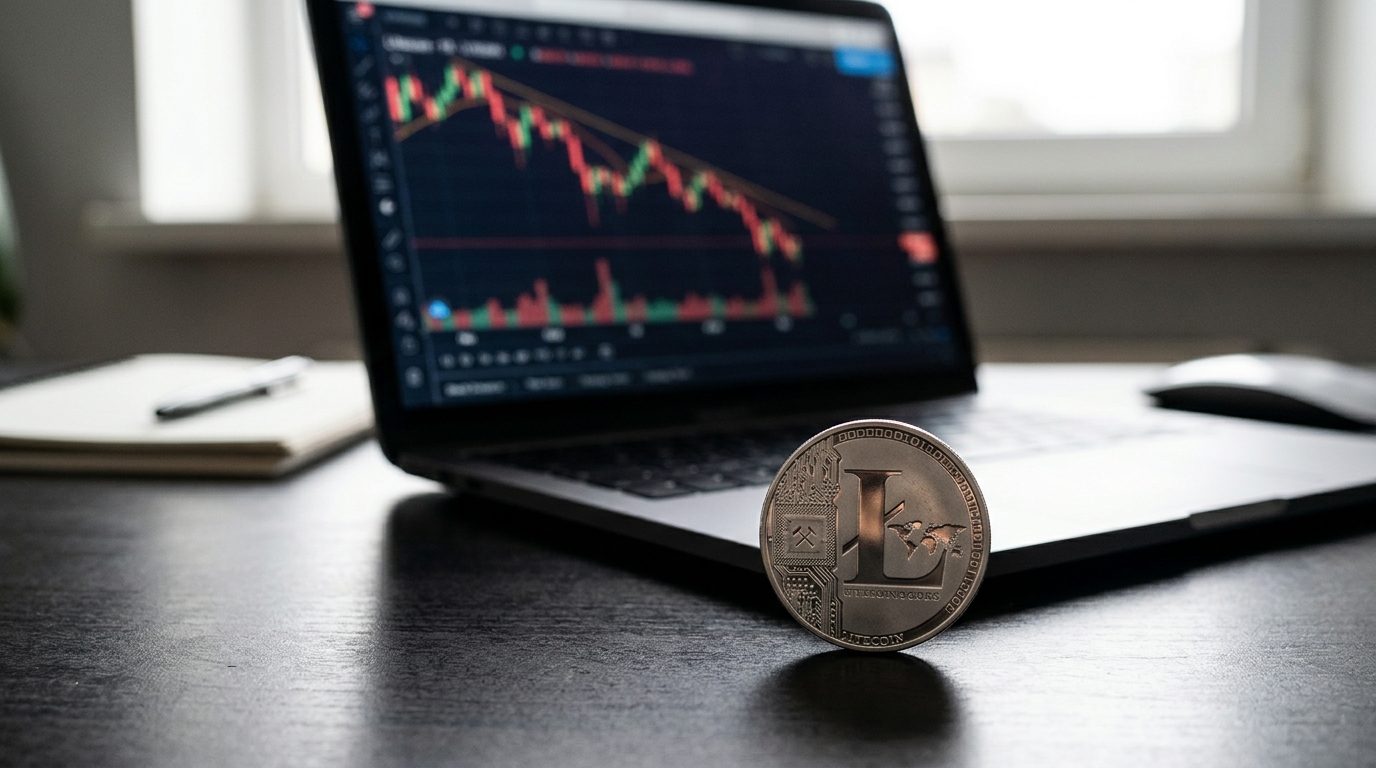
Litecoin fell to $59.82 on October 22 before slipping further to roughly $56.90, though it remains above its 200-day average of $52.10
The pullback came on thin trading volume of $242.35 million, about 36.7% below the 30-day norm, suggesting limited conviction behind the sell-off
A newer presale project, Pepeto, has raised more than $11.2 million while pitching a fee-free swap exchange as an alternative to established tokens like Litecoin
Litecoin's slide below $60 this week is less a crisis than a reminder of how differently the crypto market now prices patience versus speculation. While LTC, one of the oldest cryptocurrencies still in active use, grinds through a technical pullback, newer presale ventures are using that very volatility to pitch themselves as the faster route to outsized returns — a split that says as much about market psychology as it does about either project's fundamentals.
A Measured Pullback, Not a Breakdown
Litecoin opened October 22 at $61.16 and closed near $58.55, according to data cited from DiarioBitcoin, before further weakening to around $56.90 on CoinMarketCap, down roughly 5% over 24 hours. Blockchain.News pegs first support at $58.84, with resistance levels at $61.60 and $63.37 above that.
The notable detail is volume. Trading of $242.35 million was about 36.7% below the 30-day average, meaning the decline occurred without heavy participation. Thin-volume sell-offs often lack the momentum to extend into deeper, sustained downtrends.
Litecoin still trades well above its 200-day average of $52.10, and an RSI reading of 43.48 sits in neutral territory, indicating neither buyers nor sellers currently hold firm control. As recently as September 2025, LTC closed a month near $107, according to 24/7 Wall St, meaning a return to that level would require roughly an 80% gain from current prices.
Litecoin's $60 Dip Tests Crypto's Patience Trade
Why Presale Pitches Are Gaining Attention Now
Periods of sideways or declining price action in established tokens like Litecoin tend to coincide with increased marketing around early-stage presale projects promising far larger percentage gains. Pepeto, which operates a swap exchange called PepetoSwap advertising a 0.00% trading fee compared with the 0.30% typically charged on platforms such as Uniswap, is one example currently circulating in crypto discussion. The project says it has raised more than $11.2 million at a presale price of $0.0000001903 and cites an audit from SolidProof, along with involvement from a cofounder of the original Pepe token.
This pattern is not unique to Litecoin or Pepeto. Whenever a major, long-established cryptocurrency experiences a dip, attention tends to migrate toward unlisted tokens pitching asymmetric upside, since presale buyers are, by definition, entering before any secondary market has set a price. That dynamic carries materially higher risk than trading an asset like Litecoin, which has 15 years of continuous operation and a market capitalization near $4.6 billion, factors that generally limit — though do not eliminate — the scale of potential price swings.
Independent verification of presale volume figures, audited test results, or projected listing gains is typically unavailable until a token actually trades on open exchanges, which is a key distinction investors weighing such pitches should keep in mind.
For now, Litecoin's near-term path depends on whether it can defend the $56.84 level cited by technical analysts; holding there could open a run toward $63.37 this week and $71.02 over the month, per Blockchain.News and Bollinger Band data. A monthly close above $85 would, per 24/7 Wall St, put the psychologically significant $100 mark back in view. Those targets represent incremental, double-digit percentage moves rather than the multiples being floated around newer presale tokens such as Pepeto, underscoring the gap between established-asset recovery trades and early-stage speculative bets.
Stay Ahead of the News
Get the latest business news and company spotlights delivered to your inbox. No spam, unsubscribe any time.