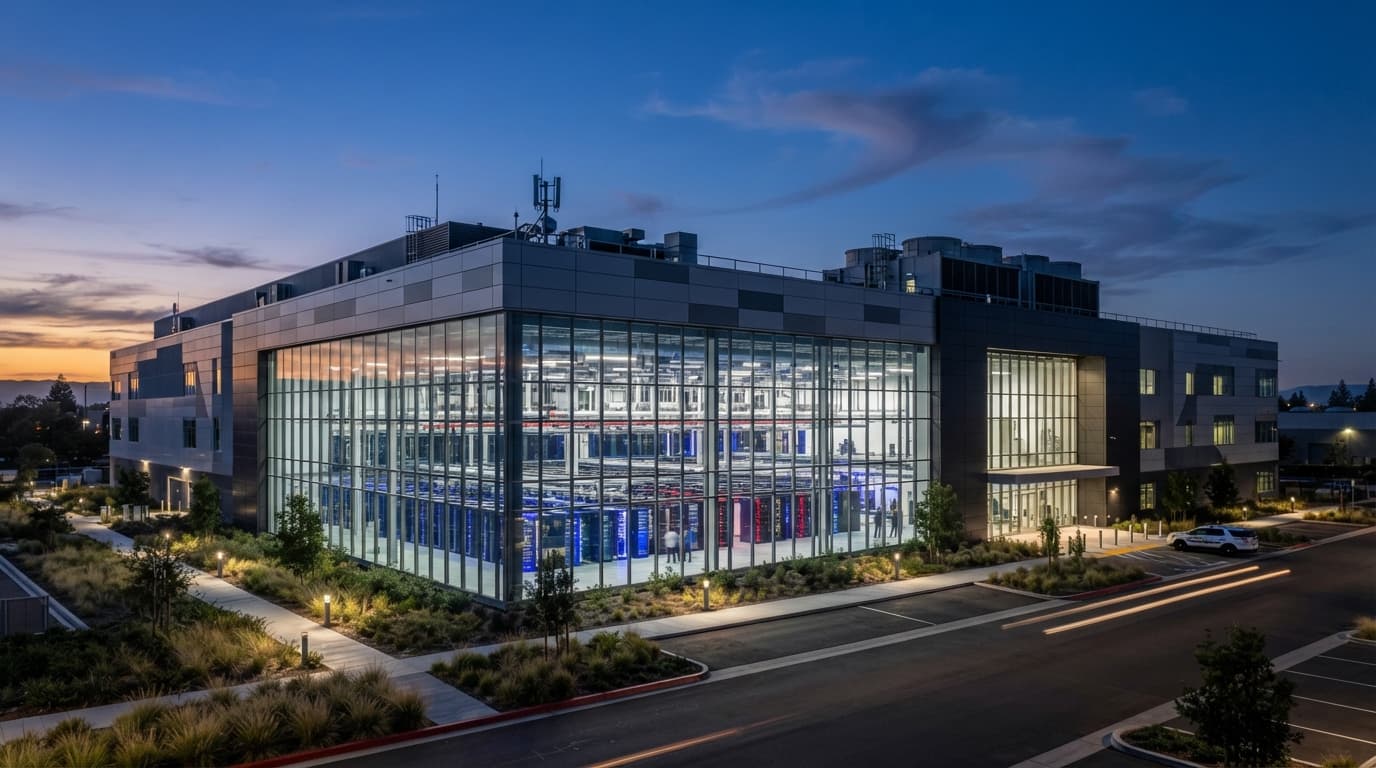
Saragon launches as a new U.S. data center provider built specifically for AI inference workloads and edge colocation, rather than large-scale model training.
The company enters a market increasingly split between hyperscale training campuses and smaller, latency-sensitive facilities closer to end users.
Analysts see rising demand for inference infrastructure as enterprises move AI applications from pilot projects into everyday production use.
A new entrant has appeared in the crowded U.S. data center sector, but with a narrower and increasingly consequential focus. Saragon has launched as a data center company purpose-built for AI inference and edge colocation, positioning itself away from the massive training clusters that have dominated headlines and toward the smaller, distributed facilities needed to run AI applications once they are already trained and deployed.
Why Inference Infrastructure Is Becoming Its Own Category
For the past several years, the data center conversation has centered on training: the enormous, power-hungry clusters of graphics processing units needed to build large language models. Those facilities are typically concentrated in a handful of regions with cheap power and available land, and they are built for raw throughput rather than speed of response.
Inference is a different problem. Once a model is trained, running it in production to answer a customer query, process a transaction, or power a real-time recommendation requires low latency, geographic proximity to users, and reliable uptime rather than sheer computational scale. That distinction has created an opening for companies that specialize in smaller, distributed facilities rather than single mega-campuses.
Edge colocation, where computing capacity sits physically closer to where data is generated or consumed, has been part of the broader internet infrastructure story for years, used for content delivery and cloud gaming. Applying that same logic to AI inference is a newer development, and one that reflects how AI deployment patterns are maturing beyond the research and training phase.
Saragon's stated focus on this segment suggests its leadership sees a structural gap between where AI training capacity has been built and where AI applications actually need to run.
Saragon Bets on AI's Inference Shift
A Market Still Defined by Power and Land Constraints
The broader data center industry has spent the past two years grappling with capacity constraints tied to electricity availability rather than construction costs or demand. Grid interconnection queues in several U.S. regions have stretched into multi-year waits, and utilities in some markets have signaled they cannot guarantee power delivery timelines for new large facilities. The International Energy Agency has repeatedly flagged data center electricity consumption as one of the fastest-growing sources of new demand globally, a dynamic that shapes where any new operator, including Saragon, can realistically expand.
Edge-focused facilities tend to be smaller than hyperscale training campuses, which can make them somewhat easier to site and power, though they still compete for the same constrained grid capacity in dense metropolitan areas where latency-sensitive customers want to be located. That trade-off between speed-to-market and power availability is likely to be a defining variable for Saragon's expansion plans, as it is for every operator entering this space.
Enterprise customers deploying AI in production also face a related challenge that goes beyond infrastructure: ensuring the outputs those systems generate are accurate and trustworthy once they are running at scale. That operational reality has been examined in the hidden problem with AI business answers, which looks at how reliability issues can surface even after models are technically deployed and running.
For a new colocation provider, winning enterprise trust will depend not just on physical infrastructure but on service-level guarantees around uptime and responsiveness that matter more for live applications than for offline training runs.
What Success Would Look Like for a New Entrant
The data center colocation market includes established global players with decades of operating history, deep customer relationships, and existing footprints across multiple continents. A new company entering this space faces the practical challenge of building credibility with enterprise customers who typically sign multi-year contracts and want assurance of long-term operational stability.
Saragon's positioning around inference and edge workloads specifically, rather than trying to compete directly for hyperscale training contracts, is a common strategy for newer entrants: find a segment of demand that larger incumbents have not fully prioritized and build a specialized offering around it. Whether that approach translates into contracted capacity will depend on execution, pricing, and the pace at which enterprise AI adoption continues to move from experimentation into sustained production use.
The broader pattern of infrastructure providers positioning around specific stages of technology adoption, rather than trying to serve every use case at once, echoes how other companies have approached operational readiness ahead of anticipated growth, a theme also visible in Godex's operational readiness drive ahead of scaling its own business.
Saragon's launch reflects a broader recalibration underway across the data center industry, as operators increasingly distinguish between the infrastructure needed to build AI models and the infrastructure needed to run them at scale. Whether the company can carve out a durable position will depend on execution amid power constraints and established competition. The next indicators to watch will be early customer announcements, site locations, and how quickly enterprise inference demand materializes into signed capacity commitments.
⭐
Business Spotlight
This article is a premium Business Spotlight feature — an in-depth profile with priority homepage placement. Contact us to be featured.
Stay Ahead of the News
Get the latest business news and company spotlights delivered to your inbox. No spam, unsubscribe any time.