Dryair engineers sealed, low-humidity rooms for battery, pharmaceutical and electronics manufacturing
Insulated steel panels, specialised flooring and airlocks replace standard drywall construction
Factory-coordinated fabrication aims to cut field errors and preserve vapor-barrier integrity
As battery and electronics manufacturers push production lines into ever-drier environments, the humble factory drying room has become a specialised engineering problem rather than a construction afterthought. Hangzhou-based Dryair has detailed its approach to designing, fabricating and installing low-humidity industrial drying rooms for moisture-sensitive production, including lithium-ion battery assembly, pharmaceutical tableting and specialty electronics manufacturing, where even small moisture intrusions can compromise product quality or safety.
Why Standard Construction Falls Short
The company's central argument is that conventional warehouse partitions and air conditioning cannot hold a stable low dew-point environment against the steep vapor pressure gradient between a dry room and humid outside air. Drywall and typical building materials are porous enough to let moisture migrate through over time, undermining the very conditions a drying room exists to protect.
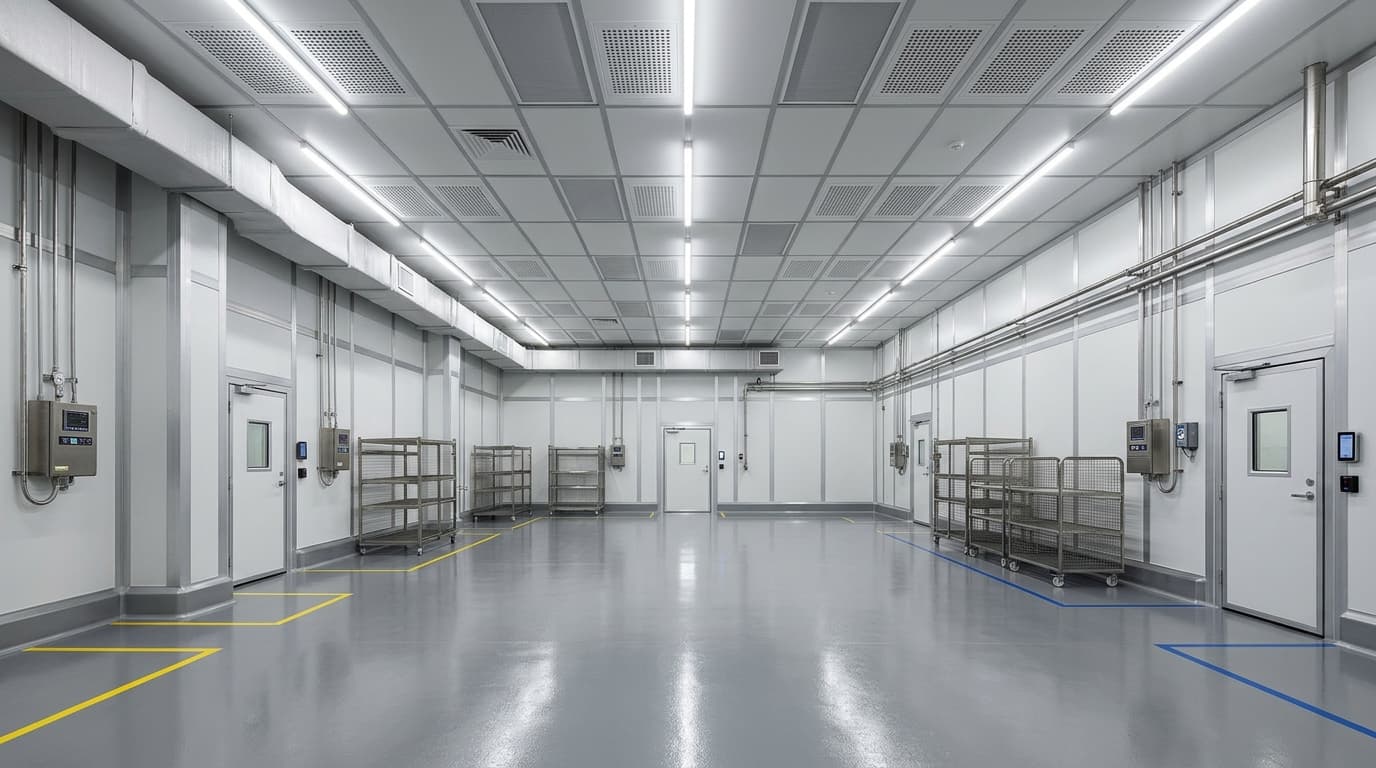
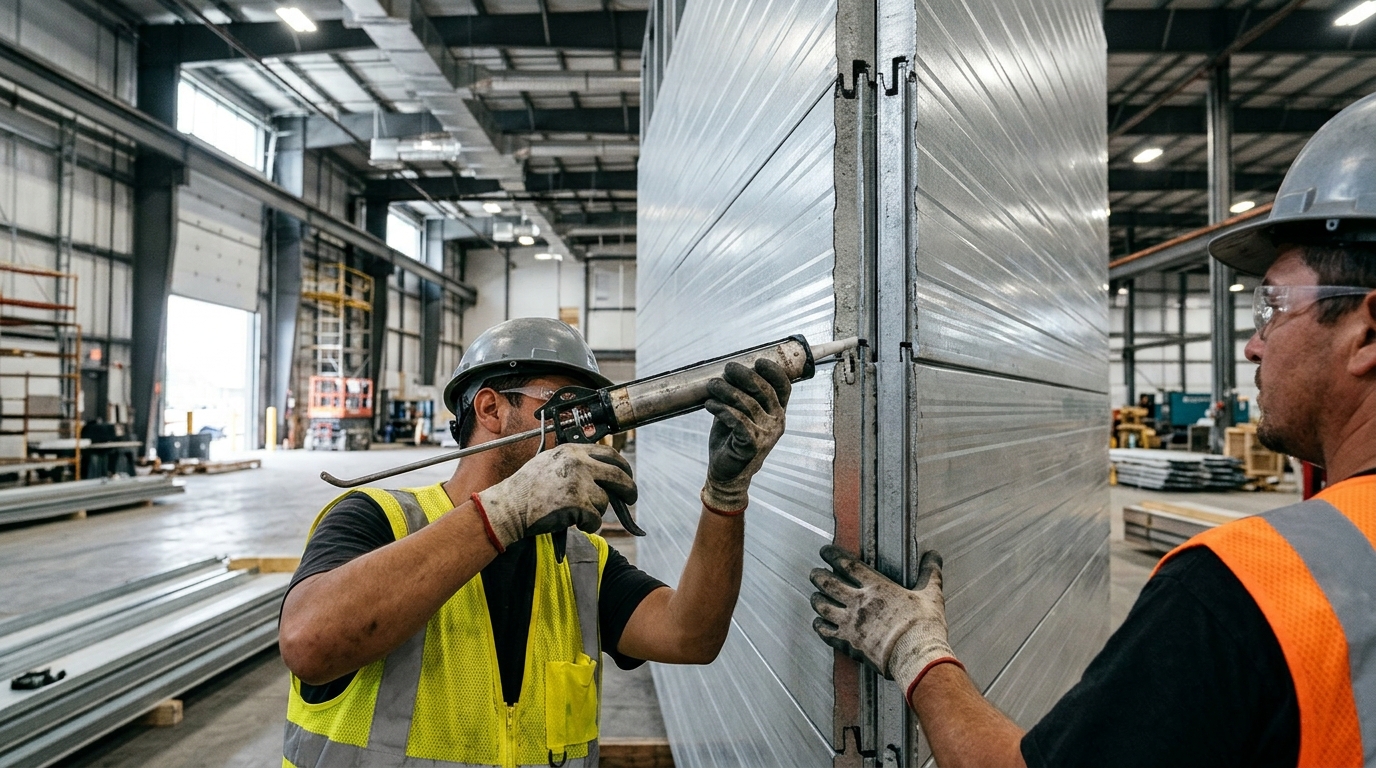
Dryair's answer is prefabricated steel sandwich panels filled with high-density polyurethane foam, built in 50mm, 75mm and 100mm thicknesses depending on structural and thermal needs. Tongue-and-groove or cam-lock joints are sealed with non-outgassing vapor-barrier compounds, while pre-painted steel skins resist corrosion and avoid particulate shedding that could contaminate sensitive processes.
Flooring receives similar attention, with options including self-leveling epoxy for chemical resistance, PVC anti-static flooring for electrostatic discharge control in electronics and battery work, and stainless-steel flooring for heavy-duty, high-sanitation suites. Sealed airlocks further protect the controlled space during shift changes and material handling, acting as buffer zones where humid air is prevented from surging into the primary room.
Why Battery Plants Need More Than AC Units
Fabrication Logic: Plan the Penetrations First
Every drying room must still accommodate ducts, conduits, piping, lighting and pass-through chambers without puncturing its own vapor seal. Dryair says it addresses this by mapping every opening in computer-aided design models before panels are built, rather than cutting holes on-site after installation has begun.
That approach yields panels with reinforced, factory-sealed cutouts and integrated framing, plus doors fitted with dual-perimeter silicone gaskets and optional interlocking controls that stop two doors opening simultaneously. The company argues this reduces on-site labour and protects the insulation value engineered into the panels at the factory stage.
Air distribution follows a downward-flow design, with conditioned dry air entering through perforated ceiling modules and being drawn out through low-level grilles near the floor. Sensible cooling coils, using either direct-expansion refrigerant or facility chilled water, manage heat generated by equipment and by the desiccant dehumidification process itself.
A Narrow but Growing Niche
Demand for this kind of controlled-environment construction tracks the expansion of battery gigafactories and precision electronics manufacturing worldwide, sectors where humidity tolerances are measured in single-digit dew points rather than general comfort ranges. As more producers relocate or scale lithium-ion and semiconductor-adjacent operations, the market for purpose-built dry rooms is likely to widen beyond the handful of specialist integrators currently serving it.
That trend also raises a practical question for manufacturers: whether to treat environmental containment as a bespoke engineering project from the outset, or retrofit existing space and risk recurring humidity failures later. Dryair's emphasis on factory-coordinated fabrication over field improvisation reflects a broader shift in industrial construction toward prefabrication, a pattern also visible in adjacent fields such as the recently published fire ratings for prefabricated garden buildings, where standardised, factory-tested components are increasingly preferred over ad hoc on-site builds.
The broader implication is that moisture control in manufacturing is shifting from a facilities afterthought to a core design discipline, particularly as battery and electronics production scales globally. Whether Dryair's methodology becomes an industry reference point will likely depend on how well these systems perform under continuous operation rather than in controlled demonstrations, a test that typically plays out over years of plant use.
Stay Ahead of the News
Get the latest business news and company spotlights delivered to your inbox. No spam, unsubscribe any time.