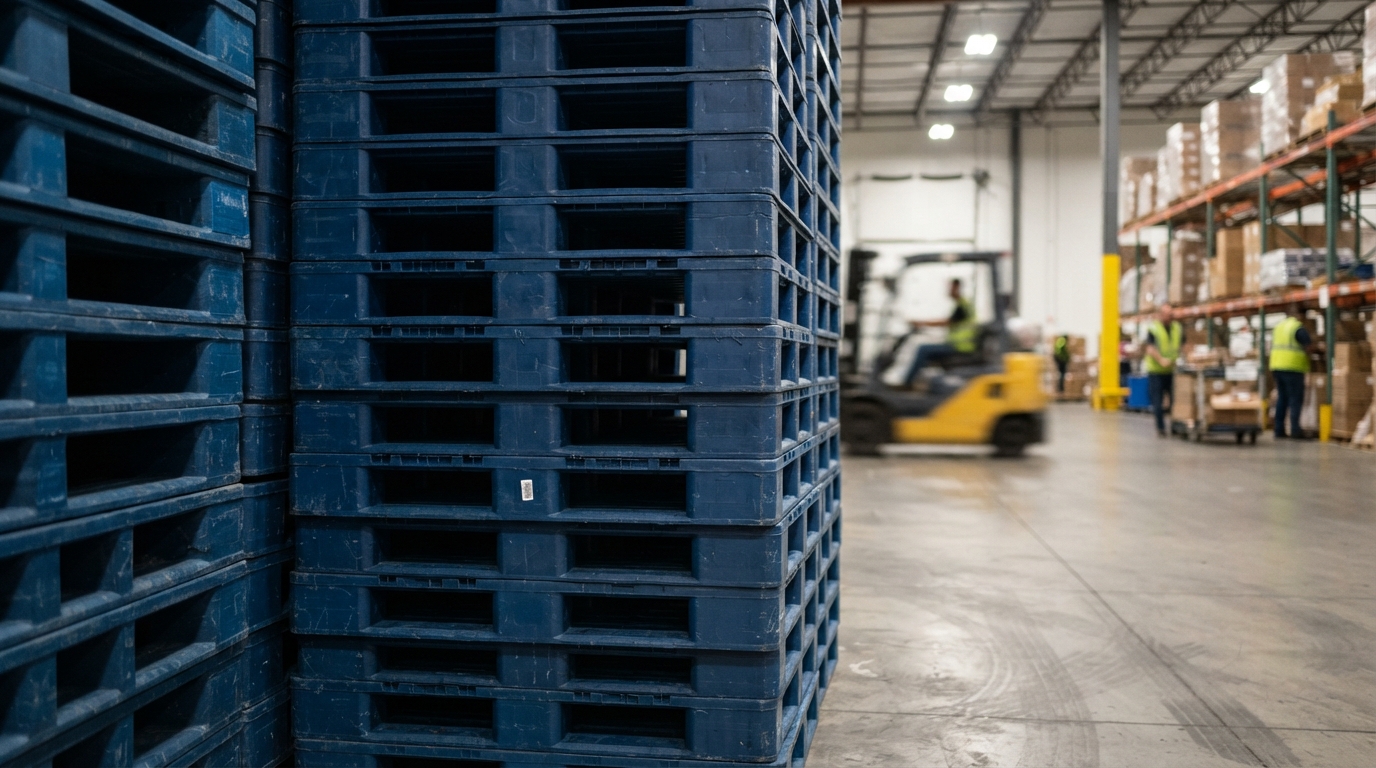
A new industry report pegs the nestable plastic pallets market at $14.86 billion in 2026, rising to $44.09 billion by 2035 at a 14.56% CAGR
The same report separately cites a 2023 valuation of just over $2 billion with a historical 6-8% CAGR, exposing inconsistencies in the underlying data
Wooden pallet replacement, e-commerce logistics growth, and hygiene regulation in food and pharma sectors are cited as the main demand drivers
A newly published market analysis projects the nestable plastic pallets industry will grow from $14.86 billion in 2026 to $44.09 billion by 2035, a compound annual growth rate of 14.56%. The figures, issued by research firm Market Research Intellect, point to accelerating demand for reusable, space-saving pallet systems across logistics, retail, food and pharmaceutical supply chains. Yet the same report also states the market was valued at just over $2 billion in 2023 with a historical growth rate of 6-8% annually, a discrepancy that raises questions about how the projections were modeled.
A Market Built on Supply Chain Efficiency
Nestable plastic pallets are designed to stack inside one another when empty, cutting the volume needed for storage and return transport compared with standard pallets. That characteristic has made them attractive to logistics operators managing high-frequency shipments, particularly as warehouse space and freight capacity have grown more expensive worldwide.
Unlike wooden pallets, plastic versions resist moisture, pests and chemical contamination, which matters most in sectors bound by strict hygiene rules. Food and pharmaceutical companies have been among the earliest adopters, since plastic surfaces are easier to sanitize and less prone to splintering or harboring bacteria.
The report also points to manufacturing improvements — anti-slip surfaces, higher load-bearing capacity and customizable designs — as factors widening the appeal of plastic pallets beyond their traditional niche. Early integration of RFID tagging and IoT sensors is mentioned as an emerging feature, though the report offers no timeline or adoption figures for these technologies.
Plastic Pallet Market Forecasts Reveal Wide Data Gaps
Reading Between the Numbers
Contradictory figures like those in this report are not unusual in the market research industry, where forecasts are often assembled by combining historical baseline data with projected growth models that use different reference years or methodologies. For readers and investors, the practical lesson is to treat headline growth percentages with some skepticism unless the underlying assumptions are disclosed. A 14.56% CAGR forecast built on one base year sitting alongside a 6-8% historical rate tied to another suggests the numbers were not fully reconciled before publication.
That said, the directional story — plastic pallets displacing wood, driven by sustainability and hygiene pressures — is consistent with broader trends already visible in packaging and logistics. Companies restructuring supply chains for cost and resilience reasons have increasingly turned to procurement platforms and sourcing tools to manage material substitutions at scale, a shift echoed in the rise of AI-driven sourcing platforms now used by procurement teams to evaluate alternative materials and suppliers. North America and Europe are described as holding the largest current market shares, owing to stricter safety standards and established logistics networks, while Asia-Pacific is flagged as the likely growth engine given expanding manufacturing output in China, India and Southeast Asia.
Regardless of which valuation baseline proves accurate, the underlying demand drivers — e-commerce expansion, tightening hygiene regulation, and pressure to cut packaging waste — appear durable enough to support continued growth in plastic pallet adoption through the coming decade. What remains unclear is the pace, given the wide range in growth estimates presented within the same report. Buyers evaluating investment in pallet fleets or manufacturing capacity would be well served by seeking corroborating data from other sources before acting on any single forecast.
Stay Ahead of the News
Get the latest business news and company spotlights delivered to your inbox. No spam, unsubscribe any time.