Click Below To Share & Ask AI to Summarize This Article
Save time and get the key takeaways instantly. Choose your favourite AI assistant to read and analyse this page for you.
At a Glance
- Chef Karl Wilder is the founder of The Chef Tours, a culinary travel business built around professional chefs, small groups and local knowledge
- The company offers culinary experiences in Paris, Berlin, Seville, Istanbul and Mexico City, with Buenos Aires among its destinations
- Many signature experiences are designed for no more than six guests, although the maximum varies by tour
- Its philosophy: "food is the excuse; human connection is the experience"
An interview with Chef Karl Wilder, founder of The Chef Tours, about building a culinary travel business around professional chefs, small groups, local knowledge, and the belief that a meal can open a door to an entire culture.
What made you start The Chef Tours?
I started The Chef Tours because I wanted to change what people take away from travelling. I had spent years working in professional kitchens and building food-tour experiences, including helping an established food-tour business expand from four cities to 50. I had also worked with Eating Europe, developing experiences in Paris. I understood the business, the logistics, and what travellers expected when they booked a food tour. Yet I kept coming back to a simple question: what would happen if we built the entire experience around the people who understand food most deeply?
A chef does more than recognise a good restaurant. A chef knows why one ingredient matters, why a traditional dish is often misunderstood, how migration changes a city's palate, and how a neighbourhood's history ends up on its plates. I wanted to build a business that put that knowledge at the centre of the experience, rather than treating the food as a series of stops along a sightseeing route.
That idea became The Chef Tours, which now offers culinary experiences in Paris, Berlin, Seville, Istanbul, and Mexico City, with Buenos Aires among its destinations. Our philosophy is straightforward: food is the excuse; human connection is the experience.
"Food is the excuse; human connection is the experience."
— Chef Karl Wilder, Founder, The Chef Tours
What does a guest actually receive from a chef-led food tour that makes the experience different?
The difference is what a chef notices and can explain. Imagine tasting a dish in Istanbul. You can enjoy the flavour, take a photograph, and move on. Or you can learn how regional traditions, migration, trade, family cooking, and changing tastes helped shape the dish, while discovering the neighbourhood where people continue to eat it. The meal becomes a way to understand the city.
The same principle works in every destination, although the experience changes completely from place to place. In Paris, a guest might explore Montmartre with Chef PJ or discover market culture with Chef Sophie. In Istanbul, our Kadıköy experience takes guests across the Bosphorus to the city's Asian side, where local food businesses and neighbourhood traditions tell a different story of the city. In Mexico City, the experience might move from a bustling market to a street-food stall or neighbourhood cantina, with a chef explaining the ingredients and traditions behind what is being served.
These are not simply lists of places to eat. The chef's knowledge shapes what we visit, what we taste, and what we talk about along the way.
Why have you made small groups part of the business model?
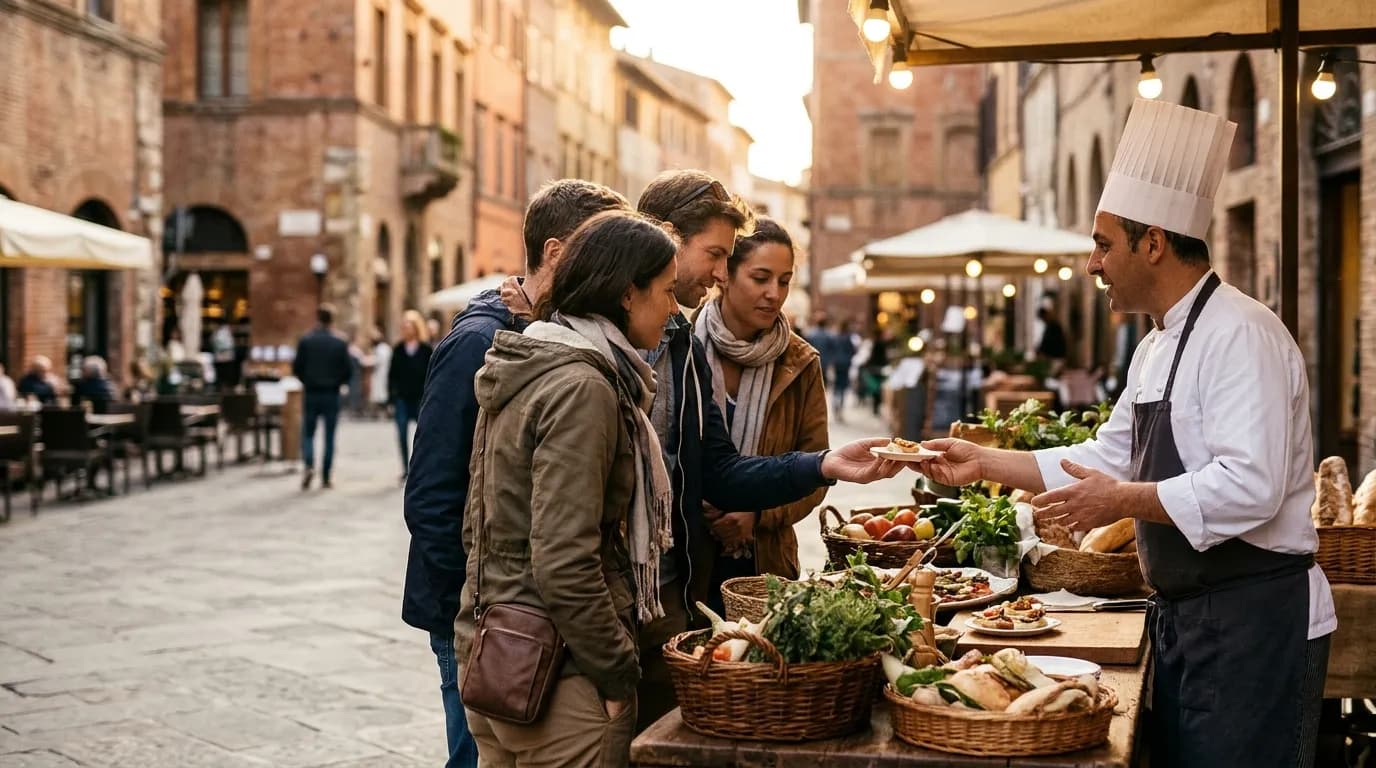
Group size changes the experience in practical ways. With a small group, guests have room to ask questions, get to know one another, and spend time talking with the chef. We can visit places where a large group would be disruptive, and the experience can respond to what is happening around us.
Many of our signature experiences are designed for no more than six guests, although the maximum varies by tour. That is a deliberate choice. I want guests to feel that they have spent part of the day exploring with someone who knows the city intimately, rather than simply following a crowd.
Small groups also create a different kind of conversation. One guest might be fascinated by wine, another by the history of a neighbourhood, and another by how a particular dish is prepared. Those interests can shape the discussion. The experience becomes richer because the people taking part help bring it to life.
How do you make a culinary experience feel genuinely local rather than designed for visitors?
You have to be curious about the people who live there, not just the places that appear in guidebooks. That means developing relationships with local food businesses, understanding how a neighbourhood has changed, and being willing to revisit an itinerary as the city evolves.
A restaurant can be important for reasons that have little to do with its popularity online. Perhaps a family has served the same dish for decades. Perhaps a market reflects the arrival of a community that transformed local tastes. Perhaps a wine tells the story of a region that visitors rarely associate with Spain.
These details are what make a city memorable. They also explain why our experiences cannot be identical from one destination to another. The personality of the chef, the character of the neighbourhood, the local food culture, and the interests of the guests all matter.
The United Nations' work on tourism and culture recognises culinary heritage as part of the cultural attractions that draw people to a destination. For us, that is not an abstract idea. It is something guests can experience through a conversation with a chef, a dish prepared by a local business, or a story about how a street became what it is today.
How do you grow an international business without losing the personal touch?
That is one of the most important questions for any experience company. Expanding into another city is not simply a matter of finding someone who can take guests to restaurants. We need a chef who understands the local food scene, cares about hospitality, and can turn culinary knowledge into an engaging experience.
The operating model provides consistency, but the personality of each destination remains local. Our Paris experiences, Seville wine and food tours, and Mexico City food tours have different rhythms, venues, and stories. The common thread is the role of the chef, the attention given to the experience, and the opportunity for guests to connect with the place through its food.
We also believe the relationship begins before the tour. Guests should be able to ask questions and speak with a real person who understands the experience, rather than being passed through an impersonal process. That matters when someone has particular interests, is planning a special trip, or simply wants to know whether a tour is right for them.
Growing the business should allow us to bring more people into these experiences without turning the experience itself into a standardised product.
What do travellers remember most after a tour?
The food matters, of course. People remember a remarkable meal, an unexpected wine, or a flavour they have never experienced before. But the conversations often give those memories their meaning.
A guest might remember learning why a famous dish is prepared differently from what they expected, or hearing how a neighbourhood changed after a defining historical event. They might discover a small business they would never have found alone, or leave with a recommendation that improves the rest of their stay.
Those moments give travellers a different relationship with a destination. They move beyond recognising its landmarks to understanding something about how people live there.
That is also why we do not think of our work simply as selling food tours. We are creating experiences that combine culinary knowledge, local discovery, and human interaction. The food draws people in, but the relationships and stories give the experience its depth.
What is the future of culinary travel?
I believe travellers will continue to look for experiences that give them something they cannot easily reproduce on their own. Information about restaurants, dishes, and attractions is readily available. What takes time to build is the local knowledge, professional judgement, and network of relationships that help someone understand a place.
For us, that means continuing to develop experiences with chefs who have something meaningful to share, keeping groups small enough for genuine interaction, and allowing each destination to retain its own character. It also means listening to guests and improving the experience rather than assuming that an itinerary is finished simply because it can be sold.
The ambition is not to make every city feel the same. It is to offer a thoughtful way into each one, guided by people who understand its food and culture.
I come back to the same principle that inspired the company in the first place. We use food as the excuse. Human connection is the experience. If a guest leaves with a fuller understanding of a place, a few new friendships, and stories they continue telling long after they return home, then we have done what we set out to do. Learn more at thecheftours.com.
Stay Ahead of the News
Get the latest business news and company spotlights delivered to your inbox. No spam, unsubscribe any time.
We respect your privacy. Unsubscribe at any time.