Click Below To Share & Ask AI to Summarize This Article
Save time and get the key takeaways instantly. Choose your favourite AI assistant to read and analyse this page for you.
At a Glance
- Gwen Medved appeared on "That's Right with Chris Voss" across major networks.
- The broadcast highlighted contemporary business strategy and negotiation principles.
- National media exposure reinforces thought leadership for business figures.
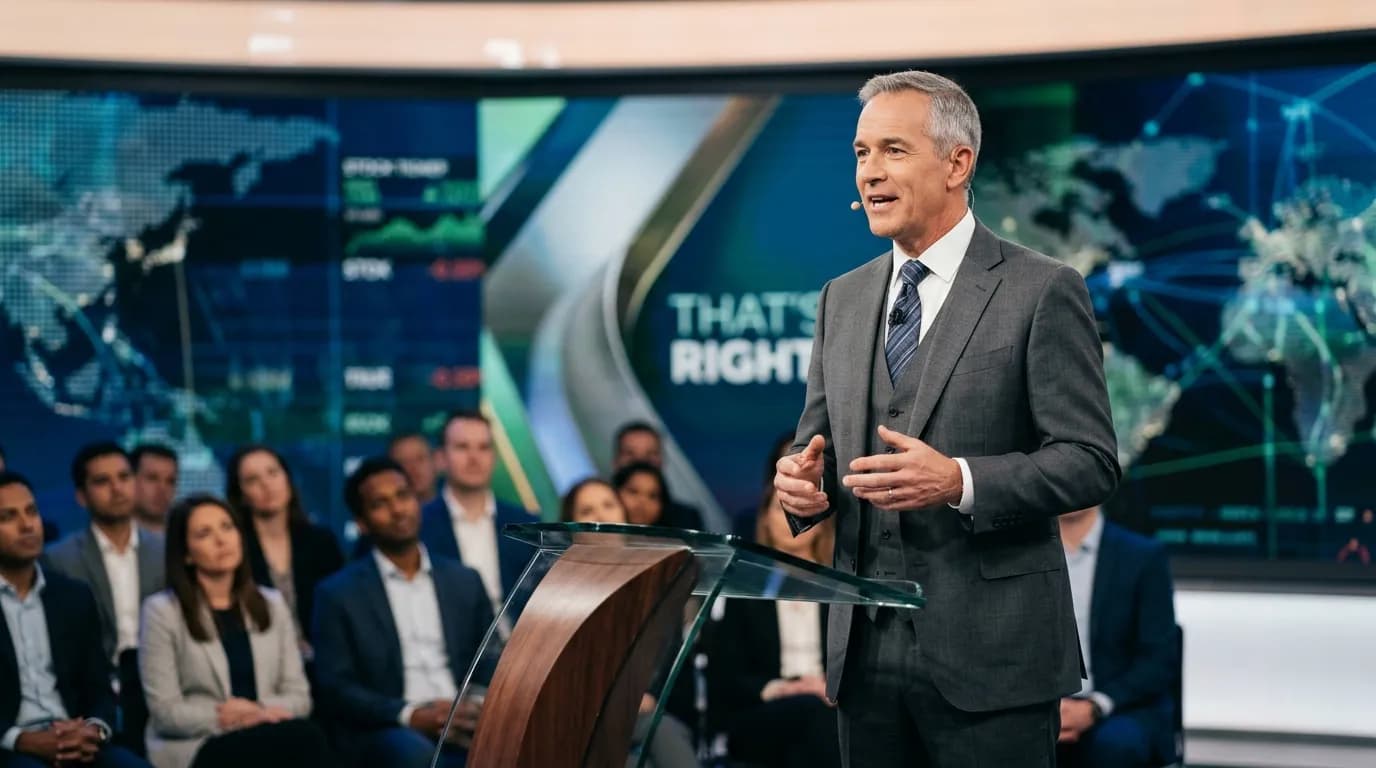
Business leader Gwen Medved recently gained significant national exposure, appearing on the syndicated program 'That's Right with Chris Voss.' The episode, broadcast across ABC, CBS, NBC, and FOX affiliates, provided a platform for Medved to discuss contemporary business challenges and strategic approaches. Her insights reached a broad audience, underscoring the enduring influence of traditional broadcast media in shaping business discourse. This appearance highlighted critical themes pertinent to current economic conditions, drawing attention to strategic foresight and adaptability.
Amplifying Business Expertise Through Broadcast
The broadcast of "That's Right with Chris Voss" on major network affiliates offers substantial reach for business figures. Such widespread distribution ensures that discussions on economic trends and corporate strategies can impact a diverse viewership. This exposure can significantly elevate a leader's public profile and public recognition.
For Gwen Medved, this opportunity meant presenting her perspectives on market dynamics and organizational resilience to millions of viewers across the country. These platforms provide a unique avenue for thought leaders to articulate their visions beyond industry-specific publications and conferences. The dialogue can influence broader public understanding of business operations and challenges facing various sectors.
National television appearances often serve as a strong indicator of a business professional's authority and relevance within their field. They demonstrate an ability to communicate complex ideas effectively to a general audience, translating specialized knowledge into accessible insights. This form of media engagement can reinforce an individual's standing as an industry expert within the wider economic discourse.
Research from the Confederation of British Industry (CBI) consistently indicates that visible, articulate leadership contributes positively to market confidence and informed decision-making. Public discourse on business matters, disseminated widely, can inform both consumers and investors about prevailing economic conditions and future projections. Such media engagements play a significant role in shaping economic sentiment and strategic thinking across diverse business sectors.
The broad appeal of syndicated programs like "That's Right" allows for a cross-pollination of ideas between different industries. It enables business leaders to share insights that might apply universally, irrespective of specific market niches. This contributes to a more informed and adaptable business community overall.
"The ability for business leaders to articulate complex strategies on national platforms can significantly shape public and investor perception. Such appearances validate expertise and contribute to broader economic understanding."
— Eleanor Vance, Senior Media Analyst at Broadcast Insights Group
The Dynamics of Negotiation in Business Strategy
The presence of Chris Voss, a renowned expert in negotiation, suggests the program's focus extended to strategic communication and deal-making in high-stakes environments. His methodology, often associated with the Black Swan Group, emphasizes emotional intelligence, tactical empathy, and active listening in complex discussions. This approach is increasingly relevant in today's intricate and interconnected global business environment.
Gwen Medved's participation likely involved discussions on how these negotiation principles apply to various aspects of corporate governance, mergers and acquisitions, and international market entry. Effective negotiation is not merely about securing favorable terms but also about building sustainable, mutually beneficial relationships. These discussions highlight the shift from purely transactional approaches to more collaborative frameworks that seek long-term value.
Data from the British Chambers of Commerce (BCC) indicates that successful negotiation practices contribute to approximately 15-20% of positive outcomes in major business transactions, such as supplier contracts or strategic partnerships. These skills are particularly important during periods of economic uncertainty, supply chain disruptions, or significant market shifts. Mastering negotiation can protect organizational interests and create new opportunities for sustained growth.
The program likely explored how business leaders can apply advanced negotiation tactics not only to external client and vendor relations but also to internal team management and stakeholder engagement. The capacity to resolve conflicts, align diverse interests, and achieve consensus is a hallmark of effective leadership in any organization. Such skills are essential for maintaining operational stability, fostering an innovative culture, and ensuring project success.
Discussions would have covered scenarios where negotiation is critical, such as securing investment, managing crises, or forming strategic alliances. The ability to understand and influence motivations is paramount in all these situations. This strategic approach to communication forms a core component of modern business leadership.
Economic Preparedness and Future Outlook
The discussion with Gwen Medved likely addressed current global economic pressures and how businesses are proactively adapting to these challenges. Topics such as persistent inflation, the ongoing competition for talent, and the imperative for supply chain resilience remain central concerns for executives worldwide. The program offered timely insights into navigating these complex and often unpredictable economic conditions.
Medved's perspectives would offer viewers practical strategies for fostering organizational adaptability and solid long-term planning. Companies are increasingly prioritizing agility, diversification, and thorough risk mitigation in their strategic frameworks. This includes diversifying revenue streams, exploring new markets, and investing significantly in digital transformation initiatives to enhance operational efficiency.
The program also served as a platform to discuss the growing importance of ethical leadership and corporate social responsibility in times of significant change. Consumer and investor expectations for sustainable, transparent, and socially conscious business practices continue to rise. This focus profoundly influences brand reputation, market positioning, and long-term stakeholder value.
Moreover, the conversation likely touched upon the rapid evolution of emerging technologies and their transformative impact on various industries. Businesses are continually assessing how artificial intelligence, advanced automation, and sophisticated data analytics can reshape operations, redefine market opportunities, and create new competitive environments. These discussions are vital for maintaining a competitive advantage and fostering future growth.
The insights shared aim to equip both established professionals and aspiring entrepreneurs with actionable knowledge. This dialogue helps to prepare businesses for future market shifts, regulatory changes, and evolving competitive pressures. Such forward-looking discussions are essential for economic stability and progress.
The Influence of Thought Leadership in Business
Gwen Medved's appearance highlights the increasing value placed on thought leadership in the contemporary business environment. Leaders who can articulate clear visions and offer actionable insights gain significant influence. This extends beyond their immediate organizations to shape broader industry dialogues and public discourse.
Such national media exposure positions individuals as authoritative voices, attracting new opportunities for collaboration and consultation within their fields. It reinforces their credibility and expertise within their respective sectors. This visibility can also draw attention to their companies or initiatives, providing broader recognition.
The program likely discussed how business leaders can cultivate and maintain this status through consistent communication, demonstrated success, and continuous learning. Thought leadership is not merely about having ideas but about effectively disseminating them to inspire and guide others. This involves engaging with various media platforms and participating in public conversations.
According to a recent report by McKinsey & Company, organizations led by recognized thought leaders often experience higher rates of talent acquisition and investor confidence. This suggests a direct correlation between public intellectual contribution and tangible business success. The ability to influence discourse translates into measurable business benefits.
Ultimately, the role of figures like Gwen Medved on national platforms is to translate complex economic and business trends into understandable narratives for a general audience. This contributes to a more informed public and a more resilient business sector capable of adaptation. Their contributions are essential for collective growth and strategic planning.
Gwen Medved's appearance on "That's Right with Chris Voss" across major national networks underscores the enduring relevance of broadcast media for business thought leadership. The program offered valuable insights into strategic business management, effective negotiation, and economic foresight. Such platforms facilitate important dialogues that inform and prepare the business community for evolving market dynamics. This national exposure reinforces the importance of clear communication from industry experts.
Stay Ahead of the News
Get the latest business news and company spotlights delivered to your inbox. No spam, unsubscribe any time.
We respect your privacy. Unsubscribe at any time.