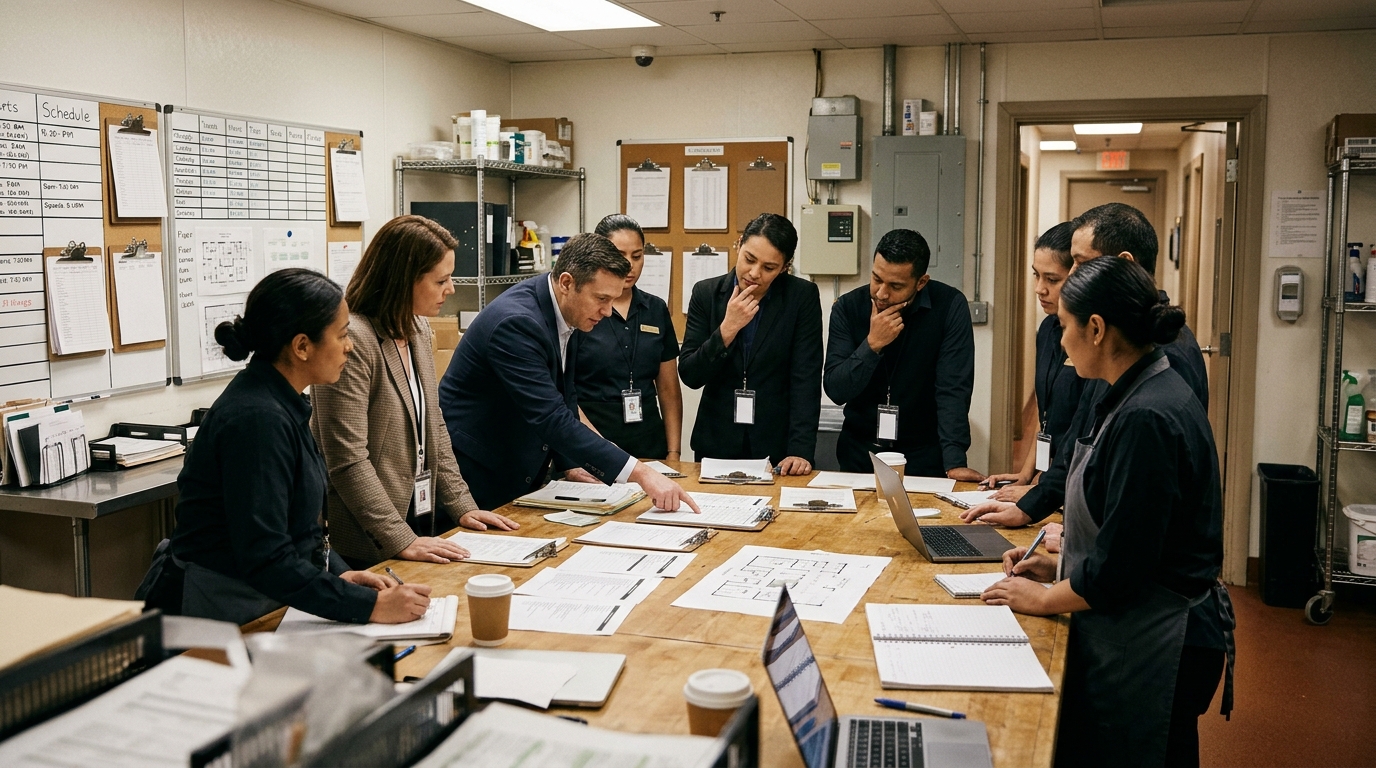
Kortney Forsblom has been profiled by Influential Women for a leadership style built on pairing empathy with exacting operational standards
The profile places her within a broader hospitality industry shift toward treating staff wellbeing as a measurable driver of guest experience
Her approach challenges the long-standing assumption that compassionate management and high performance are difficult to reconcile
Hospitality executive Kortney Forsblom has been profiled by Influential Women, a platform that spotlights women shaping their industries, for a leadership philosophy that explicitly links compassion to operational rigor rather than treating the two as competing priorities. The recognition arrives at a moment when hotels, restaurants and travel companies worldwide are re-examining how they manage staff retention, service consistency and guest satisfaction simultaneously, after years of labor shortages exposed the fragility of service-sector workforces.
Why the Compassion-Standards Pairing Matters Now
The hospitality sector has spent much of the past several years confronting a workforce crisis that outlasted the pandemic disruptions that triggered it. Staff turnover, burnout and difficulty filling frontline roles have pushed many operators to reconsider management practices that once prioritized rigid control over employee input.
Against that backdrop, a leadership model that frames empathy as compatible with high performance standards is notable less for its novelty than for its timing. Industry bodies and labor researchers have increasingly argued that guest satisfaction scores track closely with employee satisfaction, making staff treatment a commercial rather than purely ethical consideration.
Forsblom's profile by Influential Women positions her as an example of this convergence, someone whose standing in the industry rests on an insistence that service quality and staff wellbeing are not separate goals requiring trade-offs. That framing resonates with hospitality operators currently trying to rebuild workforces without reverting to the high-attrition models that preceded recent disruptions.
Hospitality Leadership: Compassion as a Hard Metric
Compassion as an Operational Discipline, Not a Soft Skill
What distinguishes this leadership approach from generic appeals to kindness in the workplace is the insistence on pairing it with high standards. Management theory has long debated whether empathetic leadership styles dilute accountability, and many operators still treat the two as a binary choice between a nurturing culture and a demanding one.
Forsblom's recognition suggests a different reading: that compassion functions as an operational discipline rather than a soft add-on, requiring the same consistency and attention as any service standard. In practice, this typically means leaders who hold staff to clear performance expectations while also investing time in understanding the pressures frontline employees face day to day.
That combination is increasingly cited by hospitality consultants as a retention tool, since employees who feel supported are statistically more likely to remain in physically and emotionally demanding roles. It also has knock-on effects for guests, who tend to notice when service staff are engaged rather than simply compliant.
A Broader Industry Pattern Among Hospitality Leaders
Forsblom's profile is part of a wider pattern of media attention on hospitality figures whose authority comes from operational detail rather than scale alone. The sector has produced numerous examples of operators who built reputations on meticulous attention to guest experience, from boutique hotel groups to specialty travel operators such as in-house luxury adventure travel providers that compete on service precision rather than price.
This emphasis on detail-driven leadership reflects a broader recognition across hospitality that differentiation increasingly comes from consistency of experience rather than amenities alone. Guests who can choose among many similarly priced properties or services often cite staff interactions as the deciding factor in reviews and repeat bookings.
Organizations such as the World Travel & Tourism Council have repeatedly flagged workforce stability as a central challenge for the global travel and hospitality sector, underscoring why leadership models that address both staff experience and service quality draw outside attention.
Kortney Forsblom's recognition by Influential Women adds to a growing body of attention on hospitality leaders whose authority is built on reconciling care for staff with uncompromising service standards. Whether this approach becomes a more formalized industry benchmark will likely depend on how consistently operators can demonstrate measurable gains in retention and guest satisfaction. For now, it stands as a notable data point in an industry still recalibrating after years of workforce strain.
⭐
Business Spotlight
This article is a premium Business Spotlight feature — an in-depth profile with priority homepage placement. Contact us to be featured.
Stay Ahead of the News
Get the latest business news and company spotlights delivered to your inbox. No spam, unsubscribe any time.