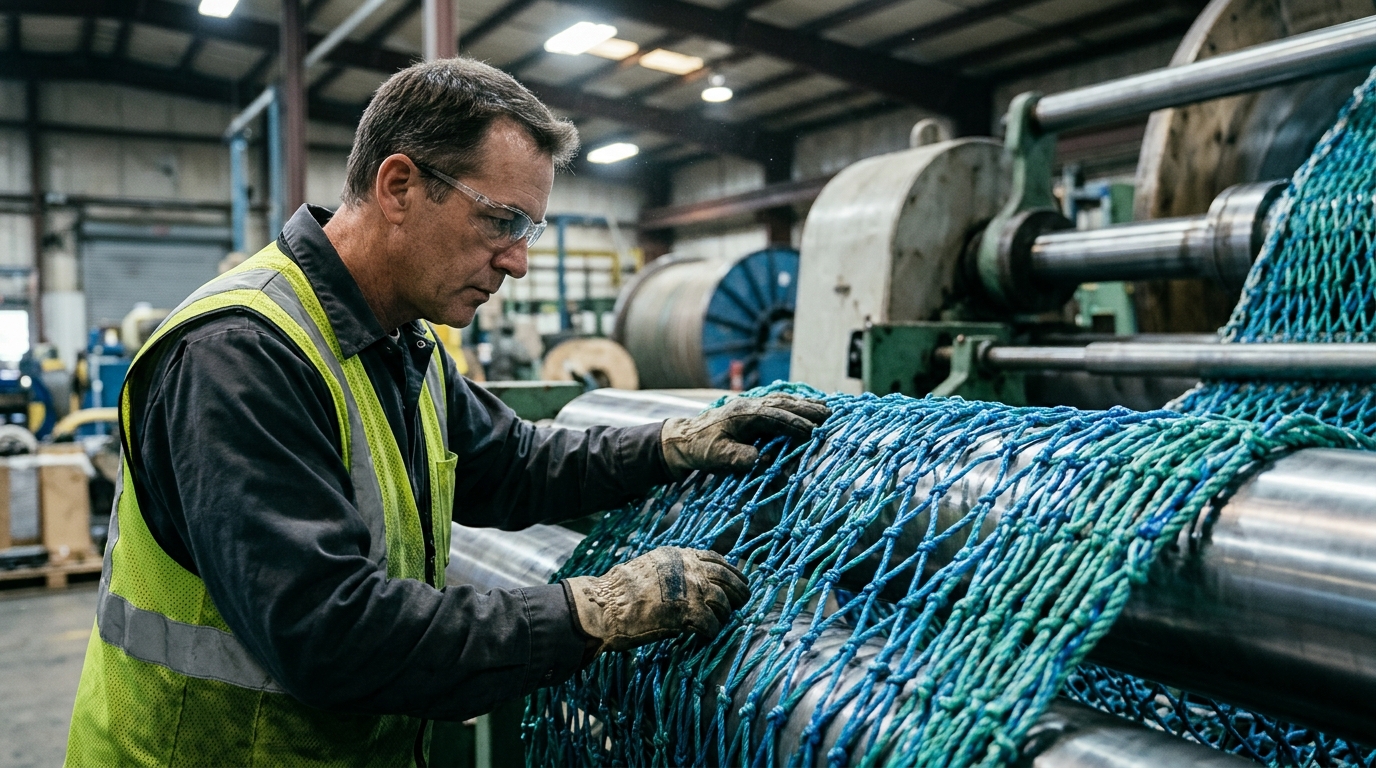
Commercial net manufacturers must now engineer gear to match regional fisheries, vessel types and polymer performance rather than apply one-size-fits-all designs
Regulatory pressure on mesh size, bycatch reduction and traceability is reshaping how suppliers design and document netting for export markets
Material choice—nylon versus polyethylene—increasingly hinges on water temperature, salinity and UV exposure rather than cost alone
Fishing fleets from sub-polar trawlers to tropical artisanal canoes are pushing net manufacturers toward increasingly customized engineering, as a new industry briefing from Shantou, China-based supplier CARPFISHING illustrates the technical demands now shaping international gear supply. The shift reflects a broader reckoning in commercial fishing: generic netting sold across geographies is losing ground to gear built around vessel power, species behavior and local regulation.
Why One-Size Gear No Longer Works
The days of shipping identical netting configurations to different coastal regions appear numbered. Vessel engine horsepower, winch hauling capacity and deck layout all dictate mesh tenacity and selvage reinforcement, meaning a trawler working heavy swell needs fundamentally different gear than a small craft setting gill nets in a sheltered lagoon.
Species morphology adds another layer of complexity. Pelagic gill netting calls for fine, flexible filaments that minimize water resistance, while demersal fisheries chasing abrasive bottom species require heavier twine built to survive constant seabed friction.
Hydrodynamic performance matters just as much as durability. Properly engineered mesh openings reduce towing resistance and fuel consumption while avoiding turbulence that can scatter schooling fish away from a net's mouth, a balance that directly affects a vessel's operating costs across a season.
Fishing Net Makers Face Global Compliance Squeeze
Materials, Climate and Regulation Converge
Environmental conditions are driving polymer selection as much as price. Polyamide nylon offers shock absorption and wet knot strength suited to temperate and cold waters, while polyethylene's resistance to biological fouling and zero moisture absorption makes it better suited to warm, high-salinity tropical fisheries where chemical degradation accelerates quickly.
Seabed topography and solar exposure introduce further variables. Rocky or coral-heavy bottoms demand abrasion-resistant polymer blends and chafer strips, while intense ultraviolet radiation in equatorial regions requires light stabilizers during yarn extrusion to prevent premature embrittlement.
Regulation now sits alongside engineering as a core design constraint. Minimum mesh size rules intended to protect juvenile fish require precision heat-setting during manufacturing, while bycatch mitigation tools such as turtle excluder devices and sorting grids must integrate cleanly with machine-made panels to satisfy conservation mandates and export documentation requirements.
The convergence of fishery-specific engineering, climate-driven material science and tightening conservation rules signals that commercial netting is moving further from a commodity business toward a specification-driven one. Suppliers able to document compliance and performance across diverse marine environments are likely to gain an edge as regional fishery management bodies tighten enforcement, while those still exporting generic gear risk falling behind both regulators and buyers.
Stay Ahead of the News
Get the latest business news and company spotlights delivered to your inbox. No spam, unsubscribe any time.