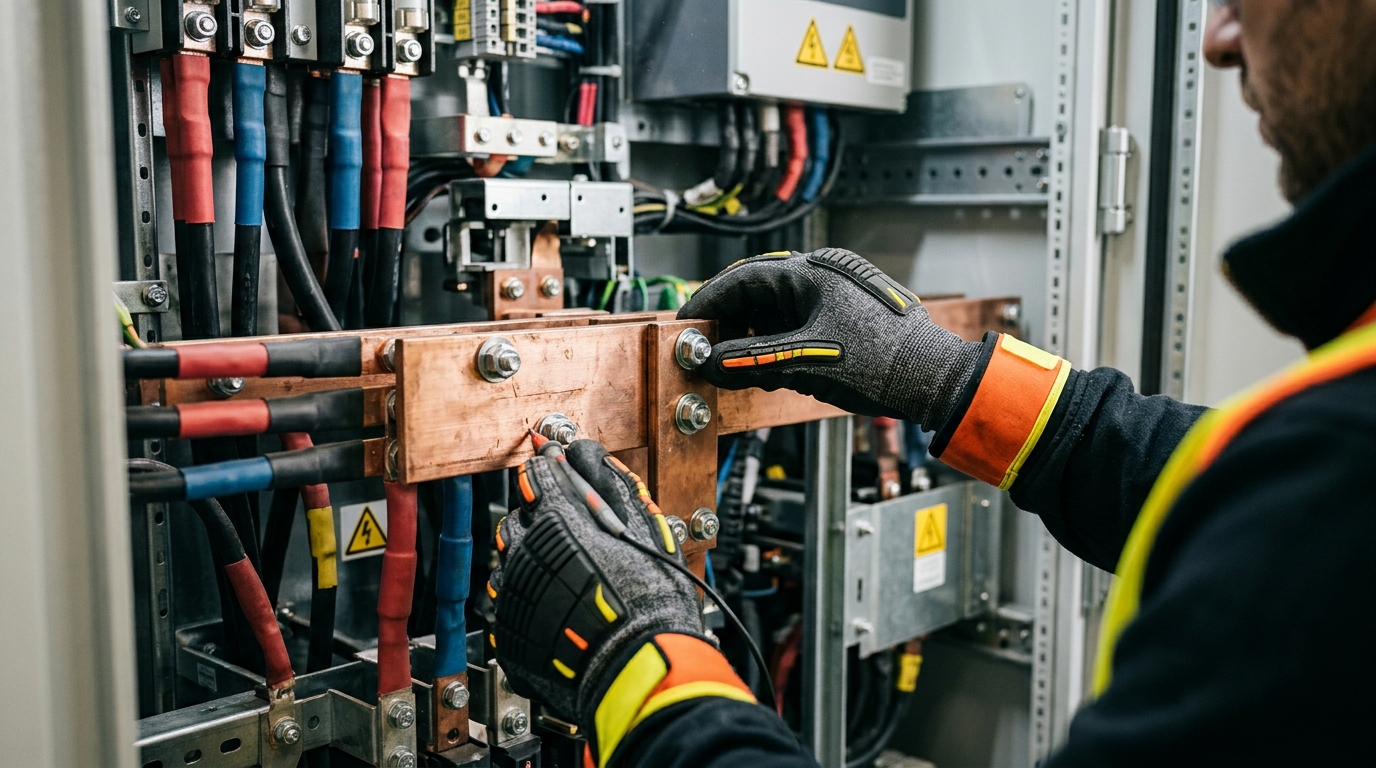
Rigid copper busbars are being positioned as core components across power distribution, renewable energy and industrial rectification systems worldwide
Chinese manufacturer Xi'an Zipeng Technology highlights applications spanning switchgear, energy storage, metallurgy, rail transit and marine electrical systems
The announcement reflects broader industry demand for heavy-current conductors as grids, data centers and electric vehicle infrastructure expand
As electricity demand accelerates across renewable energy, data infrastructure and heavy industry, a once-overlooked component is drawing fresh attention: the rigid copper busbar. Xi'an Zipeng Technology, a China-based manufacturer, has detailed how these fixed high-current conductors now underpin systems ranging from solar inverters to marine switchboards, underscoring how unglamorous hardware choices are becoming central to the reliability of modern power networks.
Why Conductor Design Matters Now
Rigid copper busbars are prized for their conductivity, structural stability and consistent temperature performance under sustained high loads. Those properties matter more as electrical systems are asked to carry greater current densities for longer periods, whether in a commercial energy storage cabinet or a medium-frequency melting furnace.
According to the company, applications span high and low voltage switchgear, dry-type distribution transformers and SVG reactive power compensation cabinets, alongside bus ducts and main bus circuits used in distribution panels. These are not niche installations; they represent the backbone circuitry of industrial and utility-scale electrical infrastructure.
The new energy sector features prominently in the list of use cases, including solar inverters, wind converters, DC combiner cabinets and charging pile power modules. As renewable generation and electric vehicle charging networks scale up globally, the need for conductors capable of handling stable AC/DC heavy current transmission becomes more pressing, a trend that mirrors broader growth in smart infrastructure technologies seen in sectors such as operating room smart equipment, where reliable hardware increasingly underpins critical systems.
Metallurgy and industrial rectification applications, such as electrolytic rectifier cabinets and high-power welding machines, further illustrate the breadth of sectors depending on this conductor category for continuous heavy-load operation.
Copper Busbars Emerge as Hidden Energy-Transition Link
Materials Choices Reflect Operating Conditions
The company notes that tin plating is commonly specified for busbars deployed in humid or salt-spray environments, a detail that points to the practical engineering decisions underlying electrical equipment durability. Marine switchboards and port electrical equipment are cited as typical settings where corrosion resistance becomes a functional requirement rather than an optional upgrade.
Xi'an Zipeng Technology also supplies laminated copper flexible connections and copper-aluminum transition bars alongside its rigid busbar lines. The firm recommends combined rigid-flexible configurations for installations exposed to vibration and thermal displacement, such as those found in rolling stock electrical cabinets within rail transit systems.
Industrial automation use cases, including inverter control cabinets, AGV power cabinets and industrial UPS and PDU units for data centers, highlight how conductor selection intersects with the broader push toward automated and digitally managed facilities. As data center capacity expands globally to support computing growth, power distribution components capable of handling sustained heavy current are becoming a quieter but necessary part of that build-out.
The breadth of sectors referenced, from power utilities to marine engineering, suggests that demand for heavy-current conductor solutions is unlikely to be confined to any single industry cycle. Instead, it tracks a wider pattern in which electrification, renewable deployment and industrial digitization each independently add pressure on electrical infrastructure to carry more current, more reliably, for longer durations.
Xi'an Zipeng Technology states that its products support drawing customization, international standards compliance and foreign trade certification, positioning the company to serve buyers across multiple regulatory environments. As global infrastructure investment continues across energy storage, grid modernization and industrial automation, suppliers of foundational electrical components such as copper busbars are likely to remain relevant to procurement decisions well beyond any single project or region.
Stay Ahead of the News
Get the latest business news and company spotlights delivered to your inbox. No spam, unsubscribe any time.