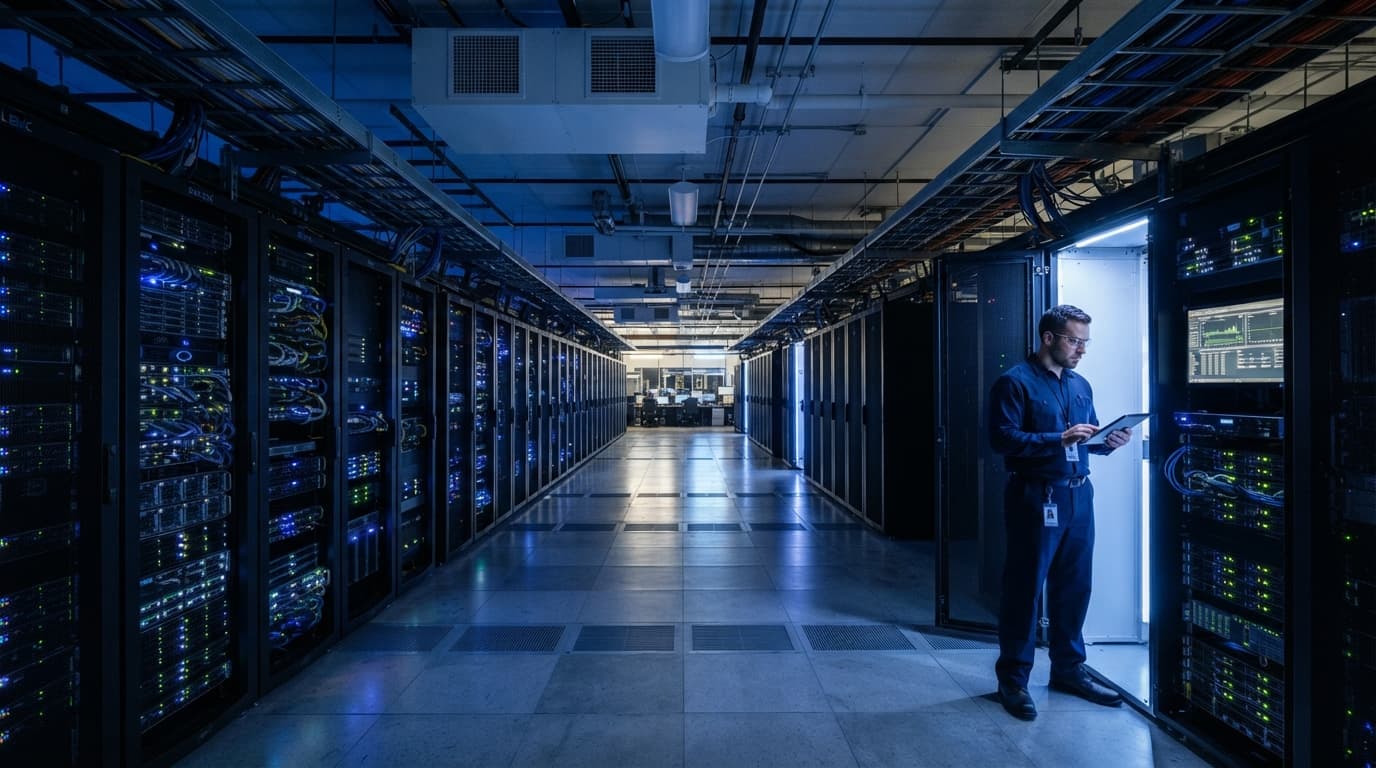
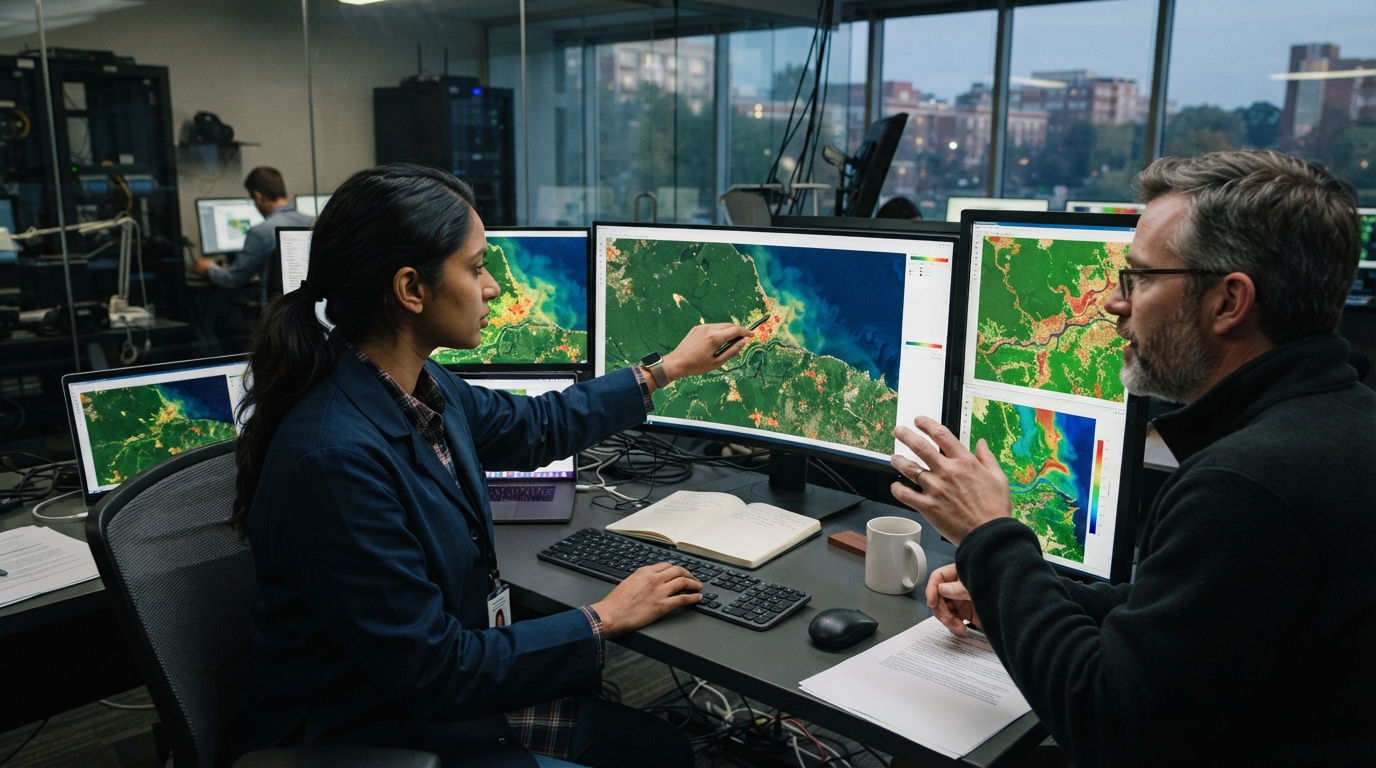
Vultr and AMD are providing cloud infrastructure and computing hardware to support Cambridge's TESSERA project
TESSERA aims to build AI foundation models for satellite-based environmental monitoring at global scale
The partnership reflects a broader trend of cloud and chip providers positioning themselves as infrastructure partners for scientific AI research
A partnership between cloud computing provider Vultr, chipmaker AMD, and researchers at the University of Cambridge is set to expand access to the computing power needed to track environmental change across the planet. The collaboration will support TESSERA, a Cambridge-led initiative developing AI foundation models trained on satellite imagery, with the goal of making large-scale environmental monitoring faster and more widely accessible to researchers and policymakers.
Why Computing Power Has Become the Bottleneck in Climate Science
Environmental monitoring increasingly depends on processing enormous volumes of satellite data, from optical imagery to radar scans covering forests, coastlines and farmland. Training AI models capable of interpreting that data at global scale requires sustained access to high-performance computing infrastructure that many research institutions cannot easily secure on their own.
By supplying cloud infrastructure and processing hardware, Vultr and AMD are addressing a practical constraint that has slowed academic AI research in this field: the cost and availability of computing capacity rather than a shortage of scientific expertise. This mirrors a pattern seen elsewhere in AI-driven research, including efforts to fast-track promising computing approaches such as the adaptive computation research recently backed by defence funders.
TESSERA's approach involves building foundation models — large, pre-trained systems that can be adapted to many downstream tasks — specifically for satellite and remote-sensing data. Once trained, such models could, in principle, be applied to monitor deforestation, crop health, water resources or land-use change without researchers needing to build specialised systems from scratch each time.
Cloud, Chip Firms Back Cambridge Climate AI Push
A Recognisable Pattern: Infrastructure Providers Courting Scientific Research
Vultr, a cloud infrastructure company that competes with larger hyperscale providers, has increasingly positioned itself around AI workloads, offering GPU-based computing capacity to developers and research institutions. AMD, meanwhile, has been expanding its presence in AI-focused hardware as it competes for a larger share of a market historically dominated by Nvidia.
Supporting a high-profile academic project such as TESSERA offers both companies a visible demonstration of their capabilities beyond commercial enterprise customers. For Cambridge and similar research institutions, such partnerships provide computing resources that would otherwise be difficult to fund through traditional grant cycles alone.
This dynamic is not unique to environmental science. Infrastructure providers across the technology sector have shown growing interest in aligning themselves with applied AI research, partly to showcase real-world use cases and partly to build long-term relationships with institutions that may become future commercial partners. Similar motivations have driven investment activity described in coverage of private equity's growing interest in supply chain AI, where infrastructure and capital providers are positioning early for sectors expected to scale.
What the Partnership Signals for Environmental Data Access
If TESSERA's models prove effective, one likely outcome is broader access to environmental monitoring tools for organisations that currently lack the resources to process satellite data independently. Governments, conservation groups and smaller research bodies could potentially draw on shared, pre-trained models rather than developing bespoke systems, lowering the barrier to entry for environmental analysis.
There are open questions, however, about how such models will be governed, who controls access to outputs, and how findings will be validated against ground-based measurements. Foundation models trained on satellite imagery are still a relatively new approach in environmental science, and their reliability across diverse geographies and conditions will need independent scrutiny before widespread adoption.
The involvement of commercial infrastructure providers also raises longer-term questions about sustainability of funding. Academic projects that depend on donated or discounted computing resources may face challenges maintaining that support once initial partnerships conclude, a consideration relevant across AI research generally.
The Vultr-AMD support for Cambridge's TESSERA project adds to a growing list of partnerships pairing cloud and chip providers with academic climate and environmental research. Its success will depend less on the announcement itself than on whether the resulting models deliver reliable, widely usable environmental insights over time. For now, the collaboration signals continued interest from infrastructure providers in aligning their technology with applied scientific research that carries global relevance.
⭐
Business Spotlight
This article is a premium Business Spotlight feature — an in-depth profile with priority homepage placement. Contact us to be featured.
Stay Ahead of the News
Get the latest business news and company spotlights delivered to your inbox. No spam, unsubscribe any time.