Click Below To Share & Ask AI to Summarize This Article
Save time and get the key takeaways instantly. Choose your favourite AI assistant to read and analyse this page for you.
At a Glance
- One-stop manufacturing services in China offer businesses consolidated production solutions.
- The model combines CNC, welding, fabrication, assembly, and DFM expertise.
- This approach aims to enhance efficiency and reduce supply chain complexities for international clients.
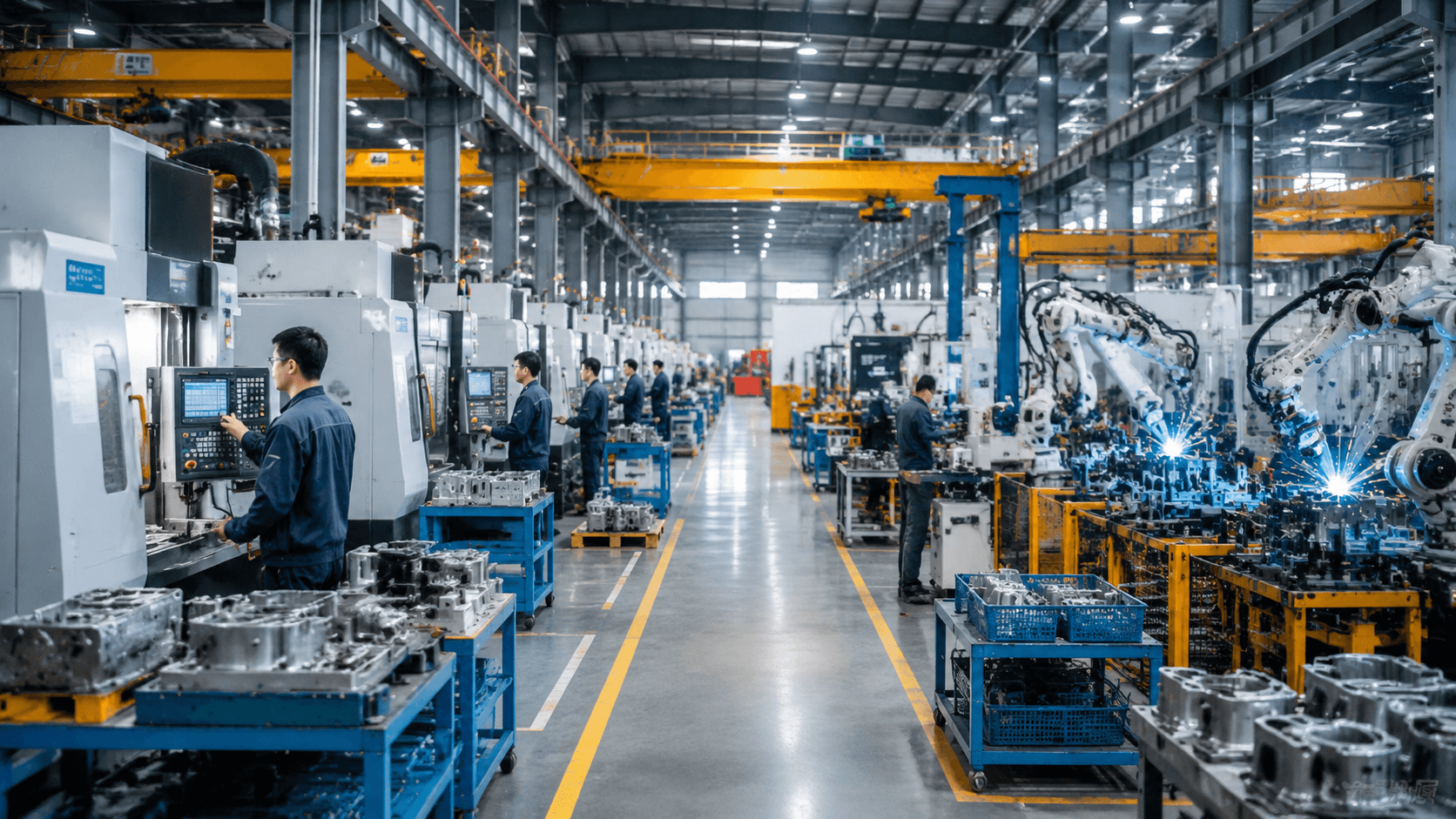
Global businesses are increasingly turning to China's integrated manufacturing services, a development marking a significant shift in supply chain strategies. This model consolidates various production stages—from precision CNC machining and welding to complex fabrication and final assembly—under a single provider. Such integration is designed to offer efficiency gains and simplified project management for international buyers seeking a unified production partner.
The Consolidation of Production Processes
The demand for single-source manufacturing in China reflects a broader trend among companies seeking to optimize their supply chains. Instead of managing multiple vendors for different components, businesses can now contract with one entity for an entire product's fabrication. This consolidation can reduce logistical overhead and communication challenges often associated with fragmented production.
These integrated services typically encompass advanced manufacturing capabilities, including high-precision CNC machining for intricate parts and various welding techniques for structural integrity. Fabrication services handle sheet metal work, bending, and forming, providing a complete structural solution. This breadth of capability allows for diverse product requirements to be met by a single supplier.
The operational benefits extend to quality control and project timelines. With all stages managed by one provider, there is greater consistency in material handling and process execution. This integrated approach can lead to quicker turnaround times and fewer delays compared to coordinating between several independent suppliers.
According to recent analysis by the US-China Business Council, foreign companies operating in China frequently cite supply chain efficiency as a key factor in their operational decisions. One-stop manufacturing directly addresses this need by simplifying procurement and production oversight. This trend underscores a strategic evolution in how global firms engage with Chinese manufacturers.
"The move towards integrated manufacturing services in China represents a maturation of its industrial base. Companies are no longer just seeking low-cost labor but rather sophisticated partners capable of managing entire product lifecycles, from design input to final assembly. This reduces risk and accelerates time to market."
— Dr. Evelyn Reed, Senior Analyst, Global Manufacturing Strategies at BCC Research
Design for Manufacturability (DFM) and Assembly Advantages
A core component of these integrated services is the emphasis on Design for Manufacturability (DFM). DFM involves optimizing product designs to ensure they can be produced efficiently and cost-effectively using available manufacturing processes. Early DFM engagement can prevent costly redesigns and production issues down the line.
Manufacturers offering one-stop solutions often provide DFM guidance directly to clients, collaborating on design iterations. This collaborative approach helps identify potential manufacturing challenges before production begins. The result is often a more refined product that is easier to assemble and has a lower overall production cost.
The assembly phase is another critical area where integration provides significant benefits. After components are machined, welded, and fabricated, they move directly to an in-house assembly line. This internal transfer minimizes transit damage and reduces the lead time typically associated with shipping parts to a separate assembly facility.
Furthermore, having assembly performed by the same entity that manufactured the components ensures a deeper understanding of part tolerances and fit. This can significantly improve final product quality and consistency. The Society of Manufacturing Engineers (SME) consistently highlights DFM as a critical practice for modern manufacturing efficiency, emphasizing its role in achieving optimal production outcomes.
Quality Control and Supply Chain Resilience
Concerns over quality consistency and intellectual property protection have historically influenced manufacturing decisions in China. However, one-stop providers are increasingly adopting stringent quality assurance protocols across all stages of production. This includes detailed inspection processes for raw materials, in-process checks during CNC operations and welding, and final product testing.
Many integrated facilities implement internationally recognized quality management systems, such as ISO 9001, to ensure adherence to global standards. This systematic approach to quality helps mitigate risks and provides greater assurance to international clients. Reputation is paramount for these providers, driving their commitment to high standards.
The integrated model also contributes to supply chain resilience, a priority for many businesses following recent global disruptions. By consolidating production with a single, well-resourced partner, companies can reduce their exposure to disruptions at multiple points in the supply chain. This centralized control allows for quicker responses to unforeseen events.
This approach offers enhanced visibility into the entire production process, from material sourcing to final shipment. Such transparency is vital for risk management and compliance. McKinsey & Company's research on global supply chains underscores the growing importance of resilience and agility, characteristics often bolstered by integrated manufacturing models.
Market Dynamics and Future Trajectory
The expansion of one-stop manufacturing services in China is a response to evolving global market dynamics. Businesses are seeking partners who can offer more than just low-cost production; they require reliability, technical expertise, and adaptability. This shift is driving Chinese manufacturers to invest in advanced machinery and highly skilled labor.
Future growth in this sector is expected to be influenced by advancements in automation and digitalization. The integration of Industry 4.0 technologies, such as IoT-enabled monitoring and artificial intelligence for process optimization, will further enhance the efficiency and precision of these services. This technological adoption will allow for even more complex and customized projects.
However, challenges persist, including geopolitical shifts and rising labor costs within China. Manufacturers are addressing these by focusing on higher-value production and increased automation to maintain competitiveness. The ability to offer specialized engineering support and advanced materials processing will be key differentiators.
The continued demand for diversified and reliable manufacturing solutions suggests that the one-stop model will remain a significant component of global sourcing strategies. Companies will likely continue to seek partners capable of managing intricate production requirements, from initial design concepts to finished goods, under one roof.
The strategic appeal of integrated manufacturing services in China is evident in their ability to simplify complex production cycles for global businesses. By combining CNC, welding, fabrication, DFM guidance, and assembly under one roof, these providers offer a cohesive solution designed to enhance efficiency and quality. This model is poised to remain a vital component of international manufacturing procurement, adapting to future industrial demands and technological advancements.
Stay Ahead of the News
Get the latest business news and company spotlights delivered to your inbox. No spam, unsubscribe any time.
We respect your privacy. Unsubscribe at any time.