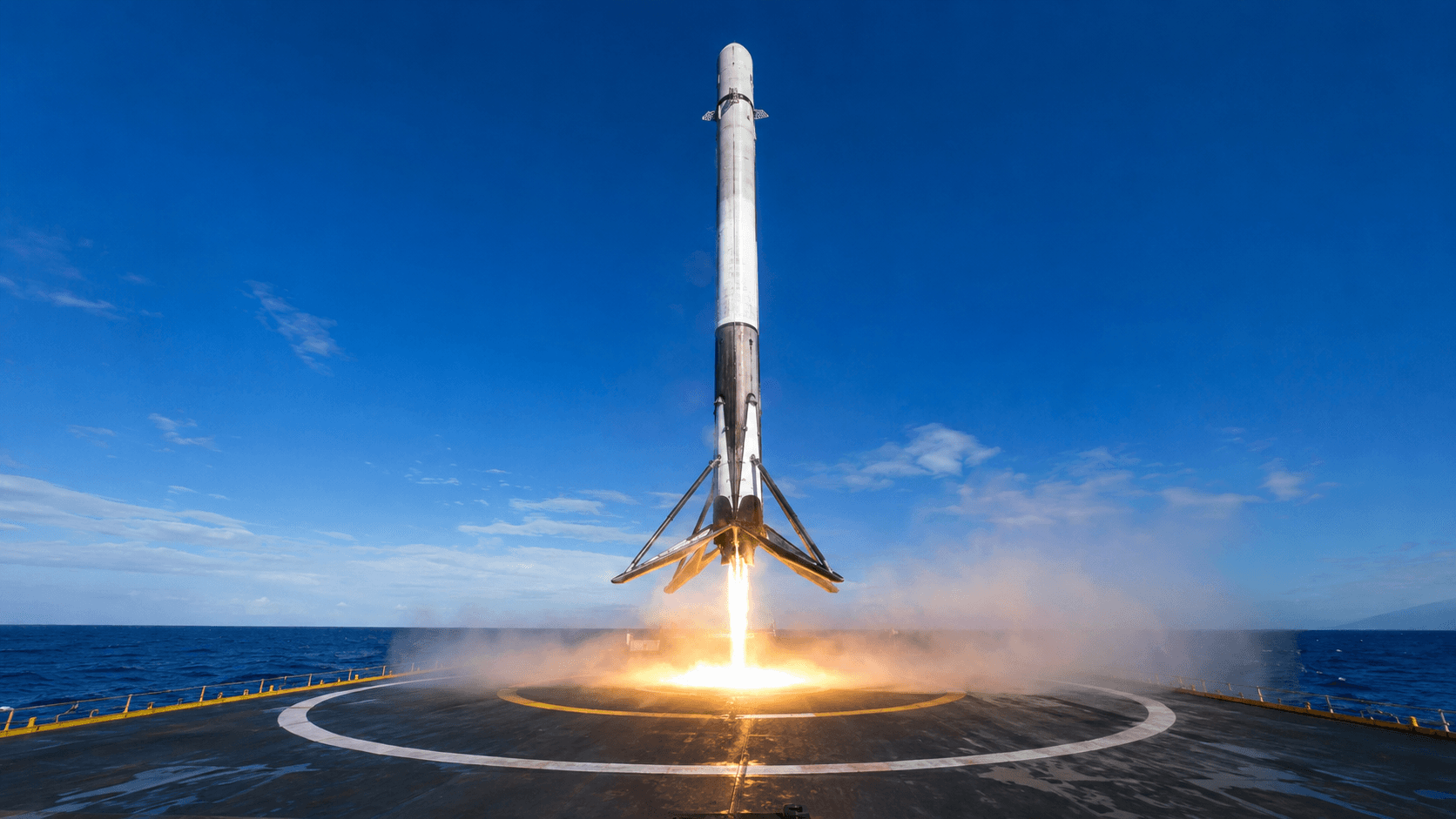
James Altucher releases extensive research on SpaceX technology.
The presentation offers detailed insights into Starlink and rocket reuse.
Analysis aims to inform potential investors on future market impact.
Veteran entrepreneur and financial commentator James Altucher has publicly released an extensive research presentation detailing the core technologies underpinning SpaceX's operations, particularly in anticipation of a potential initial public offering (IPO). Following months of dedicated analysis, Altucher compiled his findings into a singular document, now made freely available to the public. This initiative aims to provide detailed insights into the complex engineering and market strategies that could define a future SpaceX market valuation.
The Scope of Altucher's Examination
James Altucher's research project spanned several months, focusing intently on the proprietary advancements that position SpaceX as a significant entity within the aerospace and telecommunications sectors. His team meticulously reviewed publicly available data, patent filings, and extensive industry reports to construct a detailed overview of the company's operational framework. The objective was to dissect the intricate technical components and strategic decisions driving SpaceX's ambitious goals across multiple domains.
The presentation primarily dissects two major pillars of SpaceX's strategy: its reusable rocket technology and the expansive Starlink satellite internet constellation. These areas represent substantial capital investments and significant market disruptions within their respective industries. Understanding their operational efficiencies, future scalability, and potential for generating revenue was central to Altucher's investigation.
Altucher's work sought to demystify the technological advantages that grant SpaceX its competitive edge in a highly competitive global market. This includes examining the engineering behind the Merlin engines powering Falcon 9, the advanced Raptor engines for Starship, and the sophisticated recovery systems enabling booster reuse. Such detailed technical breakdowns are often reserved for institutional investors or specialized industry analysts, making this public release particularly noteworthy.
The analysis further considered the regulatory environment and intellectual property landscape surrounding SpaceX's operations, particularly concerning satellite spectrum allocation and launch licensing. It explored how the company manages its vast network of patents and how future regulatory changes could impact its various ventures. This broader perspective adds depth to the understanding of potential market entry barriers and long-term viability for the company.
The research also examined SpaceX's manufacturing capabilities and supply chain resilience, critical factors for scaling production of rockets and satellites. The ability to produce components internally at scale contributes significantly to cost control and rapid development cycles. This vertical integration strategy is presented as a key differentiator in the highly specialized aerospace manufacturing sector.
The free distribution of this in-depth analysis marks a departure from typical financial research models, where such reports are usually proprietary and costly. Altucher stated his intent was to democratize access to high-level market intelligence for a broader public. This move could significantly inform a wider audience about the underlying value drivers and future prospects of a company like SpaceX.
"Altucher's initiative to distill complex aerospace engineering and market dynamics into an accessible format is a notable contribution to public understanding of the space economy's investment potential."
— Dr. Anya Sharma, Director of Space Market Analysis at Orbital Insights
Altucher Unveils SpaceX IPO Tech Research
Deciphering SpaceX's Technological Prowess
A core element of Altucher's presentation focuses on SpaceX's groundbreaking advancements in reusable rocket technology, particularly the Falcon 9 and Falcon Heavy systems. The ability to reliably land and refly orbital-class boosters has fundamentally altered the economics of space launch services worldwide. This innovation has driven down launch costs significantly, making space access more frequent and affordable for various government and commercial payloads.
The analysis also extends to the ambitious Starlink project, a rapidly expanding global satellite internet constellation designed to provide high-speed, low-latency broadband to underserved areas. The presentation details the manufacturing scale of Starlink satellites, their sophisticated deployment mechanisms, and the extensive ground infrastructure required for global operation. Industry projections, such as those from Euroconsult, indicate the satellite internet market could reach hundreds of billions in value in the coming decades, with Starlink positioned as a significant, perhaps dominant, player.
Furthermore, Altucher's research examines the ongoing development of Starship, SpaceX's fully reusable super heavy-lift launch vehicle and spacecraft system. This colossal system is envisioned for interplanetary travel to Mars, lunar missions, and rapid point-to-point transport on Earth, representing a significant long-term bet on deep space exploration. The engineering challenges, material science innovations, and potential future applications of Starship are thoroughly discussed within the presentation.
The report highlights how these technological developments collectively create a profoundly differentiated market position for SpaceX, setting it apart from traditional aerospace companies. From providing routine launch services to establishing global internet connectivity and pioneering future space tourism, the interconnectedness of these projects presents a unique investment profile. Understanding these technical intricacies is key to evaluating the company's long-term market prospects and its potential impact on multiple industries.
The presentation also examines the company's vertical integration strategy, from manufacturing rocket components in-house to developing its own propulsion systems and ground support infrastructure. This approach reduces reliance on external suppliers and allows for faster iteration and cost control. Such strategic decisions are presented as critical factors in SpaceX's operational efficiency and rapid growth trajectory.
Market Implications and Public Access
The release of this detailed presentation carries significant implications for both retail and institutional investors, offering a rare look into a highly anticipated private company. By openly sharing his findings, Altucher aims to level the informational playing field, offering insights previously difficult for non-specialists to acquire without substantial financial resources. This transparency could foster a more informed public discourse surrounding the potential valuation of private space companies and their future market entry.
Industry analysts often debate the precise timing and potential valuation of a hypothetical SpaceX IPO, given the company's dual role as a leading launch provider and an emerging telecommunications operator. Altucher's work provides a robust framework for understanding the underlying technological assets and the substantial market moat that could justify a significant market capitalization. The document serves as a valuable reference for those diligently tracking the evolution of the global space economy and its investment opportunities.
The presentation also touches upon the broader economic impact of advanced space technology, citing various potential growth figures from authoritative sources. For instance, recent reports from TechUK suggest that the UK space sector alone contributes billions to the national economy, with global estimates for the entire space industry projecting upwards of $1 trillion by 2040. Such compelling figures underscore the growing importance and financial magnitude of companies like SpaceX within the global economic framework.
Altucher's decision to offer this extensive research freely aligns with his previous efforts to democratize financial education and provide independent analysis. This move provides a valuable resource for individuals interested in the complex interplay of technology, finance, and the future of space commercialization. It could potentially shape future investment strategies and public perception as the IPO discussion continues to evolve among market participants.
The accessibility of such high-quality research is particularly relevant in an era where information asymmetry can significantly impact investment decisions. By simplifying complex technical and financial data, Altucher contributes to a more informed investment community. This initiative could set a precedent for how significant private company valuations are discussed and understood by a broader audience.
James Altucher's release of his in-depth research on SpaceX's technology marks a notable event in financial commentary. His free presentation offers a detailed examination of the company's engineering feats and market strategies, from reusable rockets to the Starlink constellation. This initiative provides a valuable resource for anyone seeking to understand the technological underpinnings and potential market impact of a future SpaceX IPO. The move underscores a growing trend towards making complex market analysis more accessible to a wider audience.
⭐
Business Spotlight
This article is a premium Business Spotlight feature — an in-depth profile with priority homepage placement. Contact us to be featured.
Stay Ahead of the News
Get the latest business news and company spotlights delivered to your inbox. No spam, unsubscribe any time.