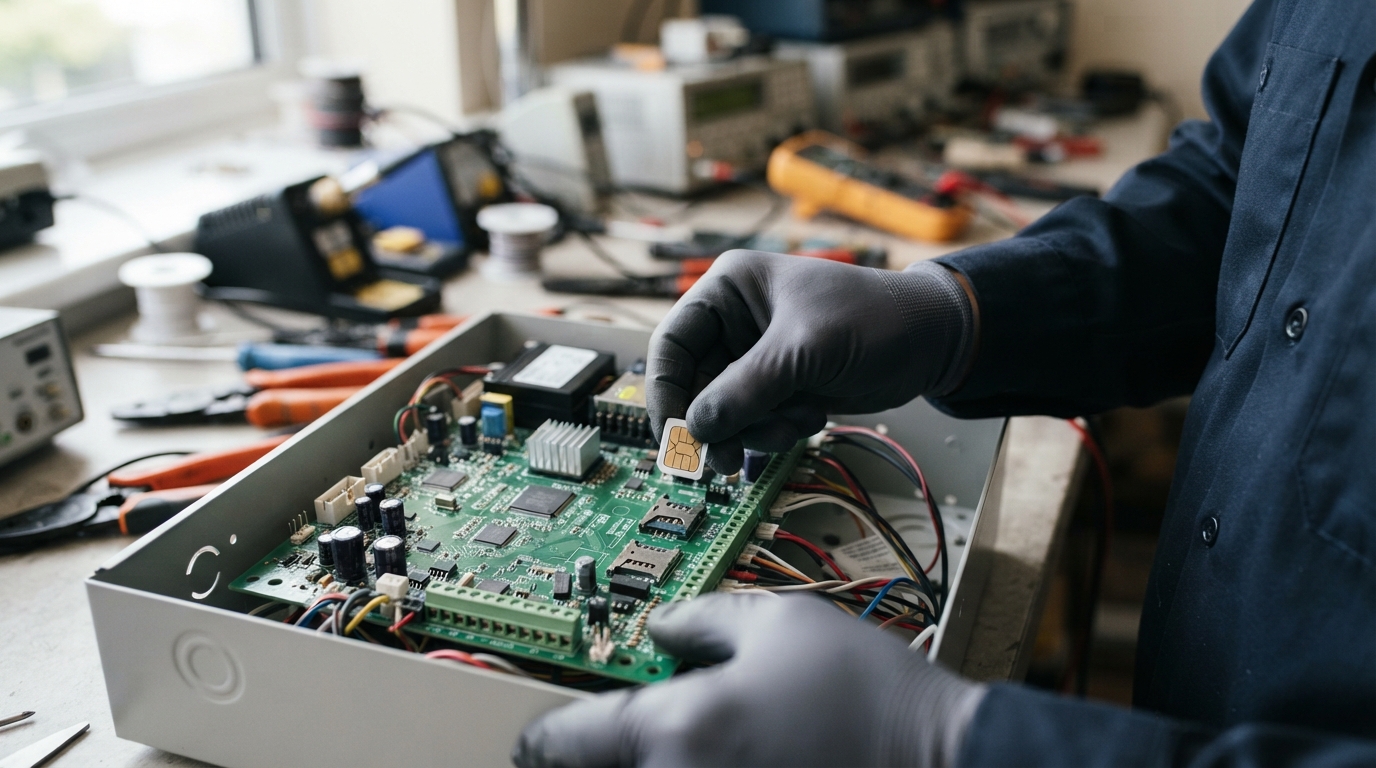
Countryside Connections now fits KeySIM multi-network IoT SIMs into Ajax alarm installations across rural Wales
The SIMs let alarm systems switch between mobile networks automatically where coverage from a single carrier is unreliable
The deployment highlights a wider shift toward network-agnostic connectivity for security and telemetry devices in hard-to-reach locations
A security alarm that cannot "phone home" during a break-in is of limited use, and that risk is magnified in rural areas where a single mobile carrier's signal can drop out entirely. Countryside Connections, a Welsh connectivity provider, has addressed that gap by fitting KeySIM multi-network IoT SIM cards into the Ajax alarm systems it installs, giving each device the ability to reach more than one mobile network rather than being locked to one.
Coverage Gaps Drive the Switch
Mobile network strength in rural regions rarely follows a predictable pattern. One carrier might offer a strong signal in a village centre while leaving a farm a few miles away with almost nothing, and the reverse can be true for a neighbouring operator.
For a company installing security equipment across such terrain, that variability turns connectivity into a recurring operational problem rather than a one-off setup task. A standard SIM tied to a single network can leave an alarm system unreachable precisely in the locations where remote monitoring matters most.
Multi-network IoT SIMs are designed to sidestep that constraint by giving a connected device access to several carriers' networks, with the SIM able to connect to whichever is available at a given location. Founder Morgan Jones said the approach gives installers more room to find a workable connection rather than being stuck with one carrier's coverage map.
"We work across rural areas where mobile coverage can differ significantly from one place to another. Having a multi-network SIM is important for the Ajax alarm systems we install, because it gives us more flexibility in finding the best available connection. KeySIM is a good fit for the way we work and the locations we serve."
— Morgan Jones, Founder, Countryside Connections
Why Rural Alarms Need More Than One Network
A Broader Pattern in Connected Security
This deployment fits into a wider trend across security and telemetry industries, where single-network dependency is increasingly treated as a point of failure rather than a minor inconvenience. Businesses installing alarms, sensors or tracking equipment in remote or variable-coverage settings are turning to SIMs that can steer between networks, reducing the chance that a device goes silent because one carrier has a local outage or weak signal.
The same logic that applies to rural burglar alarms extends to agriculture, construction and other sectors where connected devices operate far from dense urban infrastructure; the farm equipment industry's own push toward precision technology relies on comparable connectivity resilience to keep sensors and monitoring systems online. For installers and manufacturers alike, network flexibility is becoming a baseline expectation rather than a premium feature, particularly as connected security systems are marketed on the promise of reliable, round-the-clock monitoring.
KeySIM, the supplier behind the SIM cards, positions its product specifically around security, telemetry and other connected applications where relying on one mobile network is unsuitable. Its involvement with KeySIM in this case reflects a specialist niche within the IoT connectivity market focused less on consumer data plans and more on uptime for business-critical devices.
The case illustrates a practical consequence of uneven rural mobile coverage: security providers are adapting their technology choices rather than waiting for network infrastructure to catch up. As more alarm and telemetry systems move into areas with inconsistent signal, multi-network SIM technology looks set to become a standard consideration for installers rather than a niche workaround.
Stay Ahead of the News
Get the latest business news and company spotlights delivered to your inbox. No spam, unsubscribe any time.