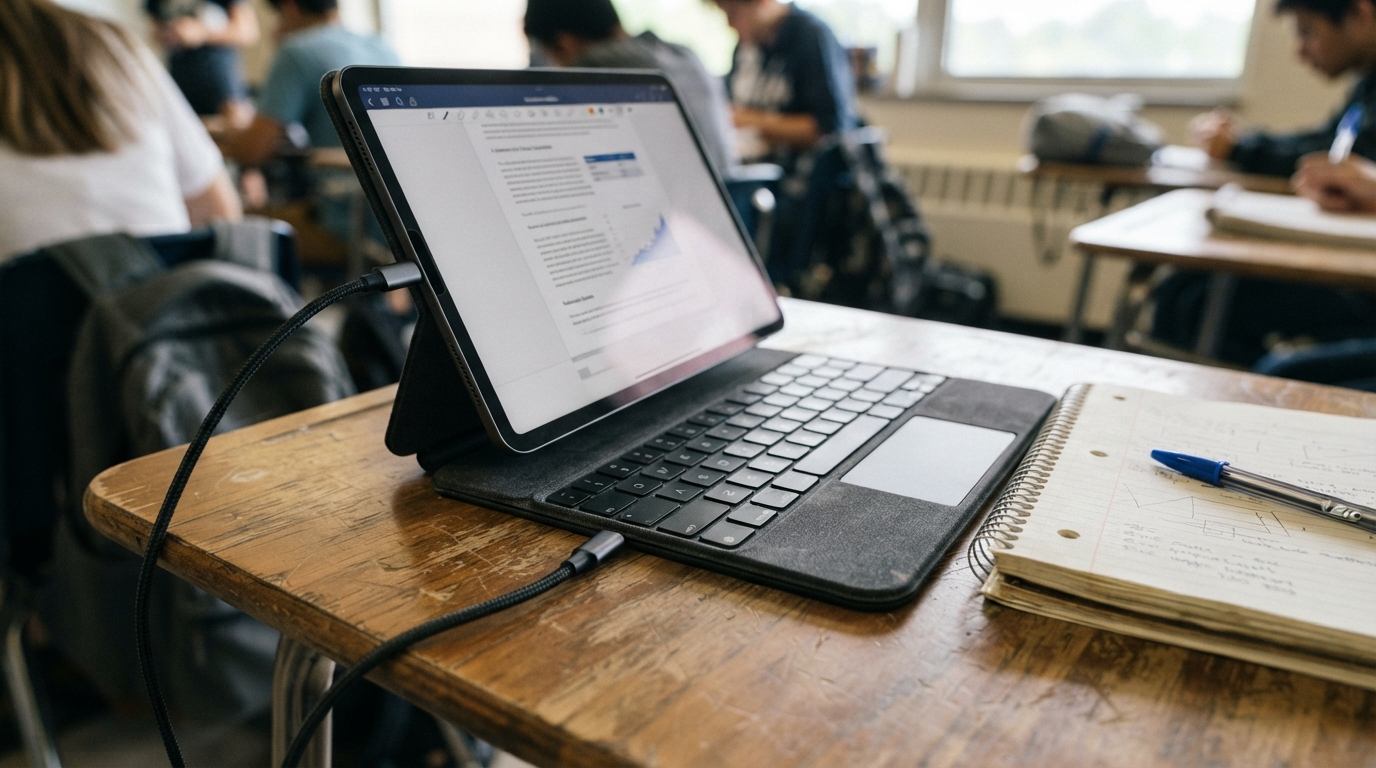
Belkin has introduced USB-C keyboard folios designed specifically for classroom tablets, reflecting the broader shift away from proprietary charging ports.
The launch aligns with regulatory and industry momentum toward a single charging standard, reducing cable clutter and e-waste in schools.
The move highlights how accessory makers are increasingly designing for institutional buyers, not just individual consumers.
Belkin has launched a new line of USB-C keyboard folios built specifically for classroom tablets, a product decision that says as much about the state of education technology procurement as it does about typing accessories. The folios are designed to pair with USB-C-equipped tablets now standard in many school device fleets, replacing older Lightning-based accessories that districts have relied on for years. The launch arrives as schools worldwide continue transitioning their device inventories to USB-C, a shift driven by both manufacturer roadmaps and tightening charging-standard regulations.
A Product Built Around One Connector
The new folios are engineered around the assumption that a single cable type should charge a student's tablet, keyboard, and other classroom peripherals. That may sound like a minor convenience, but for IT administrators managing thousands of devices across a district, cable standardization has real operational weight. Fewer cable types mean fewer lost chargers, simpler replacement stock, and less confusion for students and teachers alike.
Belkin has long positioned itself as a maker of Apple-certified accessories, and its education-focused hardware typically emphasizes durability over styling. Keyboard folios aimed at classrooms are generally built to survive drops, spills, and the general wear of daily handling by children, a design requirement that differs meaningfully from consumer-grade laptop accessories sold for office or home use.
The timing follows Apple's own shift to USB-C across its iPad lineup, a move that effectively forced accessory makers to redesign their entire education product catalogues. Districts that standardized on Lightning-based keyboard cases in prior procurement cycles are now facing replacement decisions as older devices age out of service.
Belkin's School Keyboards Signal USB-C's School Takeover
Why USB-C Matters for School IT Budgets
The push toward USB-C is not simply a manufacturer preference. Regulators in the European Union have mandated a common charging port for many electronic devices sold within the bloc, a rule that has accelerated the industry-wide move away from proprietary connectors. That regulatory pressure, combined with Apple's own transition, has effectively made USB-C the default standard for new tablets and accessories entering institutional markets globally.
For school administrators, the practical benefit is consolidation. A single charging standard across tablets, keyboards, headphones, and other peripherals simplifies inventory management and reduces the volume of e-waste generated when incompatible chargers are discarded. Education budgets are typically tight and procurement cycles long, so any product that reduces long-term replacement costs tends to draw interest from purchasing departments, not just classroom teachers.
This is also a market where reliability outweighs novelty. Districts tend to favor established accessory brands with track records in bulk deployment and warranty support, rather than newer entrants without institutional sales infrastructure.
The Broader Shift in Education Hardware Procurement
Belkin's education-specific launch fits into a wider pattern of hardware makers designing products explicitly for institutional buyers rather than adapting consumer accessories after the fact. One-to-one device programs, where every student is issued a personal tablet or laptop, have become common across many school systems, creating sustained demand for accessories built to withstand daily classroom use rather than occasional home use.
That institutional focus is increasingly visible beyond hardware design itself, extending into how these products reach buyers. Much like the broader trend of mobile-driven B2B sourcing reshaping how organizations evaluate and purchase equipment, education procurement teams are relying more heavily on digital channels and centralized purchasing platforms to compare accessory options across vendors before committing to district-wide orders.
The category also reflects a slower but steady maturation of education technology as its own distinct hardware segment, separate from general consumer electronics. Accessory makers that once treated schools as a secondary market are now building dedicated product lines, certification processes, and support structures around institutional buyers specifically.
Belkin's USB-C keyboard folios represent an incremental but telling development in that trajectory. As tablets continue displacing traditional laptops in many classrooms, and as regulatory pressure keeps pushing the industry toward a single charging standard, accessory makers face growing pressure to design specifically for institutional durability and procurement realities rather than repackaging consumer products. How quickly districts replace aging accessory stock will likely depend more on device refresh cycles and budget timing than on the appeal of any single product launch.
⭐
Business Spotlight
This article is a premium Business Spotlight feature — an in-depth profile with priority homepage placement. Contact us to be featured.
Stay Ahead of the News
Get the latest business news and company spotlights delivered to your inbox. No spam, unsubscribe any time.