
corporate_fareBusiness News & Info
Technology⭐ Business Spotlight

Prove Closes Wi-Fi Gap in Silent Authentication

Daniel HartleyDaniel Hartley10 October 2026824 words · In-depth feature
Prove Closes Wi-Fi Gap in Silent Authentication

Click Below To Share & Ask AI to Summarize This Article

Save time and get the key takeaways instantly. Choose your favourite AI assistant to read and analyse this page for you.

At a Glance

  • Prove has extended silent, phone-based identity verification to work over Wi-Fi and mobile web browsers, not just cellular app sessions
  • The move addresses a known blind spot in carrier-based authentication that previously forced fallback to less secure methods like SMS one-time passcodes
  • The change reflects a broader industry shift toward passwordless, low-friction identity verification as account takeover fraud continues to rise globally

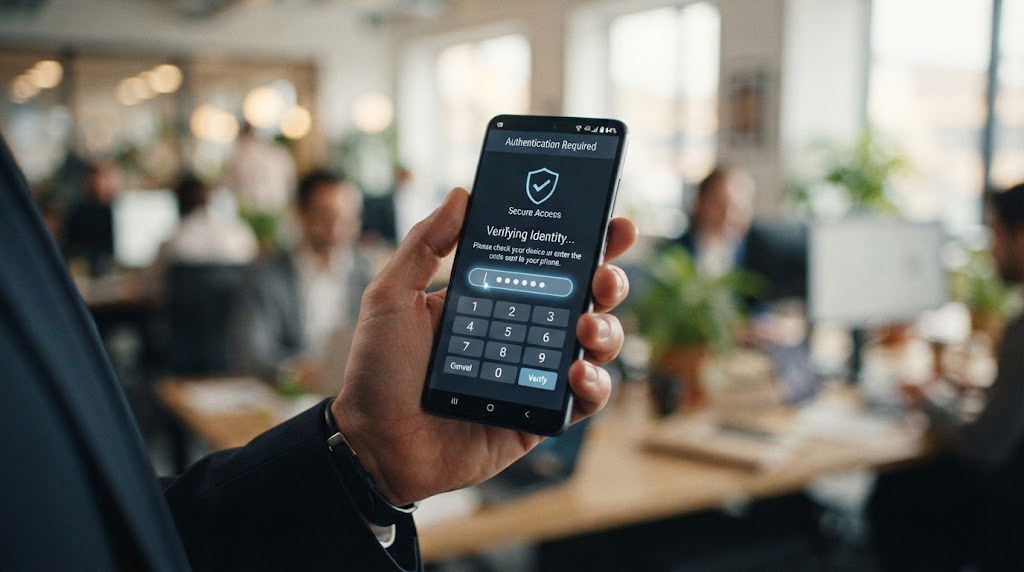
Digital identity verification company Prove has extended its silent authentication technology to cover Wi-Fi connections and mobile web browsers, closing a gap that has quietly undermined phone-based identity checks since the method's inception. Silent authentication has long depended on a cellular data connection to verify a device against its SIM card without user input. Extending that capability to Wi-Fi and browser-based sessions means businesses can now verify users through the same underlying process regardless of how or where they connect, according to the company.

Why the Wi-Fi Blind Spot Mattered

Silent Network Authentication, sometimes called SNA, works by having a mobile carrier confirm that the SIM card in a device matches the phone number a user has entered, all without sending a text message or requiring a typed code. It has become popular with banks, fintech apps and marketplaces precisely because it removes friction while still relying on carrier-verified data that is harder to spoof than a password.

The method has one structural weakness: it only works when a device is actively using cellular data, because that is the pathway through which a carrier's network can see and confirm the SIM. The moment a phone switches to Wi-Fi, or a user opens a service through a mobile browser rather than a native app, that carrier-level visibility disappears.

Businesses have typically handled this gap by falling back to SMS one-time passcodes, a method widely regarded as more vulnerable to interception, SIM-swap fraud and phishing. Security researchers and regulators in multiple jurisdictions have flagged SMS-based verification as a weaker control for years, yet it has persisted largely because alternatives could not reliably reach users outside cellular sessions.

That fallback dependency is precisely what Prove says its expansion eliminates, at least for the businesses that adopt the updated capability.
Prove Closes Wi-Fi Gap in Silent Authentication

A Broader Pattern of Closing Product Gaps

Extending an existing capability to cover previously unsupported scenarios, rather than releasing an entirely new product, is a common playbook once a technology has proven itself in its original form. Vendors often find that the biggest source of customer complaints is not a missing feature altogether but a feature that fails inconsistently depending on network conditions or device type. Removing that inconsistency tends to matter more to enterprise buyers than any headline addition would.

The pattern is visible elsewhere in software as vendors mature their platforms. Design and marketing tools have followed a similar trajectory, as seen when PosterMyWall rounds out its AI toolkit with video, multipage and photo-restoration tools that address longstanding user requests rather than introducing an unrelated capability. In identity verification specifically, the incentive to close such gaps is amplified by the fact that any fallback to a weaker method reintroduces the exact fraud risk the primary technology was built to remove.

For an industry built on trust, gaps of this kind are not cosmetic. They represent the exact seams that fraudsters learn to target once a technology becomes widely deployed.

What It Signals for Fraud Prevention

Account takeover fraud, in which criminals hijack an existing customer account rather than opening a new one under a false identity, has grown into one of the most persistent problems facing banks, telecoms and online marketplaces. Much of that fraud exploits precisely the weak links in authentication chains, including SMS codes intercepted through SIM-swap schemes or phishing pages designed to capture one-time passcodes in real time.

Reducing reliance on those weaker fallback methods, even in a subset of user sessions, narrows the surface area available to attackers. It also reflects a wider consensus forming around passwordless and possession-based verification, an approach that industry bodies such as the GSMA have supported through initiatives aimed at using mobile network data for identity assurance without exposing users to shared secrets like passwords or codes.

The practical effect for businesses adopting the expanded coverage is fewer moments where a user is dropped into a friction-heavy verification flow simply because of how their device happened to be connected at that moment. That consistency matters for conversion rates in sign-up and login flows, where every additional step tends to increase abandonment.

Removing the Wi-Fi and mobile web limitation does not eliminate fraud risk on its own, but it does narrow one of the more predictable seams that attackers have learned to exploit around network-dependent verification. As passwordless authentication becomes the default expectation across banking, telecom and marketplace platforms, the companies able to deliver it consistently across every connection type, rather than only under ideal conditions, are likely to set the benchmark others are measured against.

⭐

Business Spotlight

This article is a premium Business Spotlight feature — an in-depth profile with priority homepage placement. Contact us to be featured.

Stay Ahead of the News

Get the latest business news and company spotlights delivered to your inbox. No spam, unsubscribe any time.

We respect your privacy. Unsubscribe at any time.