Market for 3D printed satellite components projected to grow from $1.40 billion in 2025 to $10.65 billion by 2035, a 22.50% CAGR
Nanosatellites and CubeSats are the fastest-growing satellite category, while structural components remain the largest segment by component type
North America leads the market today, but Asia Pacific is forecast to grow fastest as new space programmes expand
Satellite manufacturing is undergoing a quiet but consequential shift, as additive manufacturing moves from a niche prototyping tool to a mainstream production method for spacecraft parts. New research from Strategic Revenue Insights Inc. estimates the 3D printed satellite components market will expand from $1.40 billion in 2025 to $10.65 billion by 2035, a compound annual growth rate of 22.50%, reflecting how quickly the technology is being absorbed into an industry historically defined by long lead times and high costs.
What Is Driving The Shift To Printed Parts
The report, led by analyst Rohan Mehta, points to a convergence of forces behind the growth: maturing additive manufacturing techniques, surging demand for small and nanosatellites, and pressure across the industry to cut production costs. Government space agencies and a growing roster of private satellite operators are both named as contributors to demand.
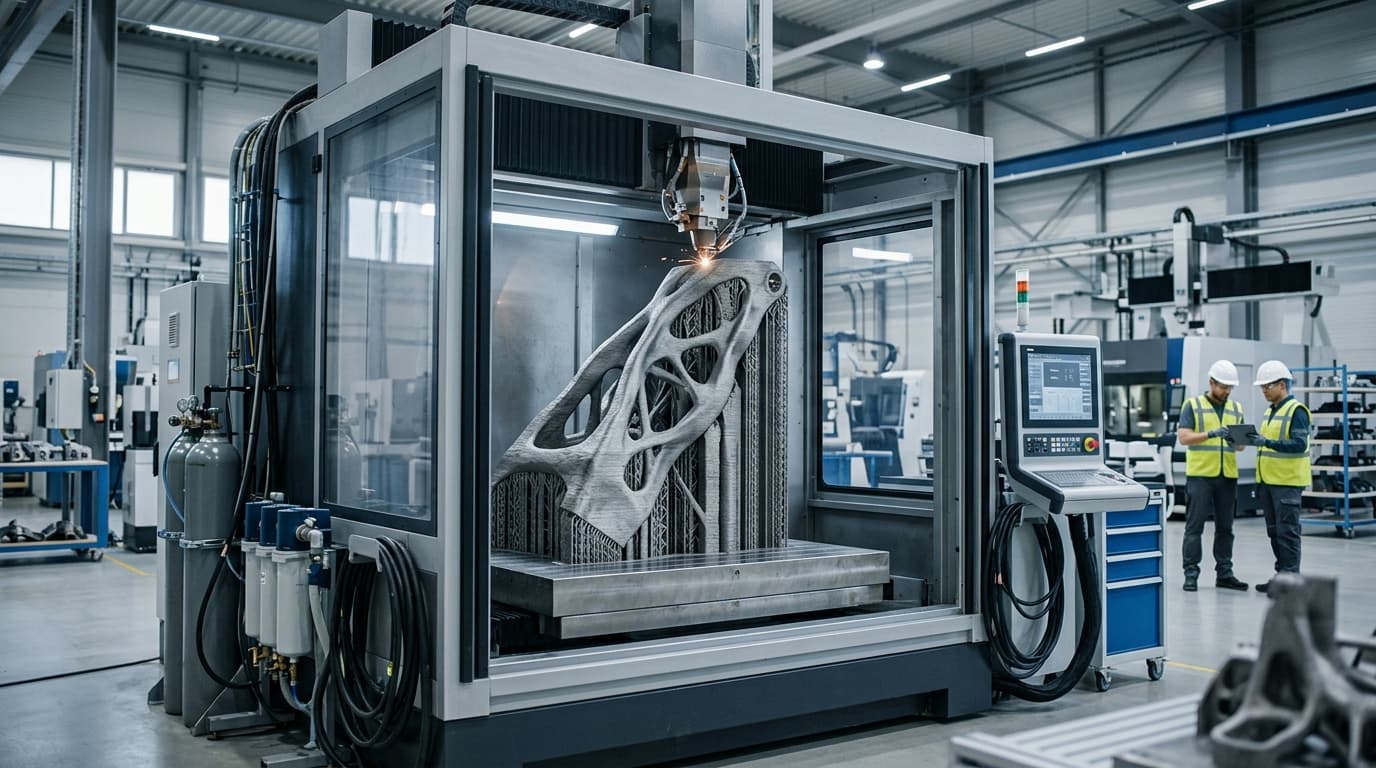
Structural components are identified as the largest segment by component type, which is consistent with how additive manufacturing first gained traction in aerospace — replacing machined brackets, housings and panels with lighter, geometrically complex printed equivalents. Titanium and aluminum alloys dominate material use, prized in spacecraft for their strength-to-weight ratios and resistance to the thermal extremes of orbit.
Communication applications represent the largest end-use category, unsurprising given the scale of commercial broadband and connectivity constellations now being deployed. Nanosatellites and CubeSats are singled out as the fastest-growing satellite type, a category that has benefited directly from additive manufacturing's ability to compress both cost and build time for smaller spacecraft.
Why Satellites Are Being Built Layer by Layer
Scale, Competition And The Limits Of Printing In Orbit
North America is named as the largest regional market, consistent with the concentration of established aerospace primes and satellite manufacturers across the United States and Canada. Asia Pacific is tagged as the fastest-growing region, a pattern that tracks with the rapid expansion of national space programmes and commercial launch activity across the region in recent years.
The competitive field named in the report includes established aerospace manufacturers alongside more specialised satellite and space-infrastructure firms: Airbus SE, Lockheed Martin Corporation, The Boeing Company, Thales Alenia Space, Northrop Grumman Corporation and Maxar Technologies. Their presence signals that printed components are no longer confined to experimental programmes but are being integrated into mainstream production lines at the largest defense and aerospace contractors.
Growth is not without friction. The report cites high upfront costs for adopting additive manufacturing equipment, a shortage of personnel trained to operate it, the risk that fast-moving printing technology becomes obsolete before it is fully amortised, and regulatory and export-control requirements that complicate cross-border supply chains in an already sensitive defense-adjacent industry.
The adoption of digital twins and AI-assisted design flagged in the report also reflects a broader pattern across heavy industry, where software-driven design tools are increasingly paired with physical manufacturing — a shift visible well beyond aerospace in sectors experimenting with generative AI platforms to speed up complex design and production workflows.
Taken together, the figures from Strategic Revenue Insights point to additive manufacturing becoming a structural feature of satellite production rather than a passing efficiency trend. With geopolitical tensions and trade restrictions cited as ongoing risks to supply chains, the pace of adoption over the next decade is likely to hinge as much on policy and materials access as on the technology itself.
Stay Ahead of the News
Get the latest business news and company spotlights delivered to your inbox. No spam, unsubscribe any time.