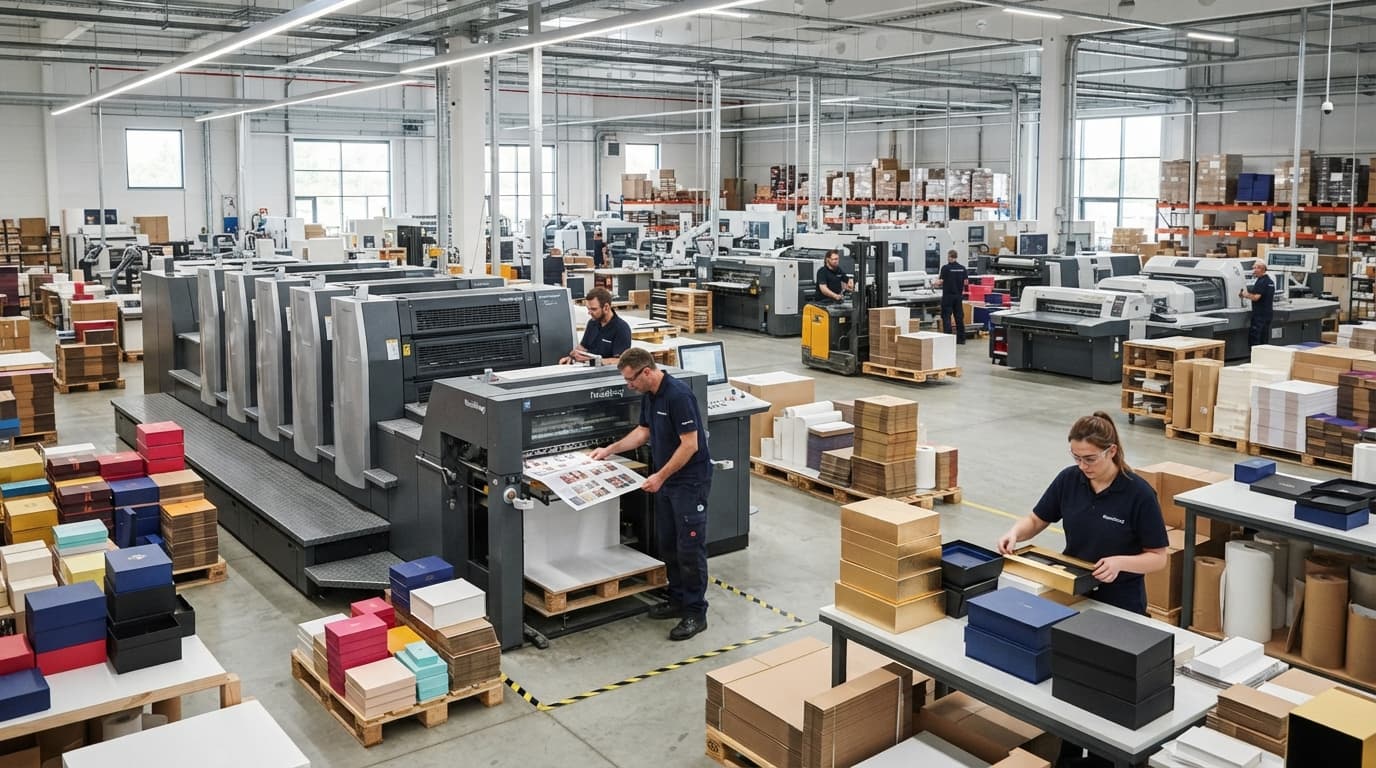
Shenzhen-based Eversun Packaging International Co., Ltd. has detailed a multi-stage quality control system built around ISO 9001 certification
The 180-employee factory keeps production fully in-house, from raw paper inspection to hot foil stamping and die-cutting, to reduce outsourcing risk
The move reflects wider pressure on packaging suppliers to prove consistency as brands ship high volumes of premium goods across multiple continents
As global brands push more premium products through longer, more fragmented supply chains, the packaging that wraps those goods has become a measurable point of commercial risk rather than an afterthought. Eversun Packaging International Co., Ltd., a Shenzhen-based custom packaging manufacturer, has outlined the quality control architecture behind its operations, centered on ISO 9001 certification and a closed-loop inspection process spanning raw material checks through to final production runs.
Why Consistency Has Become a Supply Chain Metric
For companies shipping thousands of units of cosmetics, jewelry, or retail goods internationally, the gap between an approved packaging prototype and a mass-produced batch can translate directly into returns, damaged brand perception, or costly rework. Eversun's approach ties procurement standards, printing calibration, and structural testing into a single traceable sequence, rather than treating each stage as an isolated checkpoint.
The company reports maintaining greater than 90% color-matching accuracy against original profiles during bulk manufacturing, alongside quantitative checks on die-cutting alignment and glue adhesion. These are not cosmetic details for buyers managing multi-market rollouts; a color shift or adhesion failure discovered after shipment is far more expensive to correct than one caught on the factory floor.
Humidity control, held between 55% and 65% in the workshop, addresses a less visible but persistent problem in paper-based packaging: fiber instability that causes warping or bubbling after finishing treatments such as spot UV or soft-touch lamination. Buyers sourcing premium packaging increasingly ask suppliers to document environmental controls of this kind, not merely finished-product specifications.
The factory's client base spans North America, the United Kingdom, Australia, Japan, and the Middle East, suggesting demand for verifiable manufacturing discipline is now a cross-regional requirement rather than a niche concern tied to any single market.
Packaging Quality Control Becomes Global Trade Edge
Certification as a Sourcing Filter, Not a Checkbox
ISO 9001 certification has become a common baseline expectation among corporate buyers evaluating overseas manufacturing partners, particularly as procurement teams face pressure to reduce supplier risk without physically auditing every factory. Eversun positions its certification as an operational framework standardizing raw material logging, production workflow, and final inspection, rather than a static compliance document renewed annually for its own sake.
This mirrors a broader pattern across Chinese manufacturing sectors, where certification frameworks are increasingly used to differentiate suppliers competing on price alone from those competing on documented reliability. A similar dynamic has emerged in other manufacturing niches, including China CNC suppliers facing a new certification bar, as international buyers tighten sourcing criteria across categories well beyond packaging.
For packaging specifically, the stakes extend beyond aesthetics into physical performance: drawer boxes tested for sliding resistance, magnetic closures checked for snapping reliability, and multi-tier corrugated displays evaluated for load-bearing stability. These functional tests matter commercially because packaging failures on a retail floor or during transit can undermine a brand's positioning far more visibly than a minor delivery delay.
The emphasis on documented, repeatable quality control signals a broader shift in how packaging suppliers are evaluated by international buyers, moving the conversation from raw production capacity toward verifiable process discipline. As brands continue to source premium packaging across multiple continents, manufacturers able to demonstrate traceable inspection records, rather than simply competitive pricing, are likely to hold an advantage in retaining long-term corporate contracts.
Stay Ahead of the News
Get the latest business news and company spotlights delivered to your inbox. No spam, unsubscribe any time.