New feasibility analysis pegs instant coffee plant costs at $15M-$60M+ depending on scale
Global instant coffee market projected to grow from $15.36B in 2025 to $22.83B by 2034
Asia-Pacific, led by India, China and Southeast Asia, emerges as fastest-growing demand centre
Building an instant coffee factory now carries a price tag ranging from $15 million for a modest operation to more than $60 million for a large-scale facility, according to a new feasibility study from IMARC Group. The figures matter because they arrive just as global demand for convenience beverages is accelerating, forcing investors to weigh capital intensity against a market expected to grow steadily through the next decade.
What's Driving the Investment Case
The global instant coffee market was valued at $15.36 billion in 2025 and is projected to reach $22.83 billion by 2034, a compound annual growth rate of 4.5%. That trajectory is modest compared with hotter consumer categories, but it reflects a product with unusually stable, cross-income demand — a trait few packaged goods can claim with the same consistency.
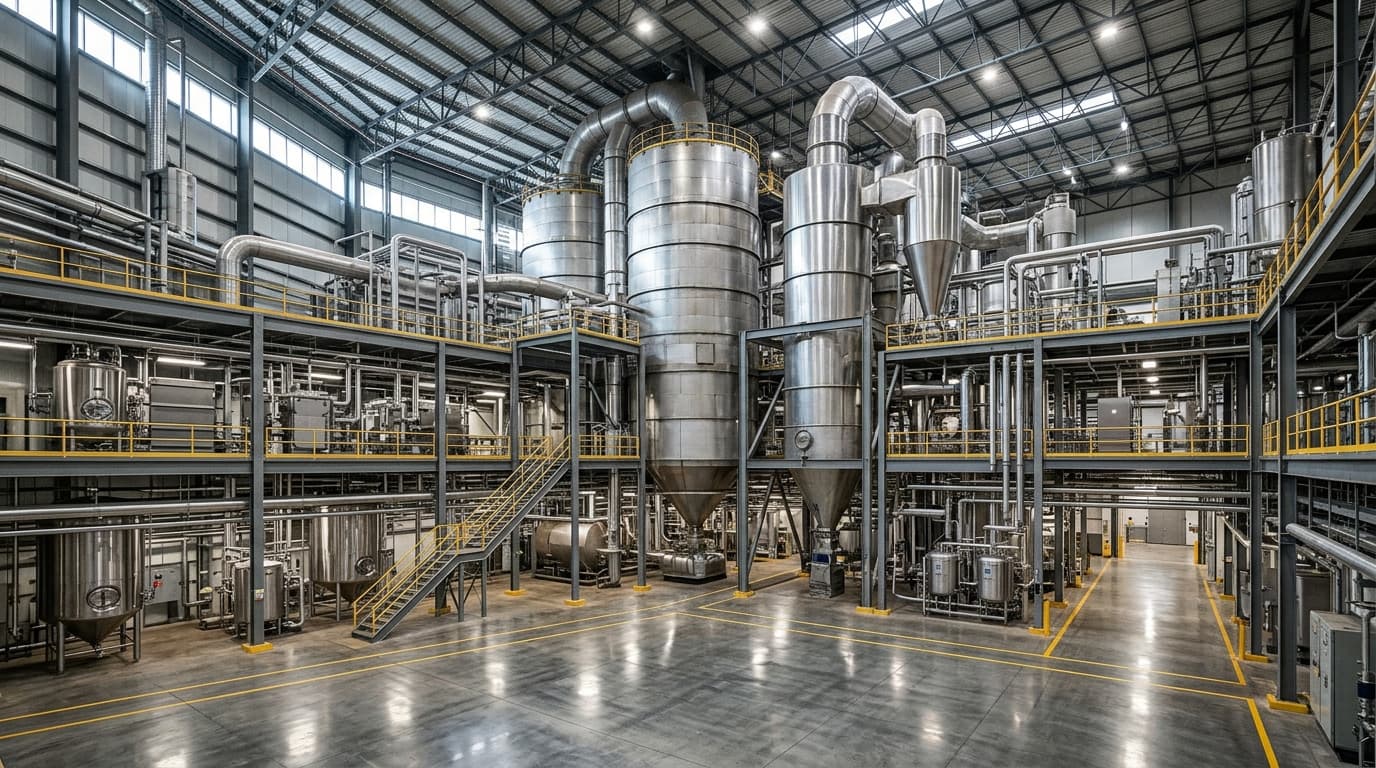
The feasibility study breaks the investment into three tiers: a small plant producing around 5,000 metric tons annually costs $15-25 million, a mid-sized facility handling 10,000-12,000 MT runs $30-50 million, and a large-scale operation at roughly 20,000 MT exceeds $60 million. Each tier adds layers of complexity, from basic spray dryers at the entry level to freeze-drying, agglomeration and effluent treatment systems at the top end.
Those cost differences are not simply about volume. Larger plants require aroma recovery systems and multiple extraction lines to preserve flavor consistency at scale, equipment that smaller producers can often skip entirely.
Instant Coffee's $60M Capacity Question
Where the Growth Is Concentrated
Asia-Pacific stands out as the fastest-growing region, with India, China and Southeast Asia cited as key drivers as urban populations expand and coffee becomes a daily habit rather than an occasional indulgence. India in particular has built a position as a global manufacturing and export hub, with value-added coffee products accounting for close to 38% of the country's total coffee shipments.
Trade policy is reinforcing that position. The India-EFTA Trade and Economic Partnership Agreement, in effect since October 1, 2025, grants zero-duty access for Indian coffee exports to Switzerland, Norway and Iceland, giving Indian producers a pricing edge in markets that already favor premium and freeze-dried formats. This mirrors a broader pattern across manufacturing sectors where export-oriented businesses are expanding their reach, a theme also evident in how companies like Austin agency Threshold made the 2026 Inc. 5000 through aggressive growth strategies.
North America and Europe, by contrast, are described as mature markets where growth now hinges on premiumization — freeze-dried variants and clean-label formulations rather than raw volume expansion. That split creates a two-speed global market: emerging economies adding new capacity to meet rising daily consumption, and developed economies competing on quality and sustainability credentials rather than price.
The wider implication is that instant coffee manufacturing is maturing into a segmented industry rather than a single global commodity play. Producers targeting Asia-Pacific face decisions about raw capacity and cost efficiency, while those serving North America and Europe must prioritize freeze-drying technology and sourcing transparency to compete on premium shelves. That divergence shapes which equipment tier — and which capital outlay — makes commercial sense for a given market. The feasibility study, drawn from IMARC Group's project report, frames these as the central variables determining whether a new plant proves viable over the next several years.
With global demand still expanding at a steady, if unspectacular, pace, the real competitive battleground appears to be regional: producers in Asia-Pacific racing to add capacity for a growing consumer base, and incumbents in mature markets defending margins through product innovation. Which strategy proves more profitable will likely depend on how quickly trade agreements and sustainability expectations reshape export flows over the coming decade.
Stay Ahead of the News
Get the latest business news and company spotlights delivered to your inbox. No spam, unsubscribe any time.