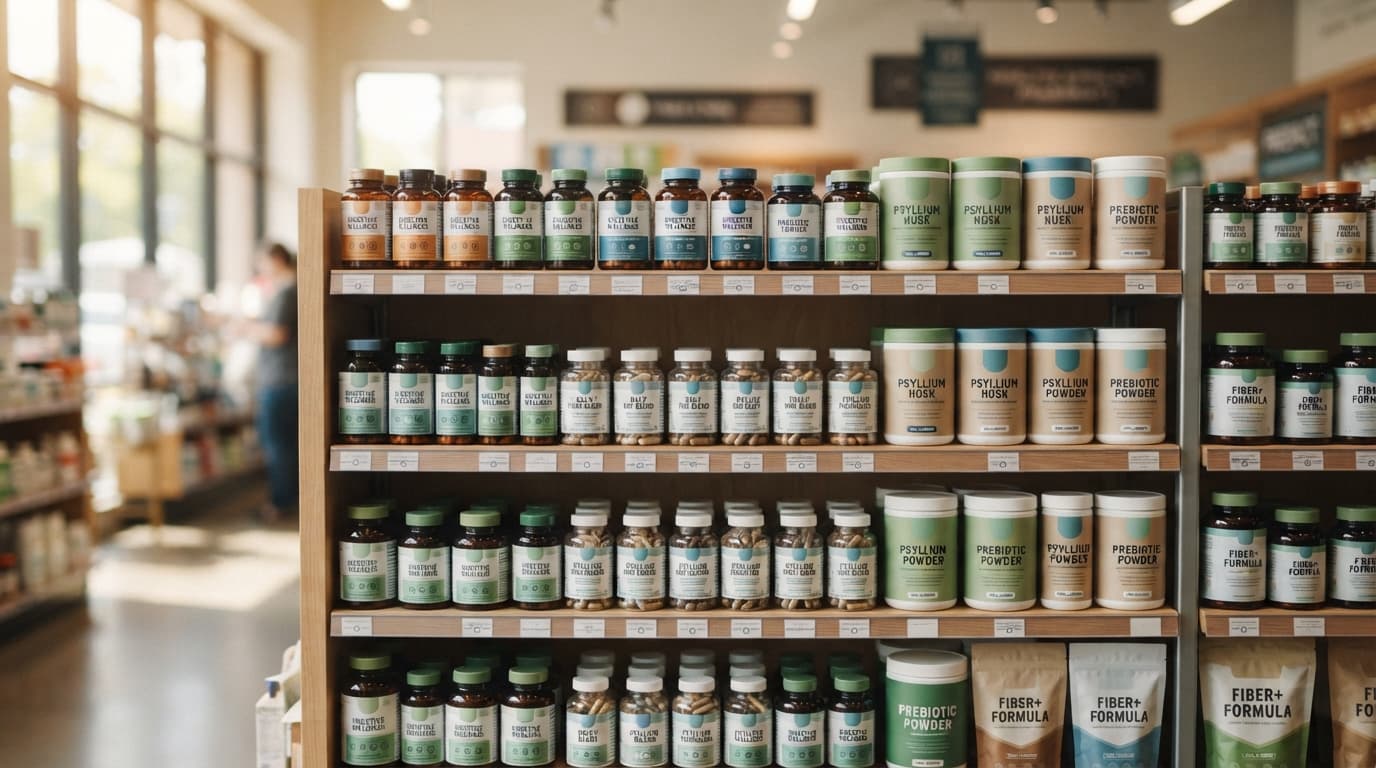
Global fiber supplements market projected to grow from $15.14 billion in 2025 to $21.45 billion by 2032, a 5.11% CAGR
Growth driven by digestive health awareness, clean-label demand, and expansion of e-commerce distribution
United States identified as leading market, with 80% of adults reportedly taking dietary supplements in 2021
The global appetite for digestive wellness is translating into hard numbers. New market research values the fiber supplements industry at $15.14 billion in 2025, with projections putting it at $21.45 billion by 2032 — a forecast that signals fiber has moved from a niche health-food category into a mainstream pillar of preventive nutrition worldwide.
From Niche Remedy to Mainstream Nutrition
Fiber supplementation was once associated narrowly with occasional digestive discomfort. That framing has shifted substantially, according to the analysis from Maximize Market Research, which links the projected 5.11% compound annual growth rate to broader consumer concerns spanning cholesterol management, blood sugar regulation, weight control, and heart health.
This diversification of use cases matters because it widens the addressable customer base well beyond consumers with specific gastrointestinal complaints. Fiber is increasingly marketed as a everyday nutritional add-on, positioned alongside probiotics, antioxidants and digestive enzymes rather than as a standalone remedy.
The research points to ingredients such as psyllium husk, inulin, guar gum, chicory root, resistant starch and beta-glucan as central to this repositioning. Manufacturers appear to be betting that formulation science, rather than price competition alone, will determine which brands capture the largest share of new demand.
Fiber Supplements Market Eyes $21B as Gut Health Booms
Distribution Shift Reshapes Competitive Dynamics
Perhaps the more consequential trend for industry watchers is not the ingredient mix but the distribution channel shift. The report identifies online retail as an increasingly important growth lever, particularly in China, India and Brazil, where digital platforms let brands reach consumers without depending on traditional pharmacy or supermarket shelf space.
That shift lowers barriers to entry for smaller or newer supplement brands that can build direct-to-consumer subscription models, but it also raises the stakes on marketing claims and label transparency, since digital buyers often compare formats and ingredient sourcing before purchase. Clean-label positioning — non-GMO, plant-based, gluten-free — is cited as a growing purchasing criterion rather than a marginal preference.
Regionally, the United States stands out, with the research from Maximize Market Research noting that 80% of U.S. adults took dietary supplements in 2021, underscoring an already saturated but still expanding base for fiber-specific products. Europe, including the United Kingdom, is described as part of a market where digestive health awareness continues to build, though the publicly available summary stops short of providing country-level growth percentages.
Taken together, the figures point to an industry maturing along two tracks simultaneously: deeper formulation science aimed at targeted health benefits, and broader distribution reach aimed at capturing price-sensitive, digitally native buyers in emerging markets. Whether growth reaches the projected $21.45 billion by 2032 will likely depend less on consumer appetite, which appears well established, and more on how effectively manufacturers navigate supply chains, regulatory labeling requirements, and rising competition from adjacent functional-nutrition categories such as probiotics and prebiotics.
Stay Ahead of the News
Get the latest business news and company spotlights delivered to your inbox. No spam, unsubscribe any time.