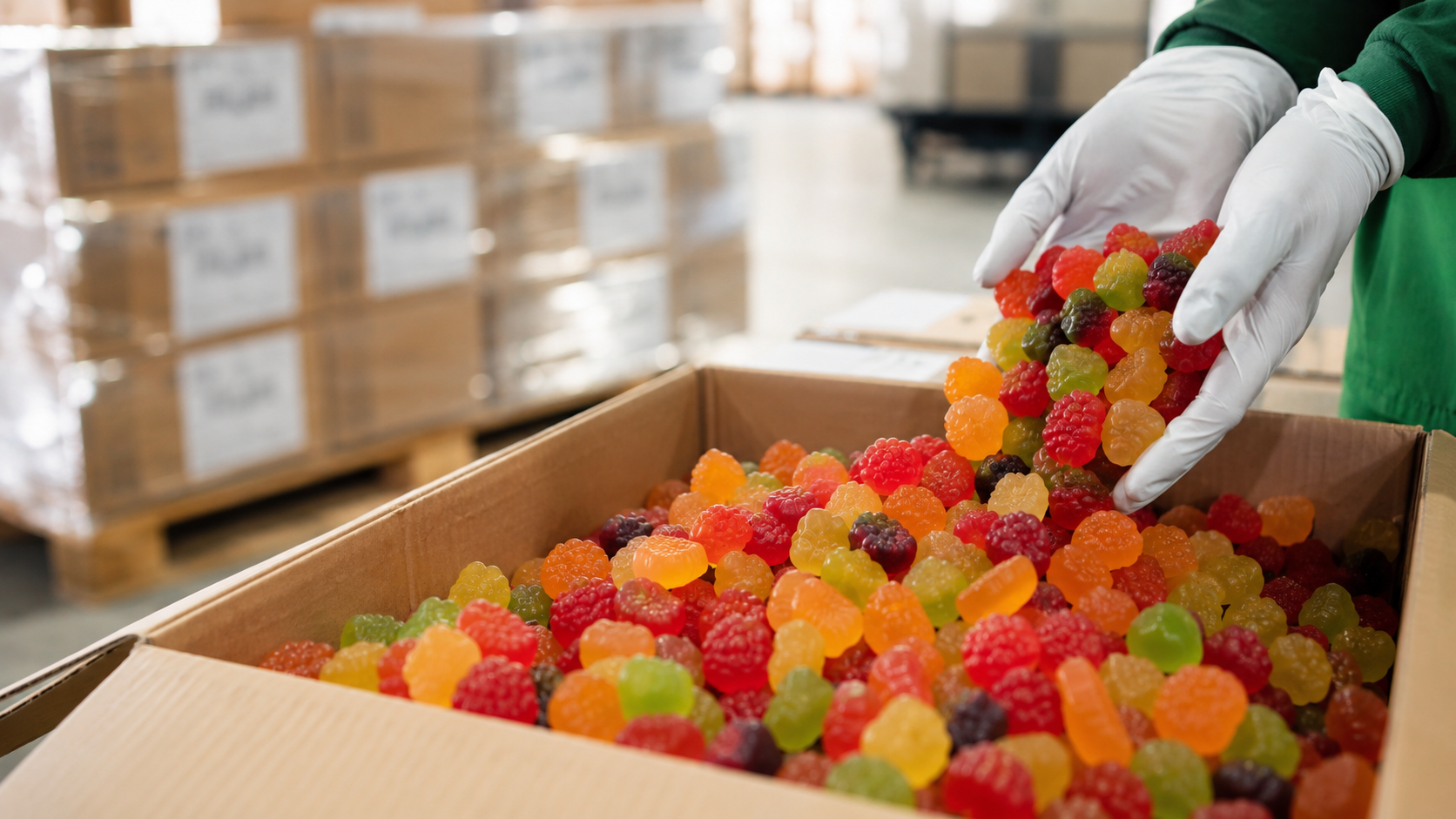
LITAFOOD, a China-based wholesale candy manufacturer, ties its halal and kosher certifications to a plant-based pectin formulation rather than bovine gelatin
The switch addresses a known weak point in halal confectionery: heat-sensitive gelatin that softens and deforms in hot climates
Gulf distributors are cited as reporting improved texture stability during shipping, pointing to certification as a competitive lever, not just a compliance box
Halal and kosher certification has long been treated as a paperwork exercise for confectionery exporters — a stamp obtained, then forgotten. LITAFOOD, a Nantong, China-based wholesale candy manufacturer, is positioning the opposite approach as its market differentiator, rebuilding its gummy formulation around plant-based gelling agents specifically to hold up in the hot, humid climates of key halal-consuming markets rather than merely satisfy an ingredient checklist.
Why Gelatin Has Been a Weak Link
Traditional gummy candy relies on bovine gelatin, a protein polymer that starts to denature between roughly 30°C and 35°C. In markets such as the Gulf Cooperation Council states, where ambient and warehouse temperatures routinely exceed that range, this has long produced sticky, deformed, or clumped product by the time it reaches retail shelves.
Gelatin's halal status is also inherently fragile, since it depends entirely on the animal source and slaughter method used, requiring exporters to document provenance at every step. Kosher certification adds a further layer of rabbinical oversight covering sourcing and contamination controls.
LITAFOOD says it has sidestepped both problems by shifting to high-methoxyl pectin and other plant-derived hydrocolloids, which form a heat-stable molecular network through hydrogen bonding rather than an animal-protein structure. The company describes running production under ISO-certified conditions with documented chain-of-custody tracking for every ingredient batch.
Halal Gummy Science Meets Gulf Demand Growth
What Distributors Are Reporting
According to the company, a distributor in Dubai has flagged the consistent texture of LITAFOOD's gummies through the supply chain, noting they resist the sweating and clumping issues common to lower-grade wholesale candy in transit. Whether that feedback generalizes across the broader GCC candy trade remains to be independently verified, but it reflects a real logistical pain point that importers in hot-climate markets have faced for years.
The company also points to water-activity management and osmotic-pressure balancing as tools to extend shelf life under extreme ambient conditions, technical claims that, if borne out at scale, would matter more to import buyers than certification labels alone. For food exporters generally, packaging and material science increasingly shape which products survive long shipping routes intact, a dynamic also visible in adjacent categories such as the PET syrup bottles market expansion now underway in beverage packaging.
The broader signal here is that halal and kosher certification in confectionery is shifting from a market-access requirement into a product-engineering problem. As halal-consumer populations grow and Gulf import volumes rise, suppliers who can demonstrate that their formulations survive real-world logistics — not just pass a certifying body's ingredient audit — stand to gain leverage with distributors wary of spoilage losses and returns. That reframes certification less as a compliance cost and more as a driver of formulation investment across the wholesale candy trade.
LITAFOOD's emphasis on thermal stability and documented sourcing illustrates a wider recalibration among confectionery exporters serving halal and kosher markets, where certification alone no longer guarantees a product's performance once it leaves the factory. Whether plant-based gelling agents become an industry standard, or remain a differentiator for suppliers willing to absorb the reformulation cost, will likely hinge on how consistently these claims hold up across independent distributor experience in the coming years.
Stay Ahead of the News
Get the latest business news and company spotlights delivered to your inbox. No spam, unsubscribe any time.