Click Below To Share & Ask AI to Summarize This Article
Save time and get the key takeaways instantly. Choose your favourite AI assistant to read and analyse this page for you.
At a Glance
- New AI-driven autonomous mobile robots target global logistics bottlenecks.
- Advanced mapping technology reduces collision risks in high-traffic facilities.
- Scalable automation solutions address persistent labor shortages in warehouses.
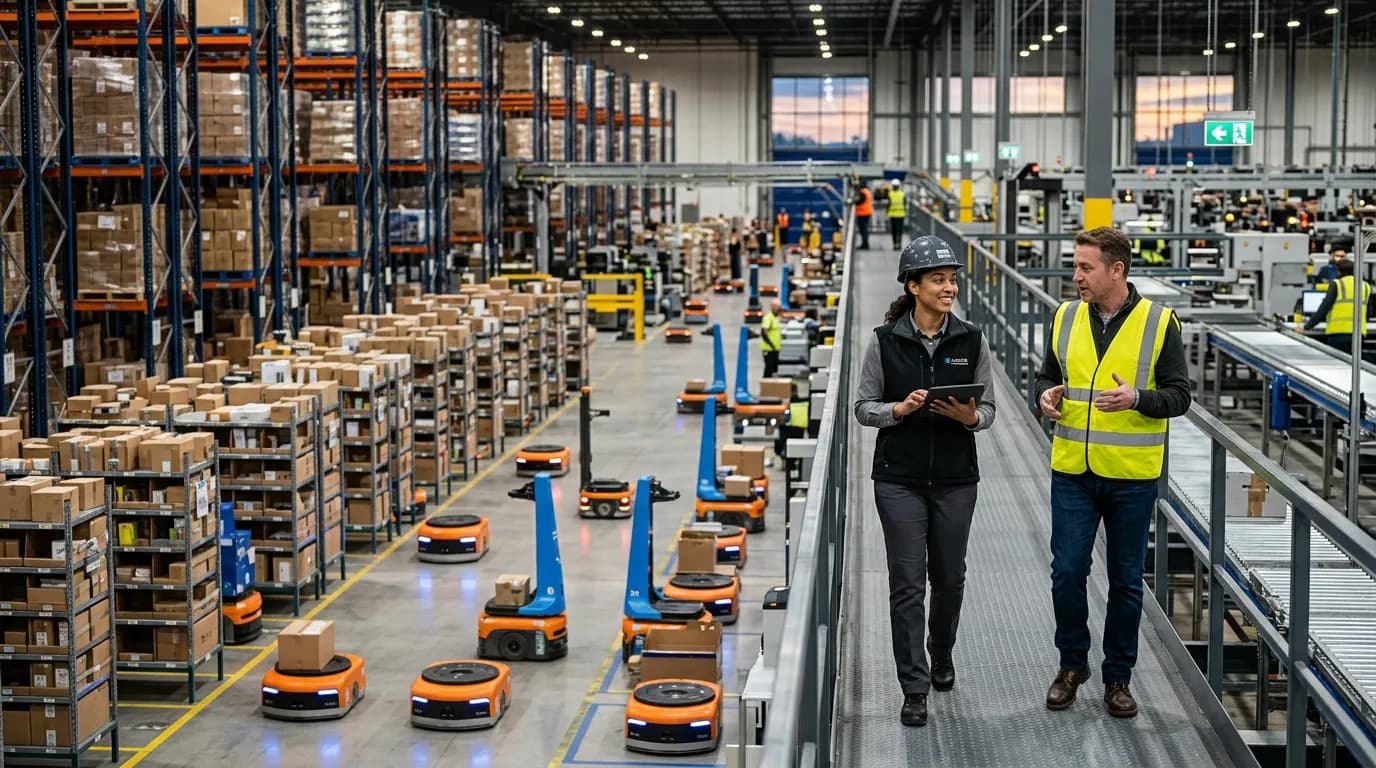
Dynamic Warehouse has officially announced the global expansion of its autonomous mobile robot fleet to meet the rising demands of modern logistics. These units utilize artificial intelligence to manage complex inventory movements without direct human intervention. The deployment aims to reduce operational costs while increasing the speed of order fulfillment across international distribution centers. By integrating advanced sensors and machine learning, the company provides a scalable solution for businesses facing increased e-commerce pressures and supply chain volatility.
Technical Integration and Operational Safety
The current generation of robots from Dynamic Warehouse uses sophisticated mapping technology to identify facility layouts in real-time. These machines detect both static and moving obstacles to prevent collisions and maintain a steady workflow. The system adjusts its pathing instantly based on warehouse traffic patterns to ensure maximum efficiency.
The fleet management software allows operators to monitor multiple units from a single digital interface. This centralized control ensures that tasks are assigned to the nearest available robot to minimize idle time. Data collected from these interactions helps managers identify potential improvements in the physical layout of the facility.
Safety protocols remain a primary focus for the hardware design of these autonomous units. Each robot includes emergency stop functions and 360-degree vision to protect human workers sharing the warehouse floor. These features allow for a collaborative environment where machines and people operate in proximity without safety risks or production delays.
"Our AI-powered AMRs are designed to solve the most pressing challenges in the logistics sector by providing reliable and adaptable automation."
— Marcus Thorne, CEO at Dynamic Warehouse
Addressing Global Logistics and Labor Challenges
The logistics industry currently faces significant pressure due to a shrinking labor pool and rising consumer expectations for fast delivery. Automated systems offer a way to maintain productivity levels during peak seasons without the need for extensive temporary hiring. These robots operate continuously, providing a predictable output that manual labor cannot always match during high-demand periods.
Scalability is a major advantage of the modular robot design offered by the company. Businesses can start with a small fleet and add units as their operations grow or during specific seasonal spikes. This flexibility prevents large upfront capital expenditures from becoming a barrier to modernization for smaller and mid-sized enterprises.
Environmental impact is also a significant factor in the adoption of these automated systems. The robots use energy-efficient motors and optimized routing to reduce the overall power consumption of the distribution facility. By decreasing the time spent on internal transport, warehouses can lower their carbon footprint while simultaneously improving their financial bottom line.
The expansion of AI-driven automation marks a significant shift in how global supply chains function on a daily basis. As more facilities adopt these technologies, the gap between traditional and automated operations will likely continue to widen. Dynamic Warehouse expects to maintain its growth by providing tools that adapt to the changing needs of the global marketplace. The focus remains on reliability and data-driven performance to ensure long-term stability for logistics providers worldwide.
Stay Ahead of the News
Get the latest business news and company spotlights delivered to your inbox. No spam, unsubscribe any time.
We respect your privacy. Unsubscribe at any time.