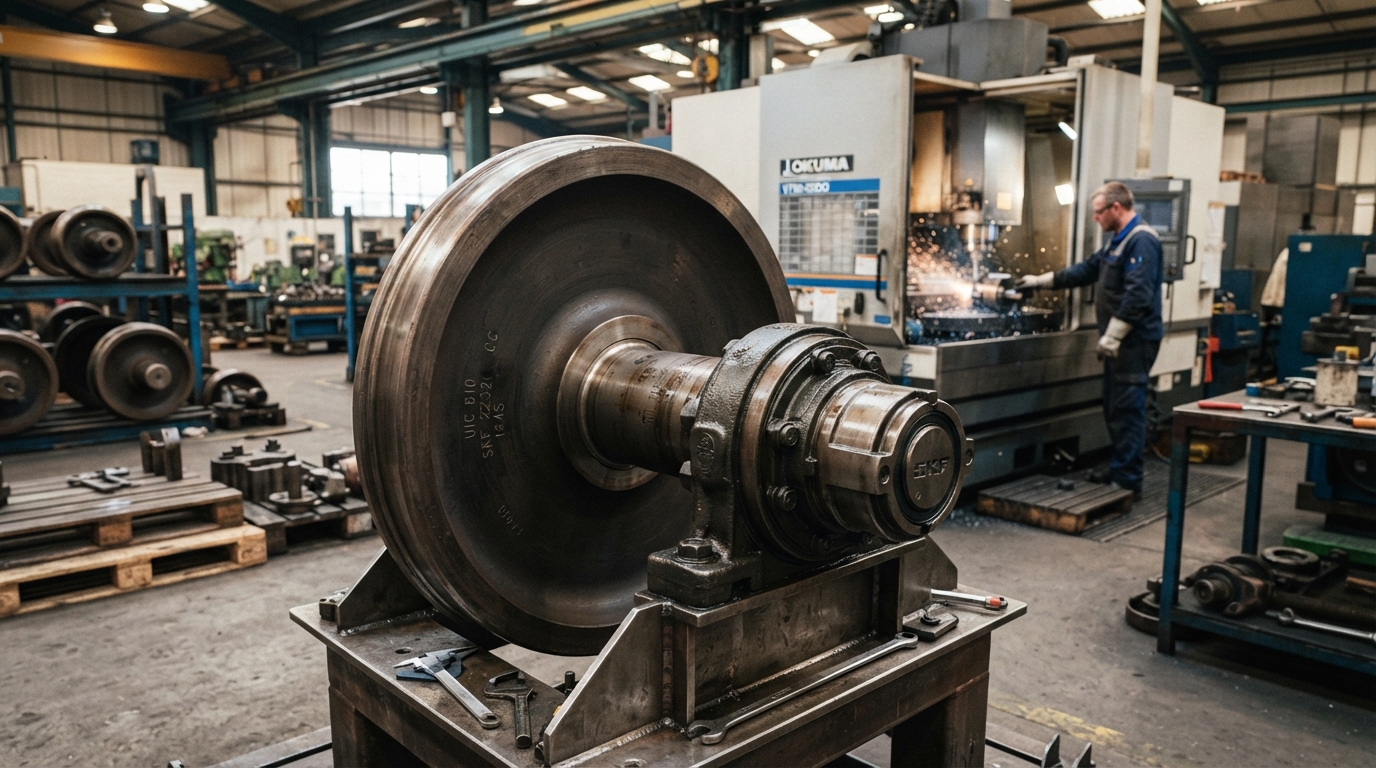
PSDrail displayed cast steel ride control bogies, self-steering bogies and Zk1 three-piece bogies at the Zhuzhou expo, alongside full AAR, ISO and EN certification records
The Hunan-based manufacturer positions itself as a single-source supplier, pairing bogie frames with wheelsets, bearings, springs and coupler systems built to multiple international standards
Products already reach more than 15 countries across four continents, reflecting how documentation-heavy procurement is reshaping supplier selection in global freight rail
At a rail transit trade show in Hunan province, a domestic bogie manufacturer used something other than steel to make its pitch to international buyers: paperwork. PSDrail, a Zhuzhou-headquartered producer of freight wagon running gear, exhibited its cast steel ride control bogies and related components at the 2025 Zhuzhou International Rail Transit Expo, but the more telling detail was what accompanied the hardware — dimensional inspection records, non-destructive testing reports and load verification data laid out for procurement teams to inspect on the spot.
Certification as a Competitive Tool
The expo, held at the Zhuzhou International Convention and Exhibition Center, drew over 400 exhibitors and buyers from North America, Europe, Southeast Asia and the CIS. Against that backdrop, PSDrail's decision to display AAR, ISO and EN certification documentation alongside its physical products speaks to a shift in how freight rail components are sold internationally.
Fleet operators and wagon lessors increasingly demand traceability that extends beyond a single purchase order, since bogie assemblies remain in service for years and require ongoing maintenance planning. PSDrail's three-stage inspection protocol — covering casting geometry, internal defect detection and structural load verification — applies whether an order covers 10 units or 100, according to the company.
That consistency matters more than it might first appear. In heavy-haul freight applications, undetected porosity or shrinkage in a cast bolster can initiate cracks under repeated cyclic loading, a failure mode that inspection regimes like this are specifically designed to catch before assemblies leave the factory.
China's Rail Bogie Makers Bet on Paper Trails
Why Documentation Speed Matters for Global Buyers
The broader significance lies in procurement timelines. Qualifying a new bogie supplier for a multi-year fleet program typically involves factory audits, sample testing and standards verification — a process that can stretch for months before a purchase order is even considered. By making certification records and factory audit documentation available at the booth, PSDrail is attempting to compress that front end of the sales cycle rather than compete purely on price or delivery speed.
This mirrors a pattern seen across manufacturing sectors more broadly, where operational rigor and documented readiness increasingly determine which suppliers advance to serious contract discussions. The analysis in Godex's operational readiness drive makes a similar point: companies that can prove process discipline before a deal is signed tend to shorten their own sales cycles relative to peers who rely on relationship-building alone.
For rail specifically, the range of standards cited — AAR Class B+, UIC 813, EN 13260, TB/T 1718, BS 5892-6 and AS 7517 among them — reflects a fragmented global market where wagon fleets built to different regional codes still need compatible running gear. A manufacturer that can document compliance across several standards simultaneously reduces the burden on buyers who might otherwise need separate suppliers for separate markets.
PSDrail also used the exhibition to present itself as a single-source option, combining bogie frames with wheelsets, bearings, suspension springs, friction wedges, brake shoes and coupler systems rather than components sourced piecemeal. Whether that consolidation appeals to buyers will likely depend on how much weight procurement teams place on reducing the number of suppliers they must separately audit, versus the negotiating leverage that comes from splitting orders across multiple vendors.
The expo itself underscores how Zhuzhou has positioned itself as a hub for China's rail equipment export ambitions, with thousands of procurement professionals reportedly attending across the three-day event. As global freight operators continue to weigh fleet renewal and expansion, the willingness of suppliers to open their quality records to scrutiny before a factory visit is likely to remain a differentiator in a market where trust, as much as price, still shapes who wins long-term contracts.
Stay Ahead of the News
Get the latest business news and company spotlights delivered to your inbox. No spam, unsubscribe any time.