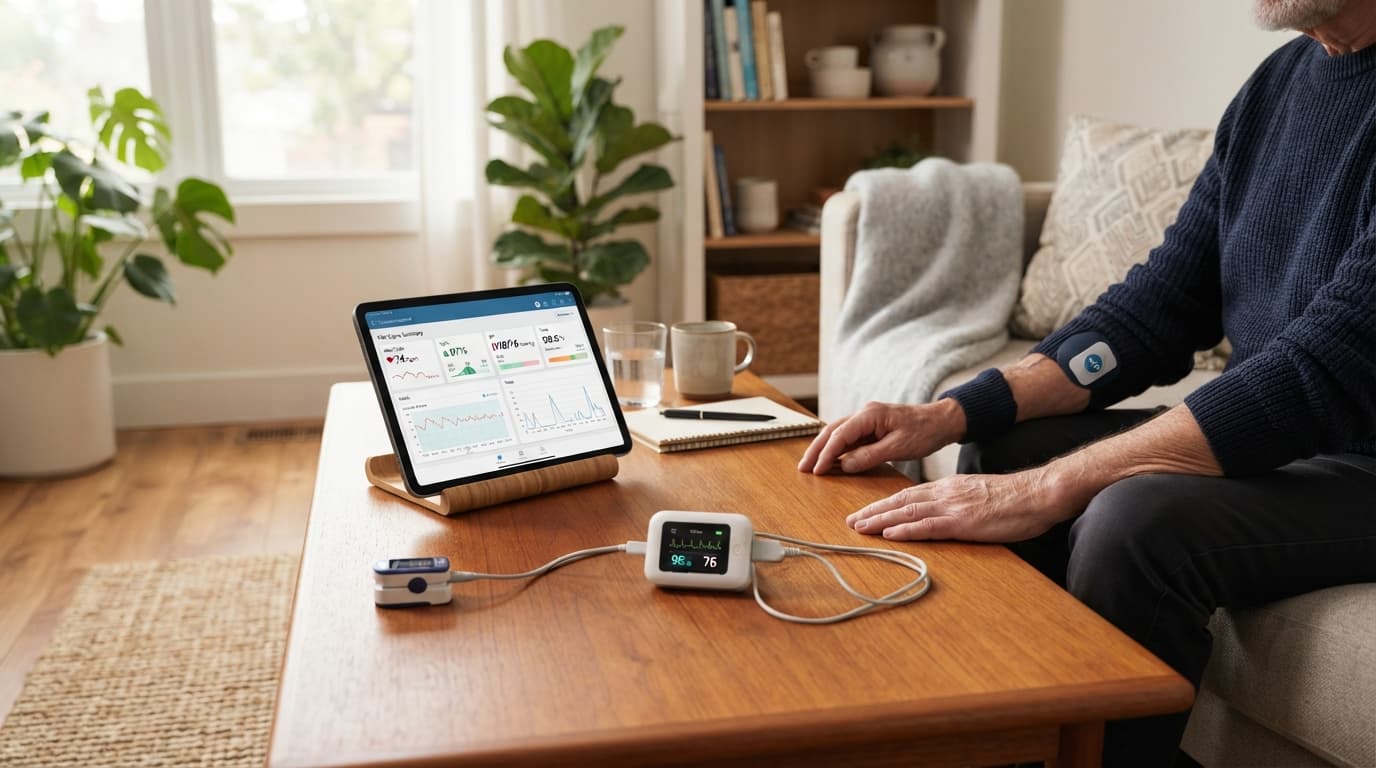
Vega Health and Baptist Health have partnered to embed AI tools into hospital-at-home programs
The collaboration aims to give clinicians real-time, actionable data on patients treated outside traditional hospital wards
The deal signals a broader industry shift toward AI-supported remote monitoring as health systems face capacity and cost pressures
Vega Health and Baptist Health have announced a partnership to deploy artificial intelligence tools within hospital-at-home programs, aiming to give clinical teams more immediate, actionable data on patients being treated outside conventional hospital settings. The companies describe the arrangement as the foundation for a longer-term collaboration rather than a single deployment, reflecting a wider push across healthcare to make remote patient monitoring more clinically useful, not just more widely available.
Why Hospital-at-Home Needs Smarter Data
Hospital-at-home models allow patients who would otherwise occupy an inpatient bed to receive acute-level care in their own residence, supported by remote monitoring devices, periodic clinician visits and telehealth check-ins. The approach gained significant traction during the COVID-19 pandemic, when hospitals needed to free up physical capacity, and many health systems have continued to expand these programs since.
The operational challenge has always been data volume without data clarity. Remote monitoring devices generate continuous streams of vital signs and other readings, but clinical staff overseeing multiple home-based patients need that information filtered into signals worth acting on, rather than raw numbers requiring constant manual review.
This is the gap Vega Health's technology is intended to address within Baptist Health's program, translating monitoring data into flagged, actionable insights for care teams. The stated goal is to help clinicians intervene earlier when a patient's condition changes, rather than relying solely on scheduled check-ins or patient-reported symptoms.
Baptist Health, a multi-hospital health system, is among a number of established providers that have built out hospital-at-home infrastructure in recent years as demand for acute care has outpaced physical bed capacity in many regions.
Hospital Care Goes Remote: AI Enters the Home
A Broader Industry Pattern
The partnership fits into a recognizable pattern across healthcare technology: vendors moving from selling monitoring hardware or dashboards toward selling interpretation layers built on AI. Hospitals have generally had no shortage of data from wearables, sensors and connected devices; the harder problem has been converting that data into decisions clinicians trust enough to act on.
This mirrors a dynamic playing out well beyond healthcare, where organizations across sectors are discovering that AI adoption succeeds or fails based on how well it is integrated into existing workflows rather than on the sophistication of the underlying model. A recent workforce strategy analysis examining AI integration in corporate settings noted that technology deployments tend to stall when organizations underinvest in the people and processes needed to use new tools effectively, a lesson that applies directly to clinical AI rollouts as well.
Health systems adopting AI-assisted monitoring also face questions that differ from typical enterprise software adoption: regulatory scrutiny, liability if an AI system misses or misflags a deterioration event, and the need for clinician trust built over time rather than assumed at launch. Framing this deal as a foundation for long-term collaboration, rather than a finished product rollout, suggests both companies are anticipating an iterative process of refinement based on real clinical use.
What Success Would Look Like
For a hospital-at-home program, the practical measures of success are fairly concrete: fewer missed deteriorations requiring emergency readmission, reduced clinician time spent reviewing low-value data, and patient outcomes comparable to or better than inpatient care. None of these outcomes have been independently verified for this specific partnership at this stage, since the arrangement has only just been announced.
The broader healthcare sector has been investing heavily in remote and connected care infrastructure, a trend that touches adjacent areas of the supply chain as well, from telehealth platforms to the logistics behind decentralized clinical supplies, an area covered in a related look at lab supply innovation addressing gaps in how hospitals source materials for dispersed care settings.
Whether this particular collaboration expands into other Baptist Health facilities, or whether Vega Health uses it as a reference deployment to pursue additional health system partners, will be the clearer test of its long-term significance. Announcements framed around "foundations" for collaboration are common in health tech, but the ones that matter are the ones followed by measurable expansion.
The Vega Health and Baptist Health partnership adds to a growing body of evidence that hospital-at-home care is moving from a pandemic-era stopgap toward a permanent fixture of acute care delivery, provided the underlying monitoring technology can keep pace with clinical demands. Its ultimate impact will depend less on the announcement itself than on whether the AI tools genuinely reduce risk and clinician burden once deployed at scale.
⭐
Business Spotlight
This article is a premium Business Spotlight feature — an in-depth profile with priority homepage placement. Contact us to be featured.
Stay Ahead of the News
Get the latest business news and company spotlights delivered to your inbox. No spam, unsubscribe any time.