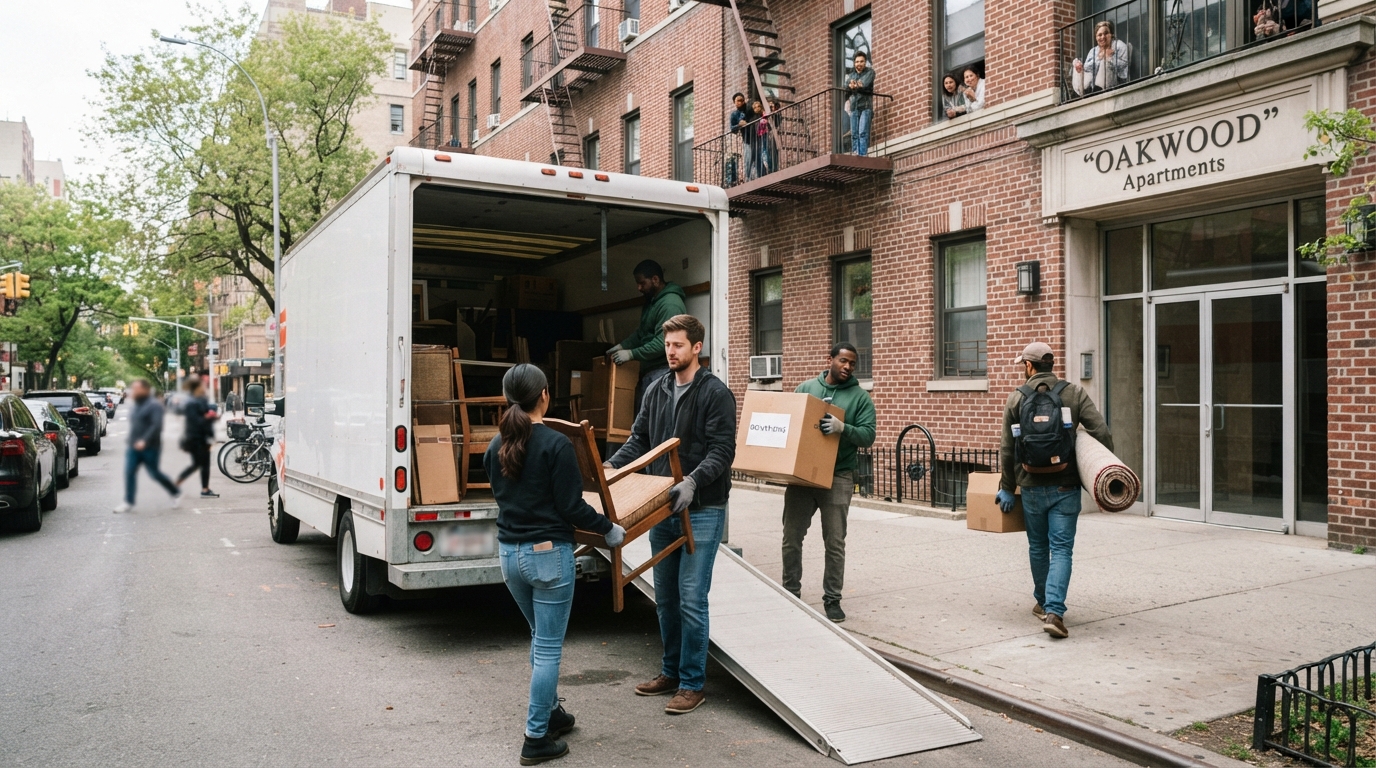
Humble Design Chicago has received a grant from the SBB Research Group Foundation to support its work furnishing homes for families leaving homelessness
The award reflects a broader shift in corporate philanthropy toward funding practical, wraparound services rather than one-time emergency aid
The grant arrives as furniture banks and home-setup charities face rising demand alongside strained housing and social-service budgets in many cities
Humble Design Chicago, a nonprofit that furnishes homes for families transitioning out of homelessness, has been awarded a grant from the SBB Research Group Foundation. The funding will support the organization's core service: transforming empty apartments into fully furnished homes for families and individuals moving from shelters, transitional housing, or crisis situations into permanent residences. The grant underscores a growing corporate interest in funding the practical, often overlooked final step of the housing-stability process.
Why Furnished Housing Matters
Securing a lease is frequently treated as the end point of a family's housing journey, but an empty apartment with no bed, no table, and no basic household goods can undermine that progress within weeks. Humble Design's model addresses this gap directly, pairing donated furniture and household items with volunteer-led interior design to create a livable home in a single day.
This approach has spread beyond its original Detroit base to cities including Chicago, Seattle, and several other metropolitan areas, reflecting recognition among housing advocates that stable housing requires more than four walls and a lease. Families rebuilding after homelessness, domestic violence, or displacement often have no financial cushion left for furniture, appliances, or linens after covering deposits and moving costs.
Social-service providers increasingly describe this stage as critical to preventing families from cycling back into housing instability. A bare apartment can also affect a family's sense of dignity and normalcy, particularly for children starting at a new school or adjusting to a new routine.
Grants like the one from SBB Research Group Foundation allow organizations such as Humble Design to expand capacity without relying solely on individual donors or seasonal fundraising campaigns.
Corporate Grant Puts Chicago Housing Charity to Test
A Shift in Corporate Philanthropy
The SBB Research Group Foundation operates as the philanthropic arm of SBB Research Group, a Chicago-based investment firm, and has directed funding toward a range of causes tied to education, health, and community stability. Its support for Humble Design Chicago fits a pattern seen across the financial and technology sectors, where firms are increasingly channeling philanthropic dollars into organizations with measurable, immediate impact on housing and basic needs rather than broad awareness campaigns.
This shift mirrors a wider trend documented by philanthropy researchers and covered extensively by outlets such as The Chronicle of Philanthropy, which has tracked donors moving away from unrestricted general giving toward funding specific, outcome-driven programs. For grant-making foundations tied to investment or research firms, this often means prioritizing nonprofits that can demonstrate a clear link between funding and tangible results, such as the number of homes furnished or families stabilized.
Corporate foundations also benefit reputationally from association with visible, community-based work, particularly in cities where housing affordability has become a persistent civic issue. For firms headquartered in or near the communities they fund, grants of this kind can double as a form of local engagement that extends beyond standard corporate social responsibility statements.
Funding Pressures Facing Housing Nonprofits
Nonprofits operating in the housing-support space have faced uneven funding in recent years, as government stimulus-era support has receded in many regions while need has not necessarily declined at the same pace. Organizations that rely on in-kind donations of furniture and household goods also face logistical costs tied to warehousing, transportation, and volunteer coordination that are not always covered by donated goods alone.
Grants earmarked for operational capacity, rather than program expansion alone, are therefore particularly valuable to organizations like Humble Design, which must maintain warehouse space, delivery logistics, and design staff or volunteers year-round. Without steady operational funding, even well-supported furniture donation pipelines can struggle to reach families in a timely way.
The Chicago chapter's ability to secure a dedicated foundation grant, rather than relying solely on peer-to-peer fundraising or one-time donation drives, suggests a maturing funding relationship between the nonprofit and corporate philanthropy in the region. It also signals to other potential funders that the organization's model has been vetted and deemed worth institutional support.
The grant to Humble Design Chicago is unlikely to resolve the broader funding gaps facing housing-support nonprofits, but it illustrates a targeted, growing form of corporate giving focused on the practical realities families face after leaving homelessness. As more foundations tied to financial and research firms look for measurable community impact, organizations offering concrete, replicable services such as home furnishing may find themselves increasingly attractive to funders seeking clear outcomes for their philanthropic dollars.
⭐
Business Spotlight
This article is a premium Business Spotlight feature — an in-depth profile with priority homepage placement. Contact us to be featured.
Stay Ahead of the News
Get the latest business news and company spotlights delivered to your inbox. No spam, unsubscribe any time.