
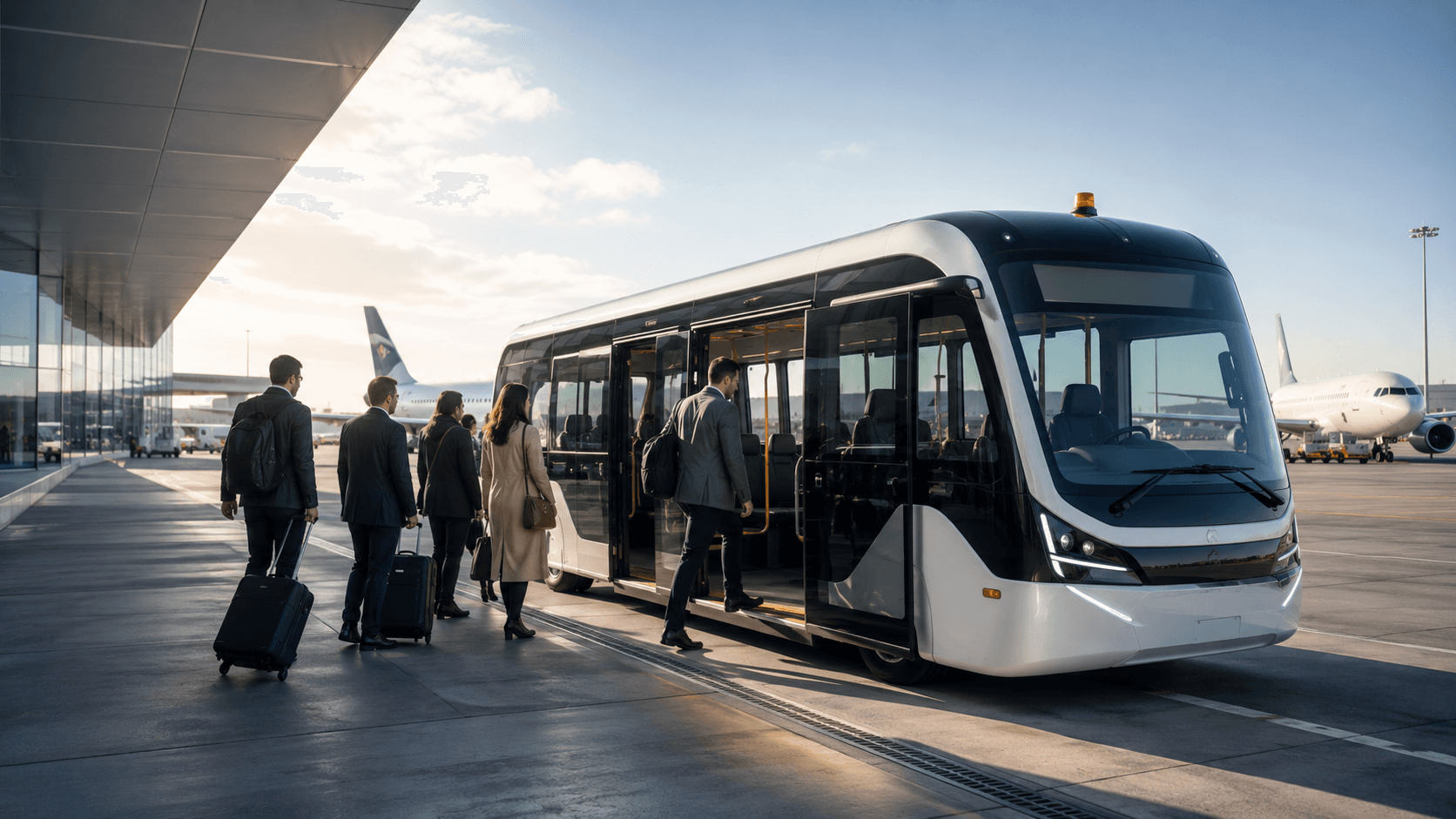
At a Glance
- Airport ground transport is shifting towards integrated digital solutions.
- Sustainability and shared mobility are driving operational changes.
- Regulatory evolution shapes competition and business models.
The global airport shuttle service market is undergoing a significant transformation, moving beyond traditional point-to-point transfers to become an integrated component of broader urban mobility networks. This evolution is driven by technological advancements, increasing demand for sustainable transport options, and a growing emphasis on efficient passenger experience. Operators are adapting business models to meet these new expectations, reflecting wider global economic shifts impacting transportation sectors worldwide.
Digital Integration and Operational Efficiency
Digital platforms are increasingly central to modern airport shuttle operations, enabling real-time booking, vehicle tracking, and dynamic routing. Mobile applications provide passengers with greater control and transparency, improving the overall travel experience. This digital shift supports more efficient resource allocation for service providers.
Data analytics now play a vital role in optimizing routes and predicting demand fluctuations. Operators use insights from passenger flow and flight schedules to adjust vehicle deployment, minimizing wait times and reducing operational costs. This data-driven approach enhances reliability and service consistency.
Furthermore, digital integration extends to payment systems, offering diverse and convenient transaction methods for international travelers. The adoption of cashless and contactless payment options simplifies the boarding process. These technological adaptations are setting new standards for ground transportation services at airports globally.

Sustainability and Electric Vehicle Adoption
A notable trend in the airport shuttle market is the accelerating transition towards electric and alternative fuel vehicles. This move aligns with global environmental goals and airports' commitments to reduce their carbon footprint. Many operators are investing in electric fleets to meet these sustainability objectives.
The expansion of charging infrastructure at airports and operator depots is a parallel development supporting this shift. Partnerships between airports, energy providers, and shuttle companies are becoming common to facilitate this transition. These investments reflect a long-term vision for greener ground transport.
Beyond environmental benefits, electric vehicles often present lower operating and maintenance costs over time. This economic advantage, coupled with a positive public perception, makes electrification an attractive strategy for many service providers. The drive for sustainability is reshaping procurement and operational strategies across the industry.
Shared Mobility and Intermodal Connectivity
The rise of shared mobility models, including ride-sharing, micro-mobility, and on-demand services, is profoundly influencing airport ground transportation. These services offer passengers flexible and cost-effective alternatives to traditional shuttles and taxis. Airports are increasingly integrating these options into their transport hubs.
Efforts to enhance intermodal connectivity are also gaining prominence. This involves linking airport shuttle services with wider public transportation networks, such as rail, metro, and bus systems. The goal is to provide a comprehensive and easily accessible transportation chain from origin to destination.
Such integration helps to alleviate traffic congestion around airport terminals and improves accessibility for a broader range of travelers. By offering diverse options, airports aim to improve passenger satisfaction and reduce the environmental impact of individual car journeys. This shift represents a move towards a more holistic approach to urban planning and airport access.
Evolving Regulatory Frameworks and Competition
The rapid changes in airport mobility are prompting the evolution of regulatory frameworks governing ground transport services. Authorities are working to balance fair competition, passenger safety, and operational efficiency across traditional and new service providers. This includes licensing for ride-hailing platforms and managing access to airport curbsides.
Competition in the airport shuttle market is intensifying with the entry of technology companies and the expansion of existing transport giants. Traditional shuttle operators are adapting by adopting new technologies and forming partnerships to remain competitive. This dynamic environment encourages service diversification and efficiency improvements.
Furthermore, discussions around autonomous vehicles (AVs) for airport transfers are advancing, albeit with significant regulatory and infrastructure considerations still to be addressed. The potential for AVs to further reshape ground transport remains a key area of future development. Stakeholders globally are examining the implications of these advancements.
The transformation of airport shuttle services reflects broader trends in urban mobility, emphasizing efficiency, environmental responsibility, and passenger-centric design. As technology continues to advance and urban environments evolve, the future of airport ground transportation will likely feature even greater integration, personalization, and sustainability. Operators and airports are collectively working to deliver a more connected and efficient travel experience for a global clientele.