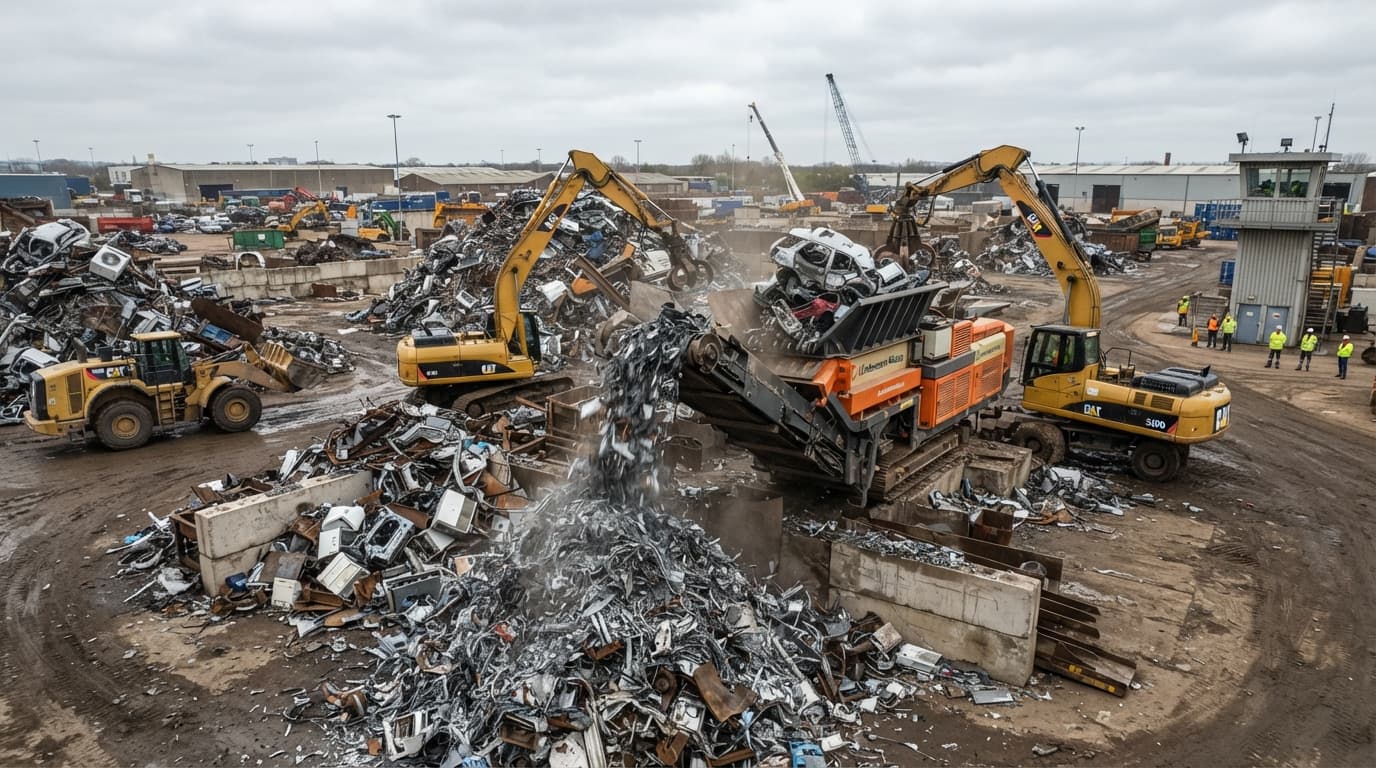
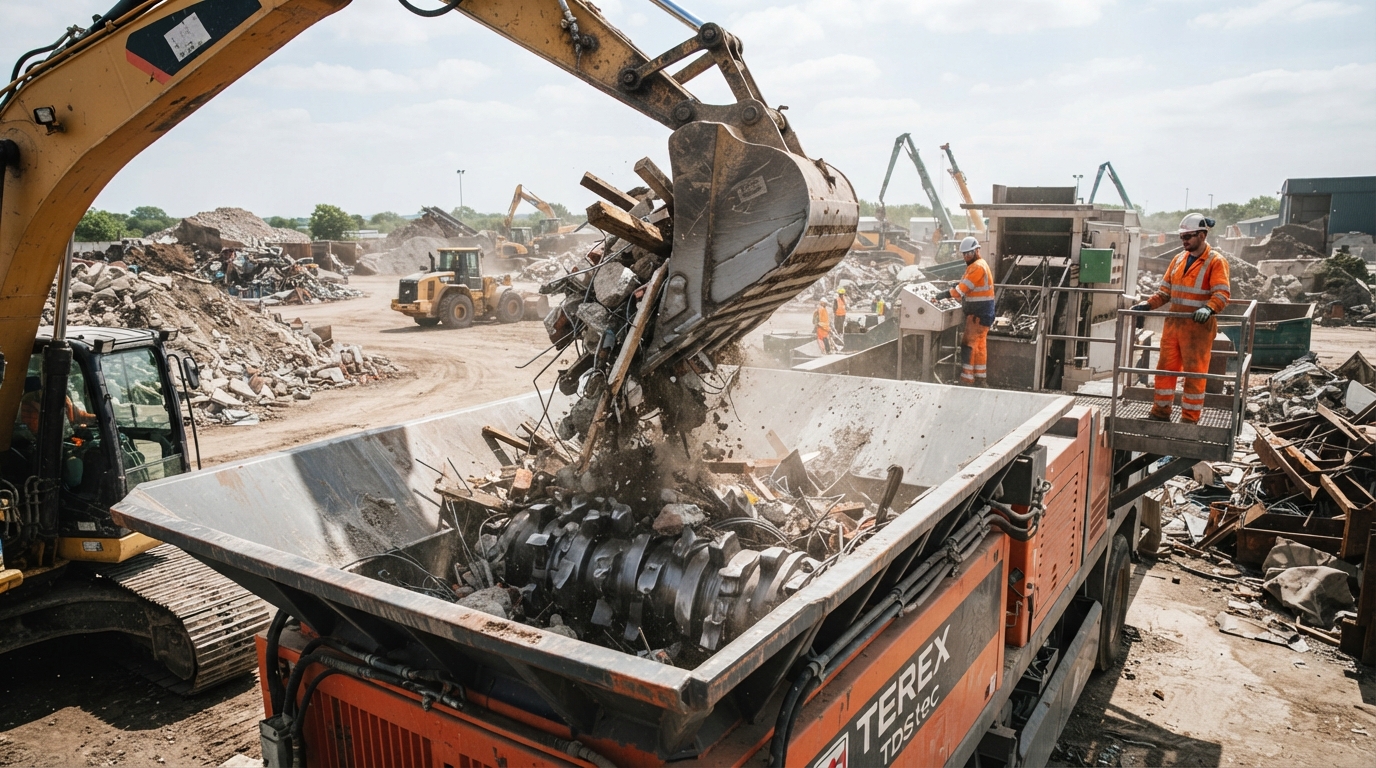
Market researchers project the hydraulic shredder sector will grow from roughly $9.72 billion in 2026 to $16.09 billion by 2035, a 6.5% annual growth rate
Recycling, construction and demolition, and e-waste processing are cited as the primary demand drivers behind the expansion
Asia-Pacific is positioned as the fastest-growing region, while North America and Europe focus on upgrading existing equipment to meet efficiency and safety standards
Demand for hydraulic shredders — heavy machinery used to break down waste, scrap metal and construction debris — is forecast to grow steadily over the next decade, according to a new industry report from Market Research Intellect. The study projects the market will expand from an estimated $9.72 billion in 2026 to $16.09 billion by 2035, a compound annual growth rate of 6.5%, as governments and industries face mounting pressure to process waste more efficiently and comply with tightening environmental rules.
Regulation and Recycling Push Adoption
The report attributes much of the projected growth to expanding recycling infrastructure and stricter environmental compliance requirements across industrial economies. Hydraulic shredders are increasingly deployed to process plastics, metals, wood and electronic waste, a broader materials range than earlier mechanical systems could handle reliably.
Construction and demolition is highlighted as a major secondary application, with hydraulic systems used to break down building materials and debris at scale. The report also points to growing use in emerging economies, where urbanization and infrastructure investment are creating fresh demand for industrial-grade waste processing equipment.
Manufacturers are said to be investing in automation, smart monitoring and energy-efficient hydraulic system designs to differentiate their equipment. These upgrades aim to reduce downtime and operating costs for large-volume waste processors, a priority as labor and maintenance expenses rise across the sector.
Waste Rules Reshape Industrial Shredder Demand
A Market That Reads Differently Depending on the Baseline
Notably, the same report cites a separate historical figure — a global market valuation of approximately $1.2 billion in 2023, growing at roughly 7% annually from 2018 to 2023. That figure sits well below the $9.72 billion starting point used for the 2026-2035 forecast, an inconsistency that is not unusual in market-sizing reports where scope, currency assumptions or segment definitions shift between historical and forward-looking sections.
For buyers and investors, the gap is a reminder that headline market-size figures in equipment forecasts can vary substantially depending on how "hydraulic shredder" is defined — whether the scope includes only standalone industrial units or also captures integrated recycling-line systems and regional aftermarket services. The direction of travel described in the report, sustained growth tied to recycling mandates and industrial modernization, aligns with broader trends already visible in adjacent sectors, including the kind of automation adoption seen as AI tools take root in property management and other asset-heavy industries seeking efficiency gains through smart monitoring.
High upfront capital costs, the report notes, remain a persistent barrier to adoption, particularly for smaller recycling and demolition operators. Supply chain volatility affecting raw material prices for hydraulic components could also weigh on manufacturers' margins even as end-market demand strengthens.
Overall, the report points to a market shaped less by any single breakthrough technology than by regulatory pressure and infrastructure investment accumulating across multiple regions. Whether the market reaches the report's higher-end 2035 valuation will likely depend on how quickly Asia-Pacific economies scale recycling capacity, and whether mature markets in North America and Europe replace aging equipment fast enough to meet updated safety and efficiency standards.
Stay Ahead of the News
Get the latest business news and company spotlights delivered to your inbox. No spam, unsubscribe any time.