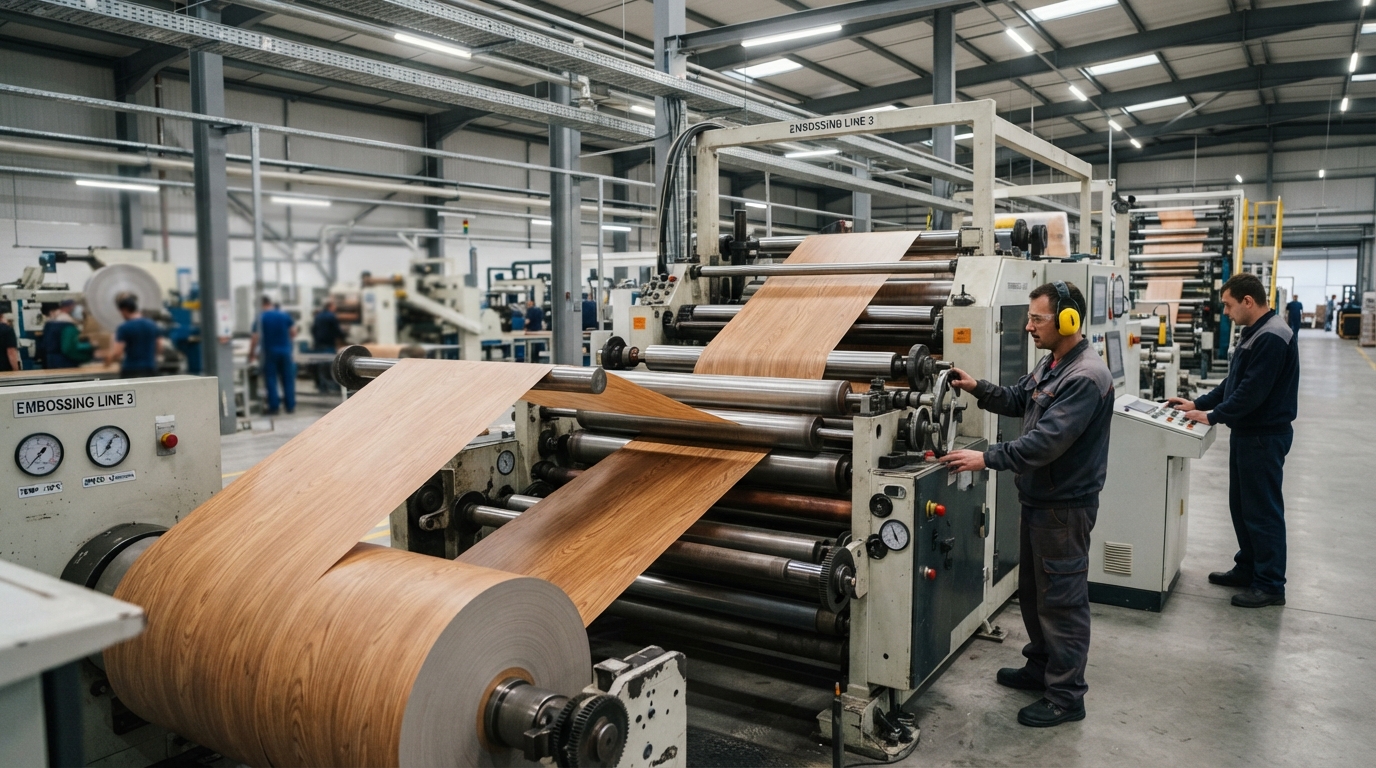
Shandong New Stone links gravure printing with embossing to align SPC vinyl flooring texture with visual pattern
The manufacturer runs a dedicated EIR SPC flooring line so buyers can verify specifications before mass production
Move reflects broader construction-materials push to replicate natural wood and stone finishes at industrial volume
A Chinese flooring manufacturer is betting that procurement teams buying synthetic wood and stone floors care as much about verifiable consistency as they do about looks. Shandong New Stone New Material Co., Ltd. has built its stone-plastic composite (SPC) vinyl flooring around a production sequence that ties printed decor patterns directly to physical surface texture, aiming to solve a persistent problem in resilient flooring: convincing commercial buyers that a factory-made plank can match natural materials batch after batch.
Why Texture-to-Print Alignment Matters
Vinyl and SPC flooring has long struggled with a credibility gap. Printed wood or stone patterns often sit beneath embossed surfaces that do not correspond to the image, producing a flat or artificial feel underfoot even when the visual layer looks convincing from a distance.
The company's approach, known as EIR (embossed-in-register) synchronous pattern matching, is designed to close that gap by mapping physical ridges and depressions to the printed grain lines beneath them. It has organized this into a standalone EIR SPC flooring category rather than treating it as an optional upgrade, giving buyers a defined product line to evaluate.
Behind the visual layer sits gravure printing, a process the company uses to fix color and pattern targets digitally before large-scale runs begin. That digitization matters commercially: it lets a distributor or brand order the same oak or marble finish across multiple shipments without relying on the unpredictability that comes from sourcing genuine wood or stone veneers.
For international buyers managing multi-country rollouts, that predictability can reduce the risk of visual mismatches between early samples and later production batches, a recurring headache in cross-border flooring procurement.
Vinyl Flooring Chases Authenticity at Factory Scale
Structural Fundamentals Behind the Surface
Surface realism is only part of the commercial equation. The company builds its decorative layers onto a stone-plastic composite core paired with an anti-scratch wear layer, positioning the visual pattern, wear layer thickness, and click-lock installation system as elements of a single specification rather than separate purchasing decisions.
That framing addresses a known procurement pitfall: selecting flooring primarily on color or texture while underweighting wear-layer grade or core stability, decisions that surface later as maintenance costs in high-traffic commercial settings such as offices, retail spaces, or hospitality venues.
The manufacturer also offers color calibration and physical sample development services, intended to catch discrepancies between an approved sample and mass-produced output before large orders ship. This kind of factory-level quality control mirrors practices seen elsewhere in industrial manufacturing, where paper trails and reference samples increasingly substitute for on-site inspection, a dynamic also visible in sectors like China's rail bogie manufacturing, where documentation has become a competitive differentiator.
The broader signal here is less about a single product line and more about where flooring manufacturing is heading. As commercial construction and renovation markets demand faster turnaround and predictable finishes across large projects, manufacturers that can document color accuracy, texture alignment, and structural specifications in one system stand to gain an edge over suppliers offering aesthetics without verifiable process controls. Whether EIR synchronous matching becomes an industry baseline or remains a differentiator will likely depend on how quickly competitors replicate the approach and how consistently it performs across large-volume orders. Shandong New Stone New Material Co., Ltd. positions itself as one of several manufacturers testing that proposition, offering its SPC vinyl flooring line as a case study in linking design intent to production discipline.
Stay Ahead of the News
Get the latest business news and company spotlights delivered to your inbox. No spam, unsubscribe any time.