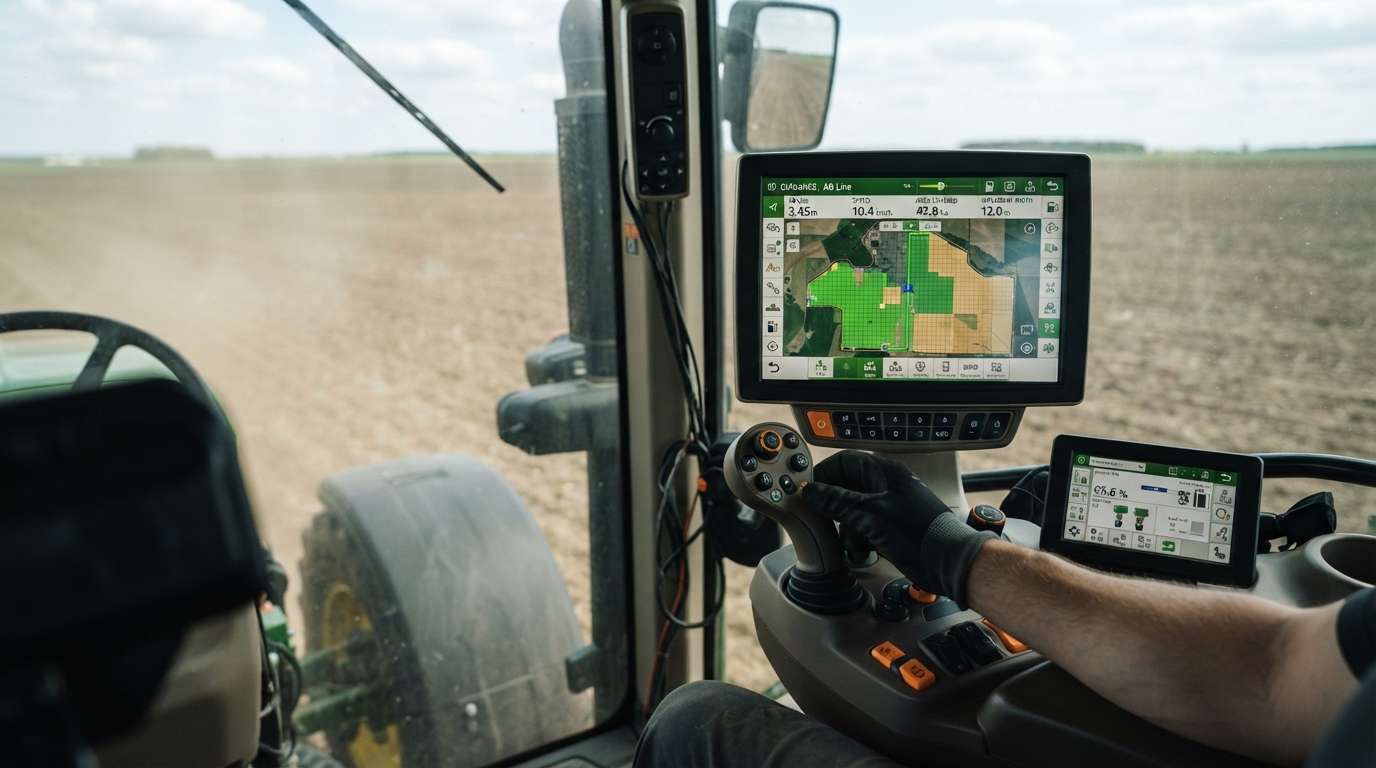
Manufacturers of fertilizing and plant protection machinery are shifting toward precision, data-enabled systems as farms face labor shortages and tighter environmental rules
Growth is being driven by rising global food demand, climate-related regulation, and consolidation among equipment producers expanding into digital agriculture
Smaller manufacturers and farmers in developing regions face affordability and infrastructure barriers that could slow adoption despite strong demand signals
Equipment makers that build sprayers, spreaders, and dosing systems for fertilizer and crop protection are increasingly repositioning themselves as technology companies rather than pure machinery suppliers. The shift reflects a broader transformation across agricultural supply chains, where precision application, sensor integration, and data analytics are becoming standard features rather than premium add-ons. Analysts tracking the sector point to a convergence of regulatory pressure, labor constraints, and food security concerns as the forces reshaping demand for this once-utilitarian category of farm equipment.
From Bulk Application to Targeted Dosing
For decades, fertilizing and plant protection equipment operated on a simple principle: apply inputs uniformly across a field and adjust only between seasons. That approach is losing favor as input costs rise and regulators scrutinize nutrient runoff and pesticide drift more closely.
Variable-rate technology, which adjusts fertilizer or chemical output in real time based on soil sensors, satellite imagery, or yield maps, has moved from pilot projects on large commercial farms toward broader commercial availability. Equipment makers are bundling GPS guidance, automated boom controls, and cloud-based record keeping into machines that once relied entirely on manual calibration.
This transition mirrors what has already occurred in other sectors exposed to tightening environmental oversight, where compliance costs have become a catalyst for technology upgrades rather than a drag on investment. The Food and Agriculture Organization has repeatedly flagged the need to produce more food with fewer resource inputs, a framing that equipment manufacturers are increasingly using in their own marketing and product development.
Still, the pace of adoption varies sharply by region and farm size, with large-scale operations in North America, Europe, and parts of Latin America moving fastest.
Farm Equipment Makers Bet Big on Precision Tech
Consolidation and the Rise of Platform Manufacturers
The equipment sector has seen a steady wave of mergers and partnerships as traditional machinery builders acquire software firms, sensor developers, and data analytics startups. Rather than competing solely on mechanical reliability, manufacturers are now positioning themselves around integrated platforms that combine hardware with subscription-based software services.
This mirrors a pattern visible across other capital-intensive industries, where incumbent manufacturers absorb smaller technology specialists to avoid being displaced by them. The strategy carries risk: integrating disparate software systems with legacy mechanical lines has proven costly and slow for some firms, and farmers have in some cases resisted proprietary data arrangements that lock them into a single vendor's ecosystem.
Sustainability-linked investment is also shaping capital flows into the sector, echoing dynamics seen in municipal and corporate finance where environmental, social, and governance criteria increasingly influence where money goes. That dynamic, visible in areas as varied as the municipal ESG investment trend, is now extending into agricultural machinery as lenders and institutional investors favor equipment makers with credible emissions and input-reduction claims.
Smaller regional manufacturers, meanwhile, face pressure to either scale up through partnerships or specialize in niche applications where larger platform providers have less presence.
Barriers Facing Broader Adoption
Despite the optimistic framing around precision equipment, affordability remains a genuine obstacle, particularly for smallholder farmers in lower-income regions who account for a substantial share of global crop production. Advanced sprayers and spreaders with integrated sensors carry significantly higher upfront costs than conventional equipment, and financing options are not uniformly available.
Infrastructure gaps compound the challenge. Variable-rate and data-driven systems depend on reliable connectivity, satellite positioning accuracy, and access to agronomic data services that remain inconsistent outside major agricultural economies.
Equipment makers have responded with tiered product lines, offering simplified versions of precision tools aimed at cost-sensitive markets, though it remains unclear how quickly these stripped-down offerings will close the adoption gap. Industry participants also note that training and after-sales support, rather than the machinery itself, often determine whether new equipment is used to its full capability once it reaches the field.
The fertilizing and plant protection equipment sector is moving away from its traditional identity as a mechanical commodity business and toward one defined by data, compliance, and service contracts. That shift brings genuine efficiency gains and aligns with broader pressure to reduce agriculture's environmental footprint, but it also risks widening the gap between well-capitalized commercial farms and smaller operations unable to afford the transition. How manufacturers address affordability and infrastructure constraints will likely determine whether precision technology becomes a universal standard or remains concentrated among the largest agricultural producers.
⭐
Business Spotlight
This article is a premium Business Spotlight feature — an in-depth profile with priority homepage placement. Contact us to be featured.
Stay Ahead of the News
Get the latest business news and company spotlights delivered to your inbox. No spam, unsubscribe any time.