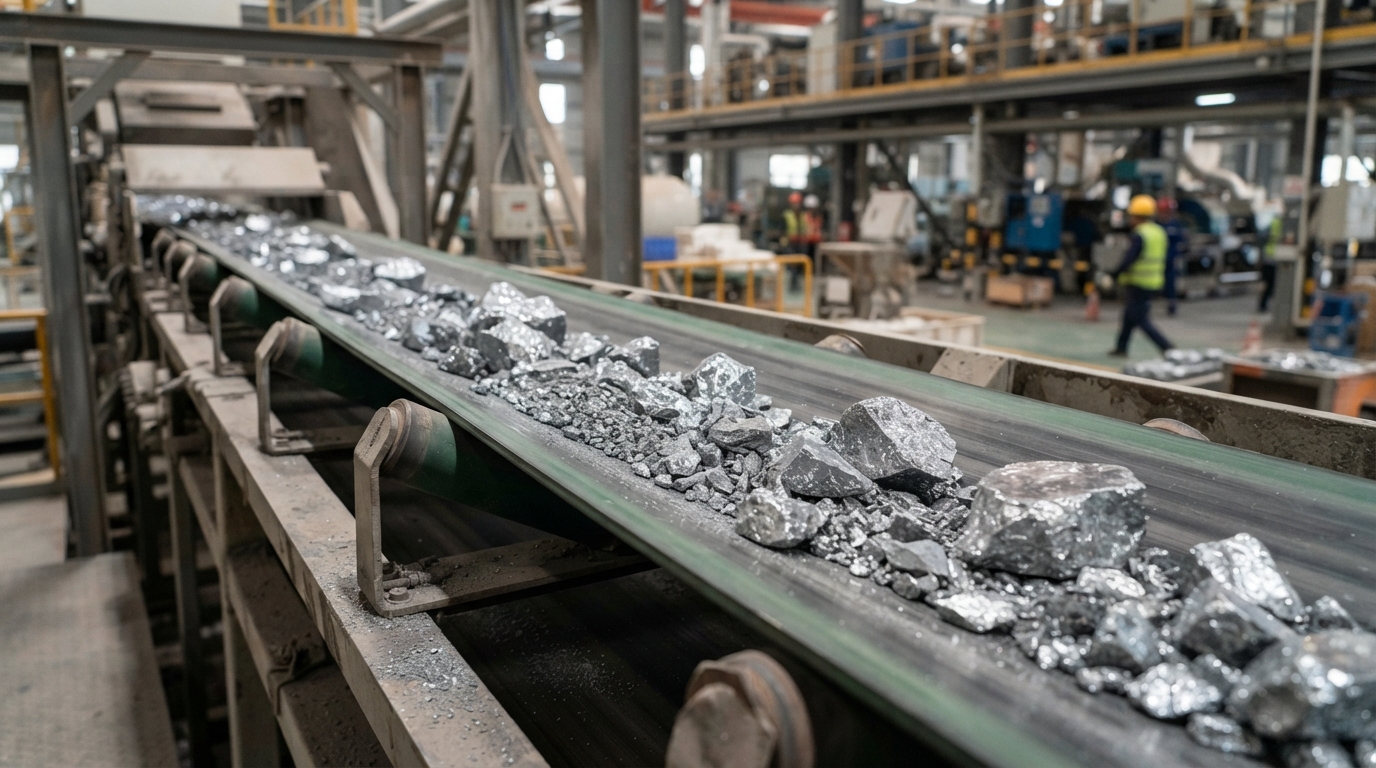
IMARC Group has published a detailed project report outlining setup costs, machinery needs and ROI projections for new polysilicon plants
Global polysilicon market valued at $12.91 billion in 2025, projected to reach $26.46 billion by 2034 at an 8.30% CAGR
Solar photovoltaics account for roughly 91% of polysilicon demand, tying the material's fortunes tightly to renewable energy expansion
A new project report detailing the true cost of building a polysilicon plant lands at a pivotal moment for the solar and semiconductor supply chains, both of which depend entirely on this single, highly purified material. IMARC Group's Detailed Project Report, released this week, breaks down setup costs, machinery requirements, feasibility studies and return-on-investment projections for facilities producing between 5,000 and 20,000 metric tonnes annually. The timing reflects a broader scramble among materials companies and investors to secure feedstock as global solar installations continue setting records.
Why Production Costs Are So Hard to Pin Down
Unlike many industrial commodities, polysilicon does not have a standard build cost that applies across markets. The report identifies deposition technology as the single biggest variable, contrasting the Siemens process, built around rod-based chemical vapor deposition reactors, with fluidized bed reactor systems that use continuous granular deposition instead.
Each route carries a distinct capital and energy profile, and plant location further complicates any generic benchmark. Energy costs matter more here than in most manufacturing sectors because the core production stages, including trichlorosilane synthesis, distillation and chemical vapor deposition, are extremely energy-intensive.
That energy dependency explains why polysilicon manufacturing has historically clustered in a small number of countries with cheap, reliable power. IMARC Group's report argues that only a location-specific feasibility study, rather than an industry-wide average, can produce a workable investment figure for a new plant.
Polysilicon Cost Guide Signals Solar Supply Squeeze
A Market Riding the Energy Transition
The scale of the underlying market helps explain the current wave of investment activity. IMARC Group values the global polysilicon market at $12.91 billion in 2025 and projects growth to $26.46 billion by 2034, an 8.30% compound annual growth rate. Solar PV alone accounts for approximately 91% of global polysilicon demand, according to the report, making the material a direct proxy for the pace of the renewable energy buildout.
New capacity is already emerging outside the traditional manufacturing centres. The report references United Solar Holding's newly operational facility at Oman's Sohar Freezone, described as the largest solar manufacturing plant in the region, suggesting producers are actively diversifying geographically to reduce concentration risk and shorten supply lines to fast-growing solar markets. That kind of geographic diversification mirrors a wider pattern across industrial sectors, where companies are rethinking where capital-intensive plants get built as governments compete to attract clean-energy manufacturing, a dynamic also visible in the push toward the green industry pivot toward sustainable production seen in other specialty chemical markets.
For investors, the appeal is straightforward: demand is structurally supported by climate policy and electronics growth, but the barriers to entry, namely capital intensity, energy access and process expertise, remain high enough to limit new entrants. That combination tends to reward established players and well-capitalized newcomers over speculative ventures, and it explains why detailed feasibility work, of the kind IMARC Group is offering, has become a prerequisite rather than an optional step for anyone weighing a plant of this scale.
Polysilicon's dual role as feedstock for both solar panels and semiconductors places it at the intersection of two of the fastest-growing industrial demand stories of the decade. Whether new capacity in regions like the Middle East can meaningfully diversify a supply base long concentrated elsewhere will depend on execution, energy costs and continued policy support for clean energy infrastructure. Investors weighing new plants now have a clearer cost framework, but the underlying economics remain sensitive to location and technology choice.
Stay Ahead of the News
Get the latest business news and company spotlights delivered to your inbox. No spam, unsubscribe any time.