Global hydrolyzed vegetable protein market projected to grow from $3.41 billion in 2025 to $5.08 billion by 2033, a 5.0% CAGR
Ten companies, led by Ajinomoto, Kerry Group, ADM and Cargill, control roughly 95% of the market
Asia-Pacific tipped as fastest-growing region as North America retains its dominant position
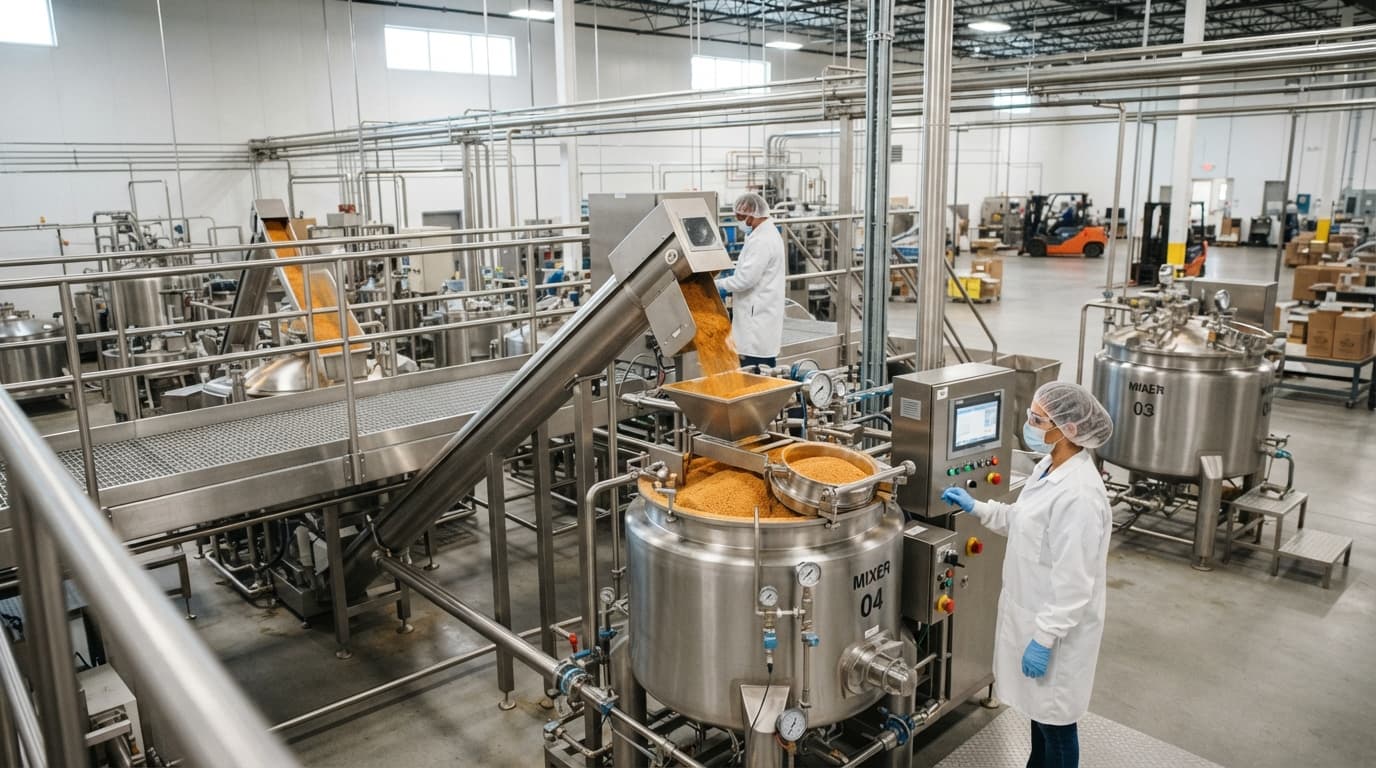
A market long treated as an industrial afterthought — the savory flavor booster hidden in soups, seasonings and snack foods — is now attracting serious investment attention. New research values the global hydrolyzed vegetable protein market at $3.41 billion in 2025, with growth to $5.08 billion by 2033 as food manufacturers race to replace synthetic additives with plant-derived alternatives that satisfy clean-label demands.
Concentration Among a Small Group of Suppliers
What stands out in the data is how tightly held this market already is. Ajinomoto Co. leads with an 18.4% share, followed by Kerry Group at 15.7%, ADM at 15.2% and Cargill at 13.4% — meaning four companies alone account for nearly two-thirds of global supply.
Tate & Lyle and Griffith Foods round out the mid-tier with 8.0% and 7.6% shares respectively, while smaller specialists such as Aipu Food Industry, Titan Biotech, Roquette Frères and DSM each hold around 4-5%. Collectively, the ten named players control roughly 95% of the market, leaving only a sliver — under 5% — for the remaining field that includes Givaudan, Sensient Technologies, Symrise, Ingredion, Angel Yeast, CHS Inc. and MGP Ingredients.
That degree of concentration is unusual for an ingredient category positioned as a growth story. It suggests that scaling hydrolyzed protein production, whether from soy, wheat, corn or pea sources, still demands the kind of capital, sourcing networks and food-safety infrastructure that only large agricultural and flavor conglomerates can readily deploy.
Plant Protein Flavor Market Consolidates Fast
Where the Growth Is Actually Coming From
North America remains the largest regional market, but the data point most likely to interest investors and manufacturers is Asia-Pacific's status as the fastest-growing region. China and India are cited as key markets where food producers are increasing use of soy, wheat and corn-based hydrolysates for savory flavor enhancement, reflecting the broader shift of processed-food manufacturing capacity toward Asia over the past decade.
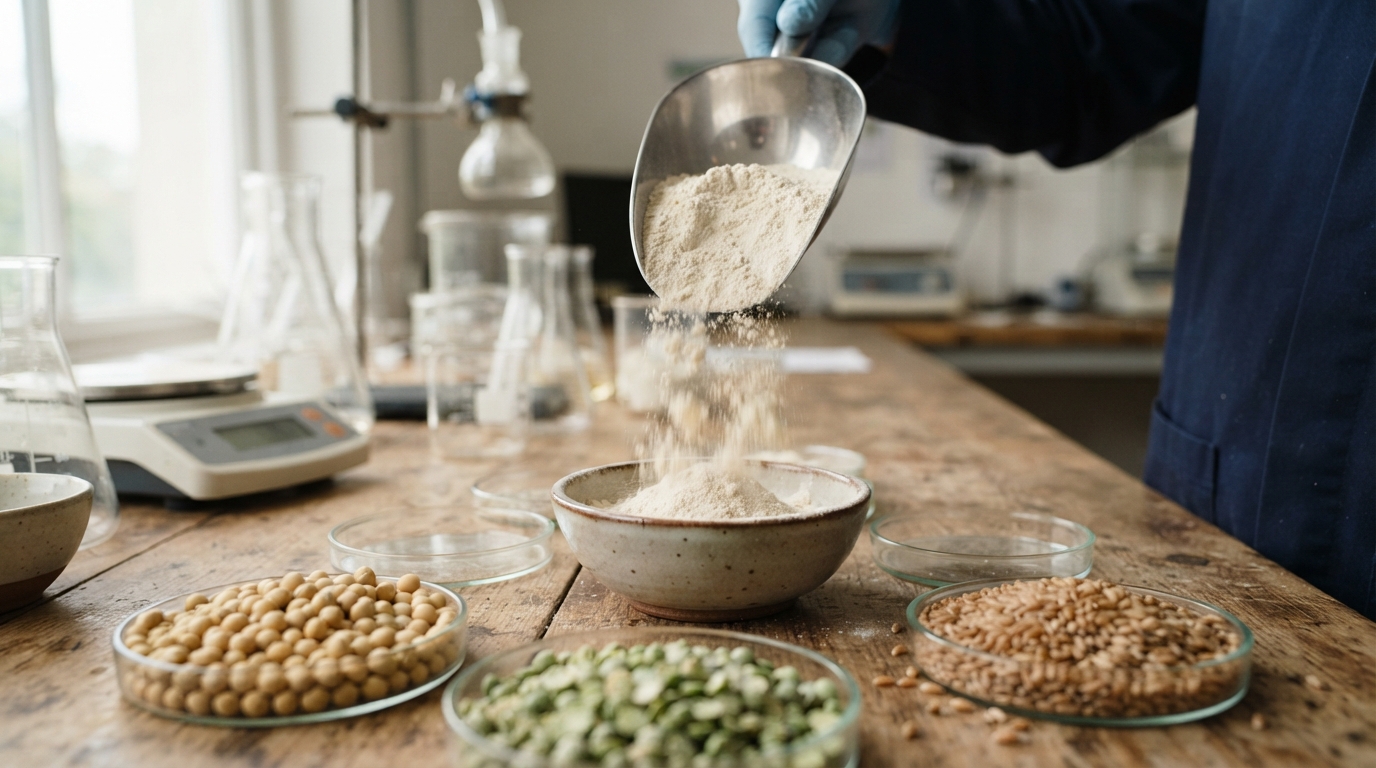
Product innovation is also moving beyond traditional soy and wheat sources. PURIS introduced ClearP, a hydrolyzed pea protein aimed at beverage formulations, part of a wider industry push toward pulse-based proteins that offer better solubility and taste in liquid applications such as protein drinks and plant-based meat alternatives.
Regulatory and consumer pressure around sodium reduction, allergen labeling and non-GMO sourcing is also reshaping formulation priorities. Companies including Ajinomoto, Cargill, Tate & Lyle, Glanbia, Fuji Oil and Roquette have all been named as strengthening plant-protein portfolios in response, a pattern consistent with broader food-industry moves toward ingredient transparency seen across adjacent categories such as material substitution trends in other manufacturing sectors facing similar reformulation pressures.
The hydrolyzed vegetable protein market's growth trajectory looks steady rather than spectacular, with a 5.0% CAGR reflecting incremental adoption rather than explosive demand. Its real significance lies in what it reveals about processed-food supply chains: a handful of established ingredient giants are consolidating control over the building blocks of savory flavor even as smaller innovators push into adjacent categories like pea protein and plant-based beverages. Whether that concentration persists through 2033 will depend on how quickly newer entrants can scale production to match incumbent capacity.
Stay Ahead of the News
Get the latest business news and company spotlights delivered to your inbox. No spam, unsubscribe any time.