Forecasts point to the global sharing economy reaching $752.8 billion by 2030, extending a decade-long shift from ownership to access
Growth is increasingly driven by business-to-business asset sharing and specialized verticals, not just consumer ride-hailing or lodging apps
Regulatory scrutiny, insurance gaps, and platform consolidation remain the biggest constraints on the sector's projected trajectory
New market projections putting the global sharing economy on track to hit $752.8 billion by 2030 confirm what industry watchers have suspected for years: the model built by early platforms like Airbnb and Uber has outgrown its consumer-facing roots and is now reshaping how businesses, cities, and individuals think about access to underused assets. The figure is less a surprise than a confirmation that renting, swapping, and pooling resources has become a permanent fixture of the global economy rather than a passing pandemic-era or gig-economy trend.
From Ride-Hailing to Everything-as-a-Service
The sharing economy's first wave was defined by a handful of household names solving narrow problems: spare bedrooms, idle cars, unused parking spots. That phase proved the concept could scale, but it also concentrated attention on a small number of consumer verticals while obscuring how broadly the underlying logic could travel.
Analysts now tracking the sector toward $752.8 billion describe a market that has diversified into equipment rental, coworking space, fashion resale, tool libraries, and peer-to-peer storage, among other categories. Each of these niches follows the same basic arithmetic: idle capacity has a cost, and a platform that can match that capacity with demand captures value that would otherwise sit unused.
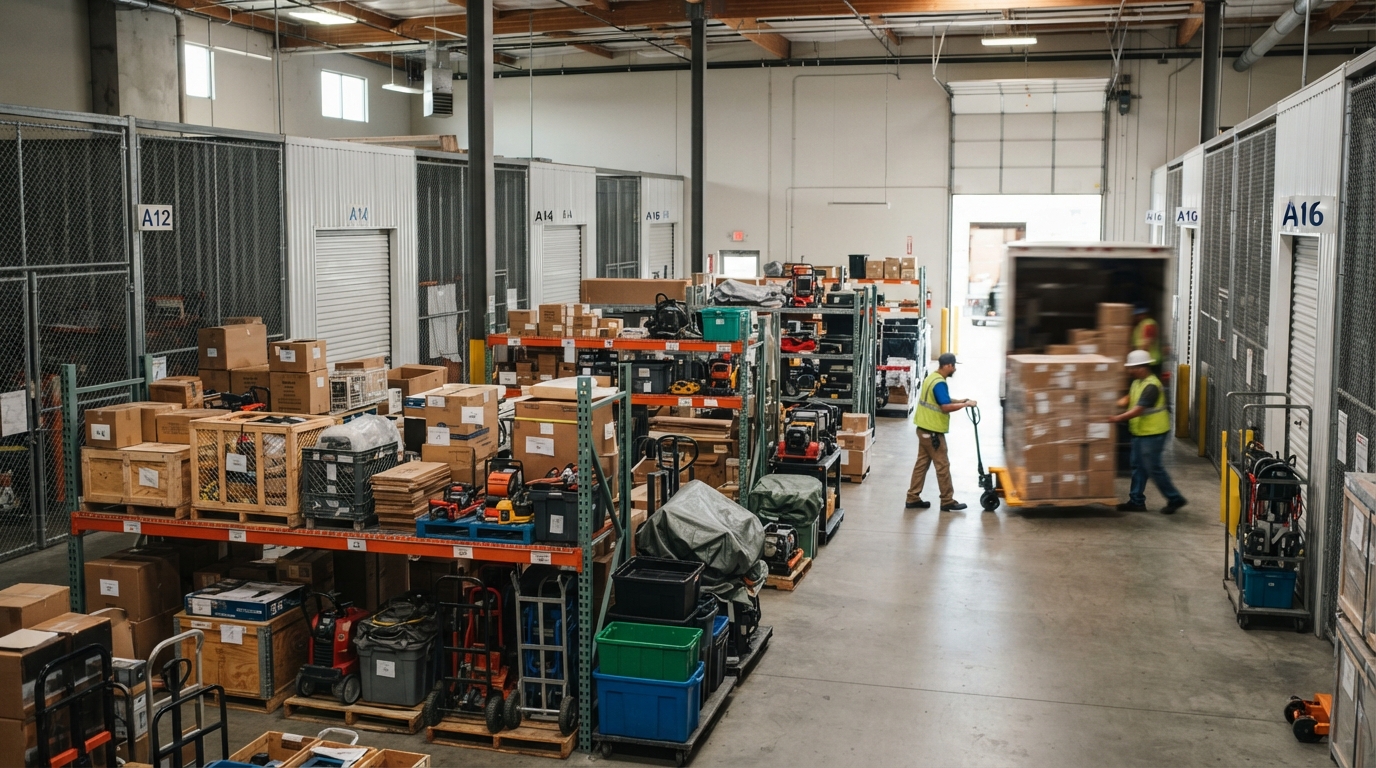
That logic extends well beyond individual consumers. Small businesses increasingly rent machinery, warehouse space, or specialized software seats rather than buying outright, a pattern that mirrors the broader move toward flexible, storage-driven infrastructure investment seen in projects such as DXD Capital's storage facility development on Nantucket, where demand for accessible, on-demand space has outpaced traditional ownership models.
Travel and hospitality remain a proving ground for this shift as well, with loyalty programs and booking platforms experimenting with ways to blend traditional stays with shared or flexible arrangements, a dynamic visible in efforts like Hotels.com's push to extend rewards to business travelers.
Sharing Economy's Next Act: Assets, Not Apps
Why the Growth Curve Is Bending Toward B2B
The most consequential change in the sharing economy over the past several years has not been a new killer app but a quiet migration of the model into business supply chains. Equipment-sharing marketplaces for construction firms, logistics operators pooling warehouse capacity, and manufacturers renting specialized tooling all apply the same peer-to-peer matching principle that once seemed confined to spare rooms and cars.
This matters because business-to-business sharing arrangements tend to be stickier and less exposed to the regulatory battles that have dogged consumer platforms in ride-hailing and short-term rentals. A logistics company sharing warehouse space with another firm is not subject to the same municipal zoning fights that have constrained platforms like Airbnb in major cities. The PwC research on the sharing economy that first popularized long-range growth forecasts for the sector noted this structural advantage years ago, and it appears to be playing out as B2B categories now account for a growing share of overall market expansion.
Investors have taken notice. Venture funding that once flowed almost exclusively toward consumer mobility and lodging apps has broadened into industrial and professional-services sharing platforms, a rotation that mirrors how capital has moved into adjacent asset-light business models across other sectors, including alternative wealth and roll-up strategies such as those seen in regional wealth management consolidation.
The Friction Points That Could Slow the Trajectory
Despite the scale of the projected growth, the sharing economy has never expanded in a straight line, and there is little reason to expect that pattern to change through 2030. Insurance frameworks in many jurisdictions still struggle to cleanly cover assets that move between commercial and personal use within the same day, leaving both platforms and users exposed to liability gaps that traditional ownership models do not create.
Regulation remains the second major variable. Cities and national governments have taken sharply different approaches to short-term rentals, ride-hailing, and gig labor classification, and that patchwork shows no sign of resolving into a single global standard. Platforms operating across borders must therefore build compliance costs into growth projections that press releases and market forecasts often understate.
Consolidation is the third factor worth watching. As sharing platforms mature, smaller regional players are increasingly acquired or squeezed out by better-capitalized global operators, a dynamic already visible in adjacent digital-infrastructure markets where scale advantages compound quickly, similarly to how streaming and content infrastructure firms are positioning themselves as micro-content formats expand, as detailed in coverage of TikTok-style infrastructure demands entering Hollywood's micro-drama push. Fewer, larger platforms could mean the $752.8 billion figure is reached, but with less competitive diversity than the current market suggests.
The path to $752.8 billion by 2030 looks less like a single consumer trend accelerating and more like a structural realignment of how businesses and individuals value access over ownership across dozens of asset categories. That broadening base gives the forecast more credibility than earlier sharing-economy projections tied narrowly to ride-hailing or lodging. Whether the sector reaches that figure on schedule will depend heavily on how regulators, insurers, and consolidating platforms resolve the frictions that have already reshaped the market once before.
⭐
Business Spotlight
This article is a premium Business Spotlight feature — an in-depth profile with priority homepage placement. Contact us to be featured.
Stay Ahead of the News
Get the latest business news and company spotlights delivered to your inbox. No spam, unsubscribe any time.