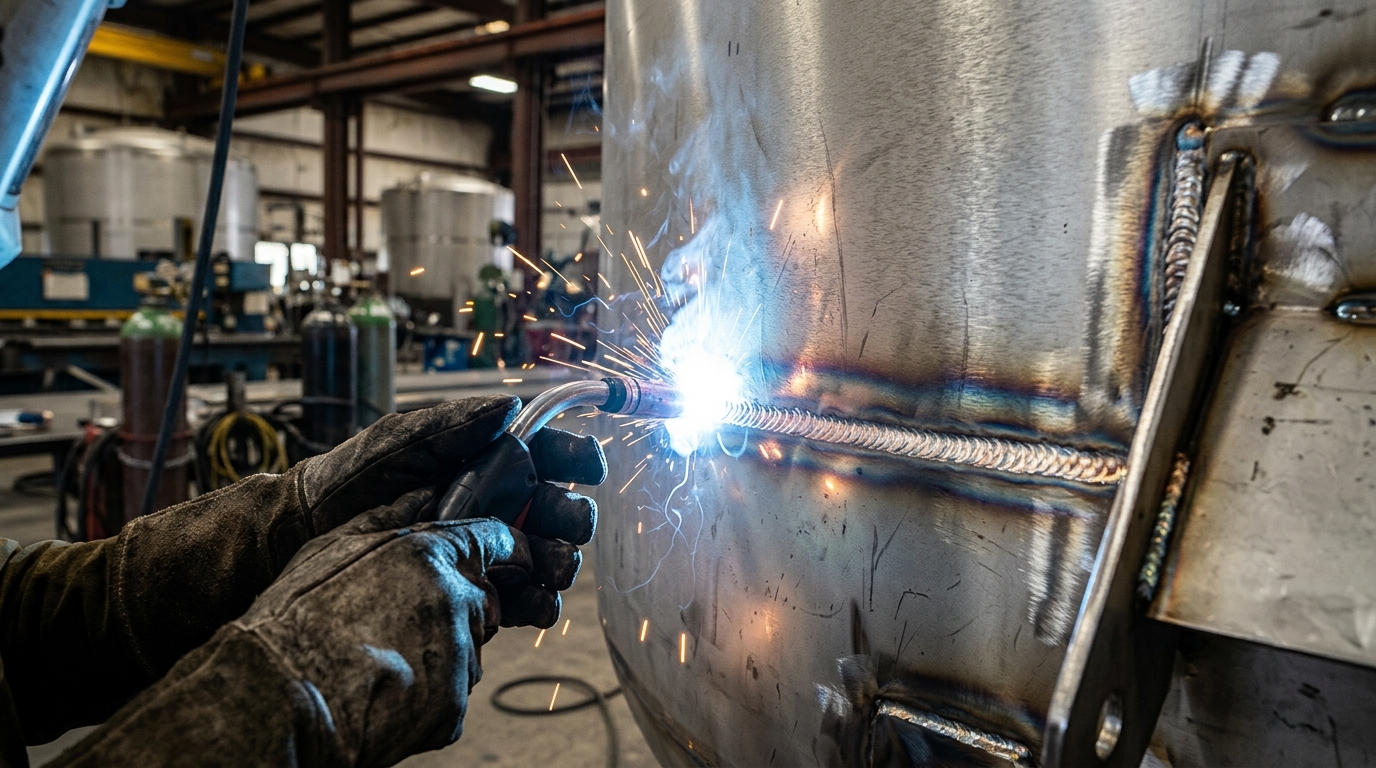
Duplex stainless steel offers nearly double the yield strength of 316L, allowing thinner, lighter tank walls
Rising heat pump and renewable heating adoption is pushing manufacturers toward higher-performance storage materials
Corrosion resistance differences between the two alloys matter most in hard water, coastal, or industrial settings
As heat pumps and renewable heating systems expand into larger commercial installations worldwide, the stainless steel used to build hot water storage tanks has become a quiet but consequential engineering decision. Guangzhou-based manufacturer Globalso has outlined a detailed comparison between duplex stainless steel and 316L stainless steel, two materials long used in heating and water storage equipment, arguing that duplex grades are gaining ground as systems grow more complex and operate under greater mechanical stress.
Why Tank Material Choice Is Getting More Scrutiny
316L stainless steel has been a default choice for decades in domestic hot water cylinders, boilers, and marine equipment, prized for its weldability and resistance to chloride-driven corrosion thanks to its molybdenum content. For straightforward residential installations, it remains a dependable option.
But as tanks scale up for commercial buffer storage, solar thermal systems, and hybrid heating setups, the moderate mechanical strength of 316L becomes a constraint. Manufacturers often compensate by using thicker sheet metal, which adds weight, raises transportation costs, and can complicate installation on larger projects.
Duplex stainless steel, including the widely used 2205 grade, combines austenitic and ferritic microstructures with higher chromium, molybdenum, and nitrogen content. That composition gives it materially higher yield strength than 316L, letting manufacturers build tanks with thinner walls while maintaining the same pressure tolerance.
The distinction matters most where tanks face years of continuous cycling, pressure swings, and variable water chemistry — conditions increasingly common as buildings shift toward electrified, renewable-based heating.
Material Choice Reshapes Hot Water Tank Durability
Corrosion Resistance and the Economics of Longevity
Pitting corrosion and stress corrosion cracking are the two failure modes most often cited by engineers evaluating tank materials for long service life. According to the comparison, duplex stainless steel's higher alloy content gives it superior resistance to both, which becomes especially relevant in hard water regions, coastal installations, and industrial environments where chloride exposure is elevated over decades of operation.
That durability advantage carries direct financial weight for commercial buyers. A tank that avoids corrosion-related failure over a twenty- or thirty-year service life reduces downtime, replacement costs, and the disruption of retrofitting heating systems already integrated into a building's infrastructure — a calculation increasingly familiar to industries evaluating protective coatings and alloys, as seen in the broader aerospace coatings market where material selection is similarly driven by lifecycle cost rather than upfront price.
The broader shift toward heat pumps and hybrid heating systems is a structural driver behind this material conversation. Buffer tanks in these systems do more than store hot water; they stabilize compressor cycling and smooth out thermal demand, meaning the tank itself becomes a performance-critical component rather than passive storage.
That reframing is pushing manufacturers and contractors to weigh material specifications earlier in project design rather than treating tank selection as a late-stage commodity purchase.
Neither material eliminates engineering trade-offs entirely, and 316L is likely to remain standard for smaller residential systems where cost sensitivity outweighs marginal durability gains. But as commercial heat pump and solar thermal installations scale globally, the economics increasingly favor materials that reduce long-term failure risk, suggesting duplex stainless steel's share of the heating equipment market will continue to grow alongside renewable heating adoption.
Stay Ahead of the News
Get the latest business news and company spotlights delivered to your inbox. No spam, unsubscribe any time.