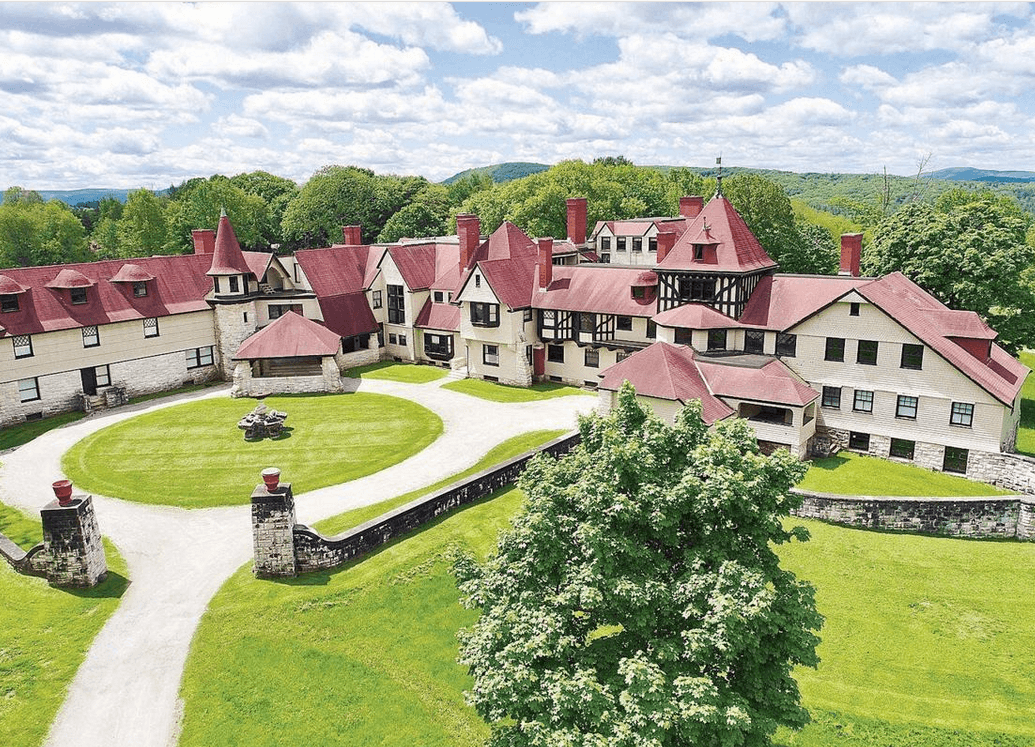
Elm Court, also known as the Vanderbilt Berkshires Estate, is an 89-acre Gilded Age property in Lenox and Stockbridge, Massachusetts, recognized as the largest shingled residence in the United States
Linda Law of Law & Associates and Dr. Richard Peiser of Harvard University are leading its revival
Plans include turning the Manor House into a boutique hotel focused on health and longevity, alongside public gathering spaces and additional guest accommodations
The project aims to preserve the estate's architectural and historical integrity
Elm Court, the Gilded Age estate in the Berkshires known as the Vanderbilt Berkshires Estate, is entering a new chapter after years of decline and periods of abandonment. Under the stewardship of Linda Law of Law & Associates and Dr. Richard Peiser of Harvard University, plans call for converting the Manor House into a boutique hotel focused on health and longevity while preserving the landmark's historic character.
Elm Court, the Vanderbilt Berkshires Estate, in Lenox and Stockbridge, Massachusetts.
The Largest Shingled Residence in the U.S.
Elm Court sits on 89 acres across Lenox and Stockbridge, Massachusetts, and is recognized as the largest shingled residence in the United States. It was designed in 1885 for Emily Vanderbilt and William D. Sloane by the architects Peabody and Stearns, with grounds by landscape architect Frederick Law Olmsted. The estate became one of the great social and cultural hubs of the Gilded Age.
Over the decades, Elm Court welcomed guests including Theodore Roosevelt, Winston Churchill, Mark Twain, Thomas Edison and Amelia Earhart. It also hosted the 1919 "Elm Court Talks," which contributed to discussions leading to the Treaty of Versailles and the League of Nations.
A New Purpose for the Manor House
Like many historic estates, Elm Court faced years of decline as preservation costs mounted. The new vision centres on transforming the Manor House into a boutique hotel focused on health and longevity. The plans also include public gathering spaces and additional guest accommodations, all while protecting the estate's architectural and historical integrity.
"Our team is going to be very deliberate in its thoughtful renovation to restore the vibrancy of this treasured landmark. We feel a tremendous responsibility to pay homage to its legendary past."
— Linda Law, Law & Associates
Why Preservation Matters
Many historic landmarks across the country face uncertain futures because of rising operating costs and changing development priorities. Elm Court's revival is offered as an example of how preservation can honor history while giving a property renewed purpose. Beyond architecture, the project's backers say such places preserve cultural memory, support tourism and local economies, and strengthen community identity, so that future generations can experience history in the places where it unfolded.
Stay Ahead of the News
Get the latest business news and company spotlights delivered to your inbox. No spam, unsubscribe any time.