

At a Glance
- Global aircraft cables market projected to reach $3.6 billion by 2032.
- Increased air travel and aircraft production are key growth drivers.
- Demand for lightweight, high-performance cabling solutions is rising.
The global aircraft cables market is set for substantial long-term expansion, forecast to hit a valuation of USD 3.6 billion by 2032. This growth represents a compound annual growth rate (CAGR) of 6.9% from its estimated USD 2.1 billion in 2023. The market's upward trajectory is primarily driven by increasing air travel demand and rising global aircraft production.
Key Drivers Propel Aviation Cable Demand
A significant resurgence in global air travel following the pandemic, alongside a steady increase in both commercial and military aircraft manufacturing, is a primary catalyst for market expansion. Airlines are actively expanding their fleets, while defense sectors are engaged in upgrading existing aircraft. This dual demand fuels the need for specialized and advanced cabling solutions across the aerospace industry, driving significant investment in research and development for new materials.
Modern aircraft designs increasingly prioritize fuel efficiency and operational performance, necessitating cables that are lighter, more durable, and capable of handling complex data transmission. These cables must also perform reliably under extreme environmental conditions, ensuring safety and operational continuity. The ongoing modernization programs for military aircraft globally further require advanced cabling for improved communication, navigation, and weapon systems, reflecting a broader trend in defense technology upgrades.
The expanding adoption of Unmanned Aerial Vehicles (UAVs) and drones across various applications, including surveillance, logistics, and defense, is also creating a new segment of demand. These platforms require specialized, lightweight aircraft cables to support their unique operational requirements, from high-bandwidth data transfer to robust power supply. These factors collectively underscore the market's robust growth potential and the continuous evolution of aviation technology.
"The aircraft cables market is experiencing a significant uplift, driven by the resurgence in air travel and the continuous demand for advanced aircraft. Our research indicates a clear trajectory towards more specialized, high-performance cabling solutions, essential for the next generation of aviation."
— Senior Analyst, Business Research Insights
Segmentation and Regional Market Dynamics
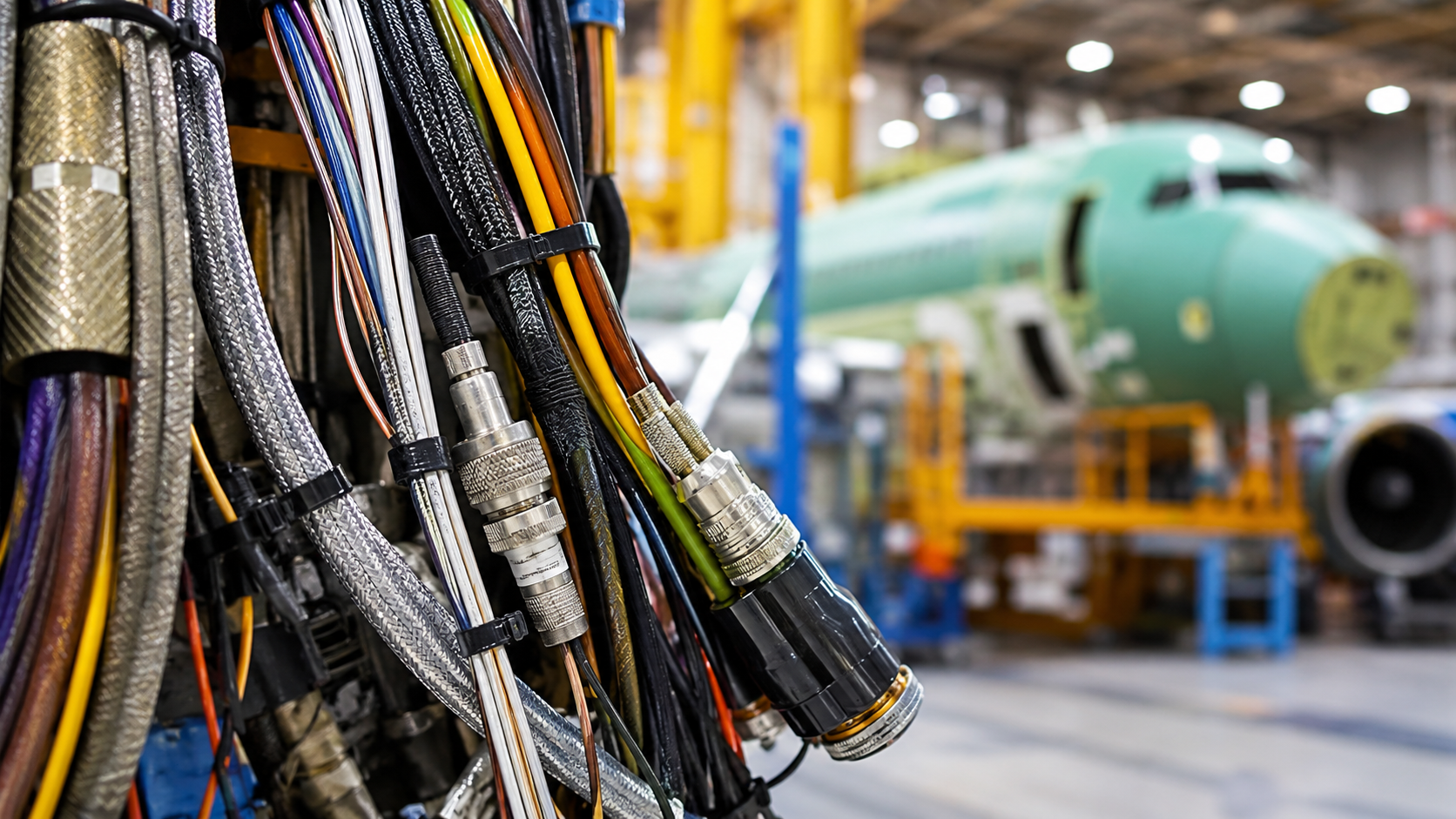
The market for aircraft cables is segmented by type, including high-temperature resistant, lightweight, data transmission, and power transmission cables, each serving distinct functional requirements. Each type serves distinct functional requirements within an aircraft, contributing to its overall performance and safety. Materials such as aluminum, copper, steel, and composites are utilized, with selection depending on factors like weight, conductivity, strength, and environmental resistance, reflecting the complex engineering demands of modern flight.
North America is expected to maintain its dominant position in the global market, propelled by a strong presence of major aircraft manufacturers, substantial defense spending, and advanced aerospace research and development initiatives. Meanwhile, the Asia-Pacific region is projected to be the fastest-growing market. This acceleration is fueled by expanding commercial aviation sectors, increasing defense budgets, and rising investments in aerospace infrastructure, particularly in nations like China and India, indicating a shift in global manufacturing hubs.
The competitive landscape includes key players like Carl Stahl Sava Industries, TE Connectivity, and Nexans, who are focusing on product innovation and strategic partnerships. However, the industry faces challenges such as stringent regulatory standards, high material and production costs, and potential supply chain disruptions. Despite these hurdles, the overall market trajectory remains positive, driven by fundamental aviation demands and the continuous pursuit of technological advancements. Companies are actively seeking ways to mitigate supply chain risks and innovate within regulatory frameworks.
The global aircraft cables market is poised for sustained expansion, propelled by the increasing complexity and demand within the aerospace sector. This growth, detailed in a recent report by market research firm Business Research Insights, highlights the industry's need for advanced, specialized cabling. As aviation continues to evolve, the demand for high-performance and lightweight solutions will remain a critical driving force, shaping the market's future trajectory. For comparison, other specialized markets are also seeing significant expansion, such as the PBC treatment market, which is projected to reach $2.72 billion by 2032.