Click Below To Share & Ask AI to Summarize This Article
Save time and get the key takeaways instantly. Choose your favourite AI assistant to read and analyse this page for you.
At a Glance
- Manufacturing output grew by 1.2% in the final quarter
- Exporters diversify supply chains to mitigate global risks
- Digital adoption increases across Midlands industrial hubs
UK manufacturing firms recorded a 1.2% increase in output during the final quarter of the year, according to the latest industrial data. This growth comes as businesses adapt to higher operational costs and shifting trade patterns across international markets. Analysts suggest that the resilience of the mid-market sector provides a stable foundation for broader economic recovery. While inflation remains a concern, the stabilization of energy prices has allowed factory owners to plan for long-term capital investments.
Supply Chain Resilience and Trade Patterns
Global logistics networks are undergoing a significant period of restructuring. Many UK firms are moving away from just-in-time models toward holding larger inventories to mitigate potential disruptions. The British Chambers of Commerce reports that 45% of exporters have diversified their supplier base over the last twelve months. This shift aims to reduce dependency on single geographic regions for essential components.
Trade with non-EU markets has seen a steady rise as businesses look for growth opportunities in North America and Asia. Export volumes to these regions increased by 3.4% compared to the previous year. Companies are investing more in customs compliance and international trade training to manage these new relationships. This diversification helps buffer the impact of regulatory changes within the single market.
Domestic procurement is also gaining traction as a viable alternative for high-value parts. Small and medium enterprises are forming local clusters to share resources and reduce transport costs. This trend supports the wider objective of shortening supply chains and improving delivery reliability. Localized production models are proving effective in high-precision engineering sectors.
Shipping costs have fluctuated, forcing firms to re-evaluate their transportation strategies. Rail and sea freight are being prioritized over air transport for non-urgent shipments to manage overheads. These logistical adjustments are necessary to maintain competitive pricing in a crowded global marketplace. Strategic planning in logistics is now a core focus for executive boards.
"The ability of British manufacturers to maintain production levels while managing significant cost pressures demonstrates the fundamental strength of the sector. We are seeing a marked shift toward long-term strategic investment in both physical infrastructure and digital systems."
— Sarah Jenkins, Lead Analyst at the Confederation of British Industry (CBI)
Technological Integration in Industrial Processes
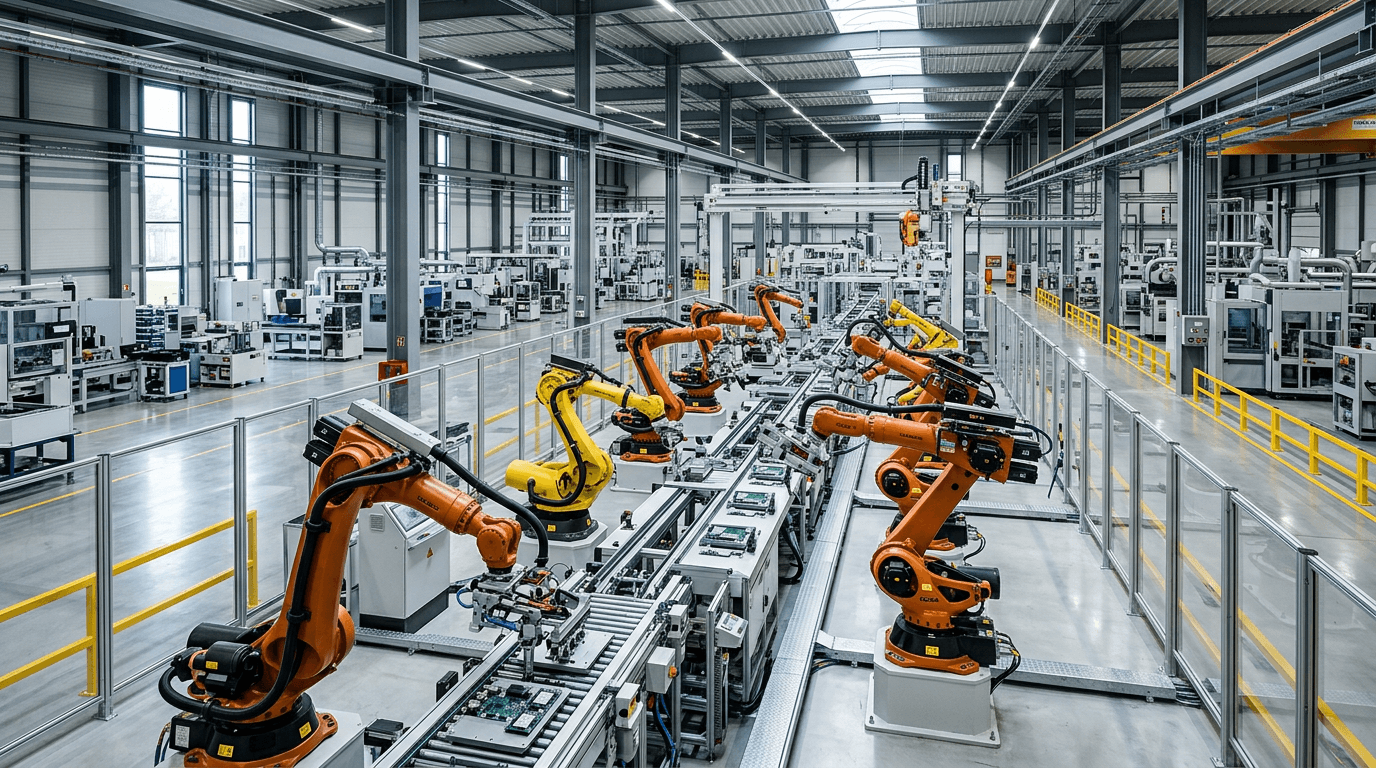
Automation is playing a larger role in the daily operations of UK factories. Recent data from TechUK indicates a 15% increase in the adoption of automated assembly lines across the Midlands. These systems help address labor shortages in repetitive roles while increasing overall production speed. Managers are focusing on integrating these tools without disrupting existing workflows.
Data analytics tools are providing managers with better insights into machine performance and energy usage. By monitoring equipment in real-time, firms can predict maintenance needs before failures occur. This proactive approach reduces downtime and extends the lifespan of expensive machinery. Investment in software for resource planning is now a priority for most medium-sized enterprises.
Cloud computing is enabling better coordination between design teams and production floors. Engineers can update specifications instantly across multiple sites, ensuring consistency in manufacturing. This connectivity allows for faster prototyping and a shorter time-to-market for new products. Digital infrastructure is becoming as vital as physical tools in the modern industrial environment.
Cybersecurity has become a major concern as more industrial systems connect to the internet. Firms are dedicating a larger portion of their IT budgets to protecting intellectual property and operational data. Training programs for staff are being implemented to recognize potential digital threats. A secure digital environment is essential for maintaining trust with international partners.
Sustainability and Environmental Compliance
Environmental regulations are driving significant changes in how products are designed and manufactured. Companies are under increasing pressure from both regulators and consumers to reduce their carbon footprint. The transition to renewable energy sources for factory operations is accelerating across the country. Solar panels and wind turbines are now common sights at major industrial parks.
Waste reduction programs are becoming a standard part of corporate social responsibility strategies. Firms are looking for ways to recycle raw materials and minimize the amount of waste sent to landfills. This circular economy approach not only benefits the environment but also reduces material costs. Efficient resource management is now a key performance indicator for many businesses.
Supply chain transparency is required to verify the environmental credentials of sub-contractors. Businesses are auditing their partners to ensure compliance with strict ecological standards. This scrutiny helps eliminate hidden risks and improves the overall sustainability of the final product. Clear reporting on environmental impact is becoming a requirement for securing green financing.
Green technology sectors are attracting significant venture capital investment as the demand for sustainable solutions grows. Startups focusing on battery storage and hydrogen power are finding ready partners in established manufacturing firms. This collaboration helps bring new environmental technologies to market more quickly. The shift toward a low-carbon economy is creating new opportunities for industrial growth.
Workforce Development and Employment Trends
The labor market for skilled technical workers remains tight, with vacancies still above pre-pandemic levels. According to the Office for National Statistics, there are approximately 75,000 open roles within the manufacturing and engineering sectors. Companies are responding by increasing starting salaries and offering more flexible working arrangements where possible. Retention of experienced staff is a primary concern for HR departments.
Apprenticeship programs are seeing a resurgence as a method for building a sustainable talent pipeline. Large firms are collaborating with local colleges to design curriculum that meets specific industrial needs. These initiatives provide young workers with practical experience while they study for formal qualifications. This hands-on approach helps bridge the gap between academic learning and industrial application.
Upskilling existing employees is another strategy used to combat the skills shortage. Workers are being trained to operate new machinery and manage digital systems. This investment in human capital increases productivity and improves employee morale. Continuous professional development is becoming a standard feature of employment contracts in the sector.
Diversity and inclusion initiatives are being used to attract a wider range of candidates to industrial roles. Efforts to encourage more women and underrepresented groups into engineering are showing positive results. Broadening the talent pool is seen as a necessary step for long-term growth. Modern workplaces are evolving to be more inclusive and supportive of diverse career paths.
The UK business sector is entering a period of cautious optimism as inflation eases and production figures stabilize. While global economic conditions remain unpredictable, the shift toward supply chain resilience and digital integration provides a path for sustained growth. Firms that prioritize workforce development and technological investment will likely lead the recovery. The coming year will test the ability of the industry to maintain this momentum in a competitive international environment.
Stay Ahead of the News
Get the latest business news and company spotlights delivered to your inbox. No spam, unsubscribe any time.
We respect your privacy. Unsubscribe at any time.