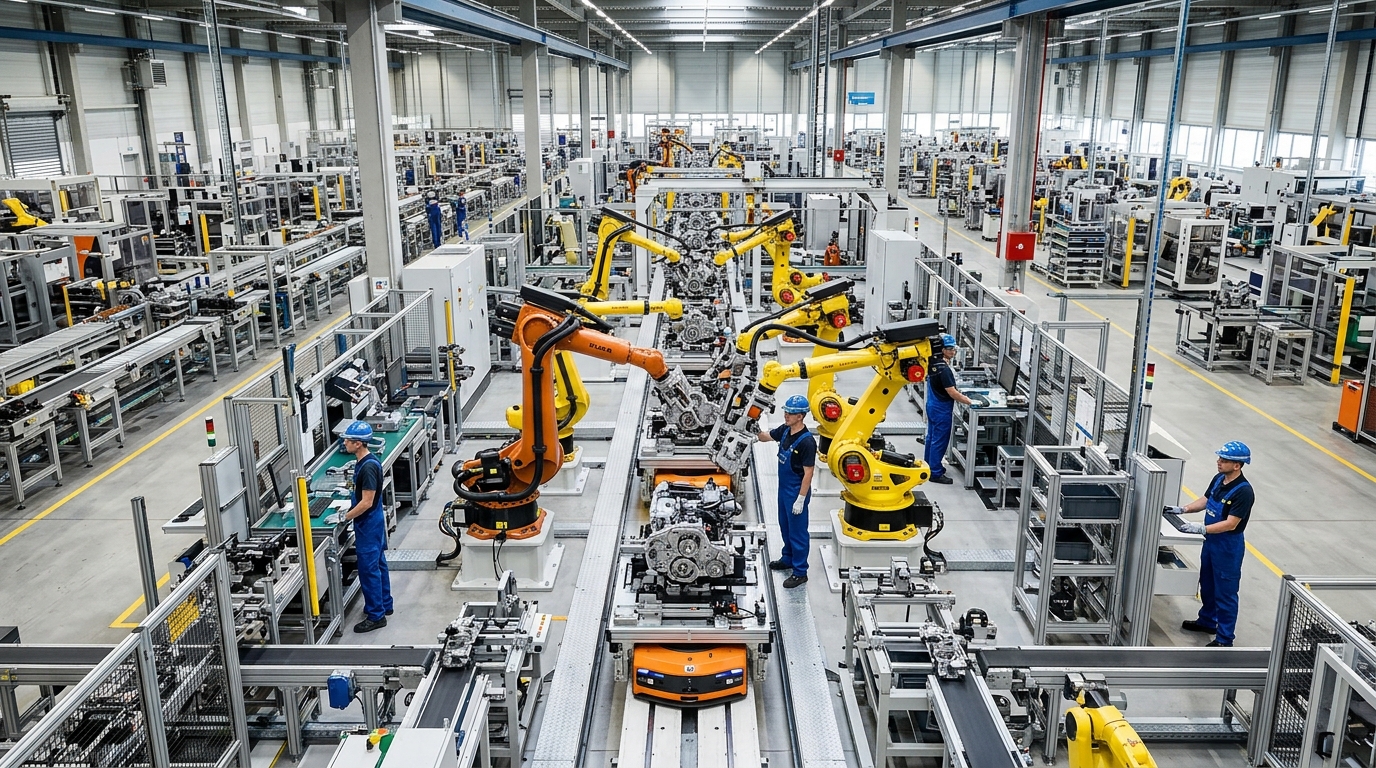
ONS reports a 0.9% increase in quarterly business investment.
Manufacturing and services lead the modest economic recovery.
High interest rates continue to influence capital expenditure.
The Office for National Statistics recently published data showing a moderate rise in business investment across the United Kingdom. This growth represents a 0.9% increase in the most recent quarter, marking a shift from the stagnation observed earlier in the year. Manufacturing and professional services provided the strongest contributions to these figures. Most companies are now directing funds toward software upgrades and physical infrastructure improvements.
Shifting Patterns in Private Capital
Business leaders remain attentive to the fluctuating inflation rates that have defined the past two years. While the headline rate has slowed, core inflation still presents challenges for long-term financial planning. Many boards are choosing to maintain high cash reserves rather than committing to aggressive expansion. This defensive posture is a direct response to the volatility in global energy markets.
Investment in transport equipment saw a notable decline during the same period. Supply chain delays continue to affect the delivery of heavy machinery and commercial vehicles. These bottlenecks force firms to extend the life cycles of their current fleets. This trend is particularly evident in the logistics and construction sectors where replacement costs have risen.
Small and medium enterprises report varying levels of confidence depending on their specific industry. Those in the hospitality sector face rising wage bills and high utility costs. Conversely, firms in the professional services sector benefit from stable demand and lower overhead. These differences illustrate the uneven nature of the current economic recovery.
The British Chambers of Commerce indicates that investment intentions remain higher than the historical average. However, small businesses struggle with high borrowing costs. These financial constraints limit the ability of startups to scale. Regional disparities continue to affect capital distribution across the UK.
"The current economic environment requires a disciplined approach to capital allocation. We see businesses focusing on internal efficiencies while they wait for more definitive signals from the central bank regarding future interest rate cuts."
— Marcus Thorne, Chief Economist at the Confederation of British Industry
UK Business Investment Rises Amid Interest Rate Shifts
Regional Performance and Trade
Specific regions such as the West Midlands and the North West are seeing a resurgence in industrial activity. This growth is supported by increased exports to European and North American markets. Local authorities are also playing a part by offering incentives for businesses to relocate to specialized hubs. These hubs provide access to shared resources and a concentrated pool of skilled labor.
Export volumes have shown resilience despite the complexities of modern trade regulations. British firms are finding new ways to access international markets by diversifying their customer bases. Many companies are now looking toward Southeast Asia for growth opportunities. This shift reduces reliance on any single geographic region for revenue.
Trade barriers still pose a significant challenge for smaller firms trying to sell goods abroad. High customs fees and administrative burdens can erase the profit margins of niche products. Trade bodies are calling for simpler documentation processes to help these businesses compete globally. Without these changes, many smaller exporters may focus solely on domestic sales.
Direct foreign investment into the UK remains a vital component of the national economy. International firms continue to view the UK as a stable environment for financial services and technology. Major investments in data centers and renewable energy projects are currently underway in several regions. These projects provide high-quality employment opportunities and support local supply chains.
Workforce and Skills Development
The demand for skilled labor continues to outpace the available supply in many technical sectors. Data from various trade bodies suggests that the digital skills gap costs the economy billions in potential output each year. Companies are responding by creating internal academies to train their staff. This proactive approach ensures that employees possess the specific skills needed for modern operations.
Apprenticeship programs are gaining traction as a viable alternative to traditional university routes. Many young professionals prefer to earn while they learn in a practical environment. Businesses benefit from this by shaping the development of their future leaders from an early stage. This model is particularly successful in the engineering and manufacturing industries.
Remote work policies remain a subject of debate among executive leadership teams. While some firms insist on a full return to the office, others have adopted permanent hybrid models. This flexibility is often a deciding factor for top talent when choosing between job offers. The impact on urban economies is significant as foot traffic in city centers changes.
Employee well-being has become a standard metric in corporate reporting. Firms recognize that a healthy workforce is more productive and less likely to experience burnout. Investment in mental health support and flexible scheduling is now common across most large organizations. These initiatives help to reduce absenteeism and improve overall company culture.
Energy Costs and Environmental Standards
Energy prices remain a primary concern for energy-intensive industries like steel and chemicals. While prices have retreated from their peaks, they stay well above historical averages. Many firms are investing in their own energy generation capabilities, such as solar arrays and wind turbines. This move provides a degree of protection against future price spikes.
Environmental reporting requirements are becoming more stringent for public and private companies. The Confederation of British Industry notes that investors now demand clear data on carbon emissions and resource usage. Meeting these standards requires a significant investment in monitoring technology and specialized staff. Firms that fail to comply risk losing access to certain types of institutional capital.
Waste reduction and circular economy principles are being integrated into manufacturing processes. Companies are finding ways to repurpose by-products or use recycled materials in their production lines. This reduces raw material costs and aligns with broader sustainability goals. Consumers are also showing a preference for brands that demonstrate environmental responsibility.
The transition to a low-carbon economy presents both risks and opportunities for the business community. While some traditional sectors face decline, new industries are emerging in the green technology space. Government grants and tax incentives are helping to accelerate this transition. Firms that adapt early are likely to gain a competitive advantage in the coming decade.
The UK business community is demonstrating a capacity for adaptation in a period of significant change. While challenges such as high interest rates and labor shortages persist, the underlying data shows signs of stability. Future growth will likely be driven by those who prioritize efficiency and internal talent development. As the economic environment evolves, staying informed through verified data remains the best strategy for long-term success.
⭐
Business Spotlight
This article is a premium Business Spotlight feature — an in-depth profile with priority homepage placement. Contact us to be featured.
Stay Ahead of the News
Get the latest business news and company spotlights delivered to your inbox. No spam, unsubscribe any time.