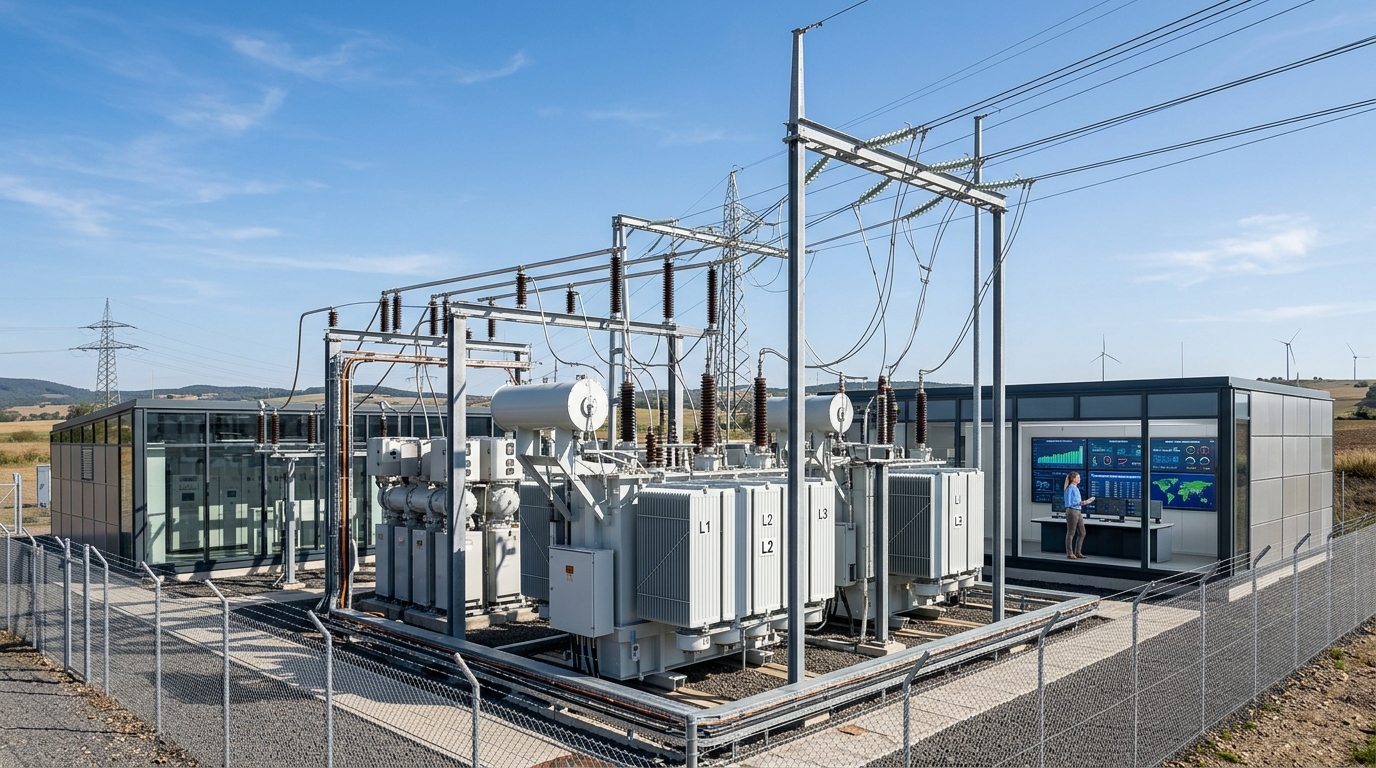
XFRA targets the multi-year delays in data center power connectivity.
The distributed model allows for faster deployment of AI compute resources.
Integrated hardware manages energy loads to prevent local grid strain.
SPAN has introduced XFRA, a distributed data center architecture designed to address the widening gap between artificial intelligence compute demand and available grid capacity. This new solution targets the significant delays currently facing hyperscale developers, who often wait years for high-voltage power connections. By decentralizing processing power and integrating it closer to existing electrical infrastructure, the company intends to accelerate deployment timelines for AI workloads. The launch comes as global energy markets struggle to keep pace with the massive electricity requirements of large language models.
Addressing the Infrastructure Deficit
The technology sector faces a growing bottleneck as electricity grids struggle to support the massive energy needs of artificial intelligence. Traditional data center construction often takes years to complete, primarily due to the slow process of securing high-voltage utility connections and building custom substations. According to data from the International Energy Agency, data center electricity consumption could double by 2026, putting unprecedented pressure on national power systems. SPAN intends to bypass these delays by deploying smaller, distributed units that can connect to existing medium-voltage infrastructure without requiring massive site overhauls.
This distributed approach represents a significant shift from the centralized model that has dominated the cloud computing industry for decades. Large-scale facilities often require hundreds of megawatts at a single site, which can trigger extensive grid stability studies and expensive transmission upgrades. By spreading the compute load across multiple smaller nodes, XFRA allows developers to utilize available capacity in areas where the grid is less congested. This method effectively shortens the "speed-to-power" gap, enabling companies to bring AI applications online in months rather than years.
The hardware is designed to reside in industrial parks, commercial basements, or repurposed urban spaces that already possess adequate electrical service. These locations often have latent power capacity that remains unused during off-peak hours or was originally intended for manufacturing processes that have since moved. XFRA captures this existing capacity by providing a plug-and-play interface for high-density GPU clusters. This strategy reduces the environmental footprint of new builds by utilizing the built environment more effectively.
Furthermore, the modular nature of the system allows for incremental scaling based on real-time demand. Instead of investing billions in a single massive facility that may take a decade to reach full utilization, firms can deploy compute nodes as needed. This flexibility is vital for startups and research institutions that require immediate access to hardware but lack the capital for hyperscale infrastructure. The system ensures that the physical limitations of the grid do not dictate the pace of software development.
"The current trajectory of AI development is colliding with the physical realities of our aging electrical grid. XFRA provides a necessary bridge by moving compute to where power is already accessible, rather than waiting for the grid to catch up to the data center."
— Arch Rao, Chief Executive Officer at SPAN
SPAN Unveils XFRA to Tackle AI Power Constraints
Technical Specifications and Grid Management
The XFRA architecture utilizes sophisticated hardware that can be installed in a variety of industrial and commercial settings. This approach moves the compute power closer to the energy source, reducing the need for massive new transmission lines. SPAN has developed proprietary power management software to ensure these units do not overwhelm local circuits during peak usage. The software monitors real-time grid health and adjusts the compute intensity to maintain stability for both the user and the utility provider.
Each unit operates as a node in a larger network, allowing for scalable processing power that grows with demand. The hardware includes integrated thermal management systems designed to handle the intense heat generated by modern AI chips. These cooling solutions are more efficient than traditional air-cooled data centers, often utilizing liquid-to-chip technology to minimize energy waste. This focus on efficiency is necessary for maintaining operational viability in urban environments where space and cooling resources are limited.
Grid stability remains a primary focus for the deployment of these distributed nodes. The systems are equipped with advanced sensors that detect voltage drops or frequency fluctuations in the local circuit. If the grid shows signs of stress, the XFRA nodes can automatically throttle their power draw or switch to internal storage. This proactive management prevents the localized blackouts that can occur when high-density loads are added to older infrastructure.
Integration with local renewable energy sources is also a core feature of the design. Many nodes are paired with onsite solar arrays or wind turbines, allowing them to operate on carbon-neutral power whenever possible. This capability helps organizations meet their sustainability goals while also reducing their reliance on the main grid. By creating a more resilient and distributed network, the solution strengthens the overall energy ecosystem.
Economic Impact and Market Readiness
Industry groups such as TechUK have highlighted the necessity of flexible power solutions to maintain national competitiveness in the digital economy. The British Chambers of Commerce (BCC) reports that infrastructure constraints remain a primary concern for high-growth technology firms looking to expand. XFRA provides a capital-efficient alternative to the massive investments required for centralized facilities. This shift allows a broader range of companies to participate in the development of advanced machine learning models.
By reducing the time to market from years to months, companies can realize returns on their hardware investments much faster. This accelerated timeline is particularly important in the fast-moving AI sector, where hardware can become obsolete within a few years. Rapid deployment ensures that firms are using the most advanced chips while they are still at the peak of their performance. This efficiency improves the overall economic productivity of the technology sector by reducing idle capital.
The Office for National Statistics (ONS) indicates that energy costs are a significant factor in the operational expenses of digital service providers. The XFRA system addresses this by optimizing power usage and participating in demand-response programs with utilities. These programs allow operators to receive financial incentives for reducing power draw during periods of high grid demand. This creates a new revenue stream that can offset the costs of running high-performance compute clusters.
Investor interest in distributed compute infrastructure has surged as the limitations of the traditional model become more apparent. Venture capital firms are increasingly looking for solutions that bypass the regulatory and physical hurdles of large-scale construction. XFRA fits this investment profile by offering a scalable, repeatable model that can be deployed across different geographies. This market readiness positions the company to capture a significant share of the growing edge computing sector.
Future Sustainability and Global Scalability
Managing peak demand is a significant challenge for utility providers as more high-density compute comes online across the globe. XFRA includes integrated battery storage to balance loads and provide backup power during grid fluctuations or outages. This storage capacity can also be used to store excess renewable energy produced during the day for use during peak evening hours. Such features make the system an asset to the grid rather than a liability, helping to smooth out demand curves.
The modular design also simplifies the process of upgrading hardware as new generations of chips are released. Instead of retrofitting an entire data center, operators can simply swap out individual nodes or components within the XFRA units. This reduced friction encourages the continuous adoption of more efficient technology, further lowering the total energy footprint of the AI industry. It also reduces the amount of electronic waste generated during the upgrade cycle.
As international regulations around carbon emissions become stricter, the ability to prove energy efficiency will be vital for tech companies. The XFRA platform provides detailed telemetry on energy consumption and carbon intensity for every compute task. This transparency allows firms to accurately report their environmental impact and comply with evolving ESG standards. Governments are likely to favor distributed solutions that do not require massive public investment in new utility infrastructure.
The scalability of this model extends beyond developed markets into regions where grid infrastructure is less reliable. In these areas, the ability to operate independently or on microgrids can provide a foundation for local digital economies. By democratizing access to high-performance compute, SPAN is helping to ensure that the benefits of AI are not restricted to regions with the most advanced power grids. This global perspective is essential for the long-term growth of the international technology sector.
The introduction of XFRA marks a shift in how the industry approaches the physical requirements of modern computing. By prioritizing speed-to-power and grid integration, SPAN offers a viable path forward for the AI sector amidst increasing energy constraints. As compute demand continues to outpace traditional infrastructure growth, distributed solutions will likely become a standard component of the global data strategy. The success of such systems will depend on continued cooperation between technology developers and utility providers to ensure a stable and sustainable digital future.
⭐
Business Spotlight
This article is a premium Business Spotlight feature — an in-depth profile with priority homepage placement. Contact us to be featured.
Stay Ahead of the News
Get the latest business news and company spotlights delivered to your inbox. No spam, unsubscribe any time.