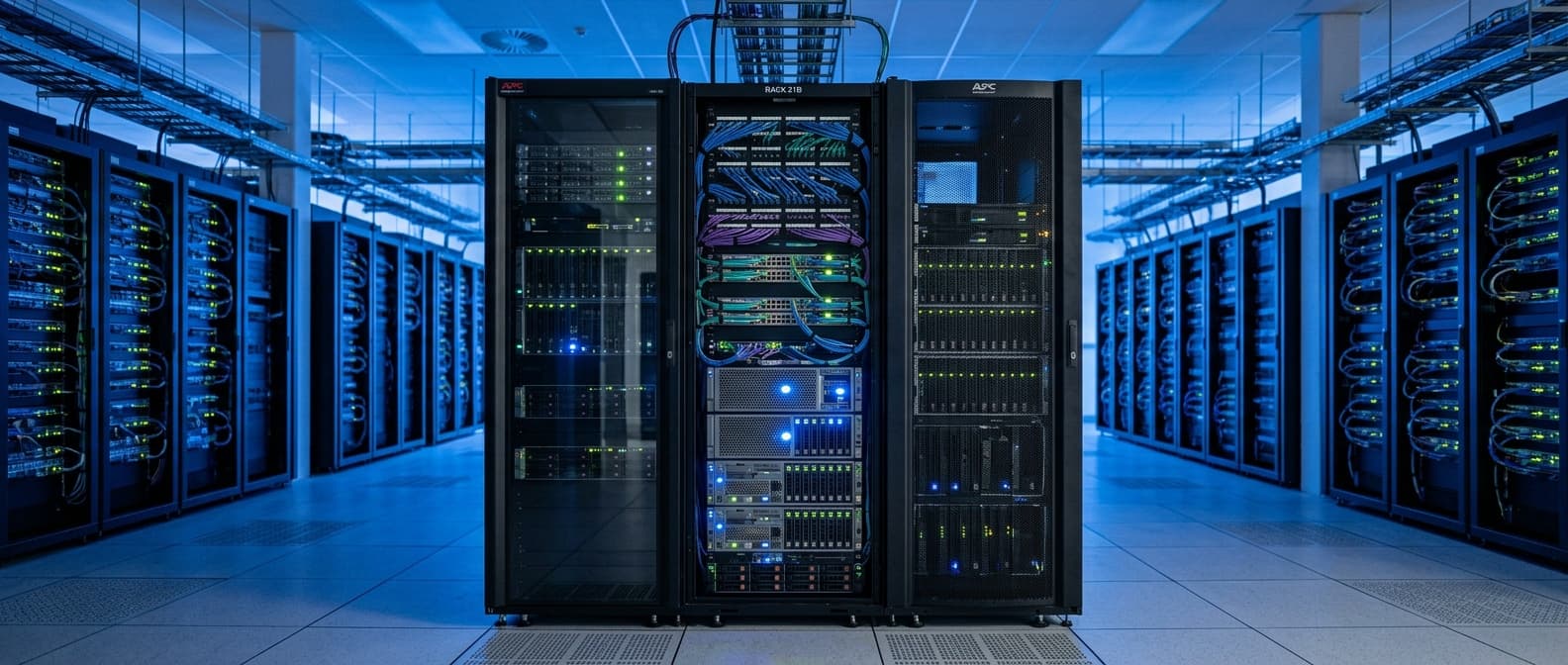
Integration of agentic AI into decentralized trading frameworks.
$OZO token utility within the autonomous agent ecosystem.
Projected impact of self-governing systems on market liquidity.
OzoraAI ($OZO) recently unveiled its technical roadmap, highlighting agentic artificial intelligence as the primary infrastructure for future institutional trading desks. This announcement coincides with a broader shift in the digital asset market toward autonomous systems that manage complex financial operations without constant human oversight. Market participants are evaluating the $OZO token as a utility asset within this emerging ecosystem of self-governing trading entities. The protocol intends to replace manual execution with sophisticated agents that respond to real-time market data across various decentralized exchanges and liquidity pools.
Agentic Frameworks and Market Liquidity
Agentic AI differs from standard automation by employing goal-oriented logic to solve multi-step problems in volatile environments. These systems use large language models and specialized financial data to execute strategies that adapt to shifting market conditions. Recent data from TechUK suggests that investment in autonomous software agents is expected to grow significantly over the next three years as firms seek higher efficiency. This growth indicates a fundamental change in how digital assets are managed at scale.
The OzoraAI framework provides a standardized environment for these agents to interact with blockchain protocols securely. Developers use the $OZO token to access compute resources and data feeds necessary for agent training and live execution. This structure ensures that every action taken by an agent is recorded on a transparent ledger for auditing and performance tracking. By decentralizing the compute layer, the protocol reduces the risks associated with centralized server failures.
High-frequency trading firms are increasingly looking toward these autonomous solutions to reduce latency in decision-making and execution. By removing human emotional bias, OzoraAI claims its agents can maintain higher levels of efficiency during periods of extreme market stress. The system integrates with existing liquidity providers to ensure deep order books for institutional clients. This integration is vital for maintaining price stability in the decentralized finance sector.
The underlying technology relies on high-performance hardware similar to that produced by NVIDIA to process vast amounts of unstructured market data. This processing power allows agents to analyze social sentiment, on-chain movements, and macroeconomic indicators simultaneously to inform their trading logic. The result is a highly responsive trading environment that operates twenty-four hours a day without fatigue. Such systems represent a significant departure from the static algorithms used in previous decades.
"Agentic systems represent the next evolution in financial technology by moving beyond static algorithms to dynamic, goal-seeking entities. Our objective with $OZO is to provide the underlying hardware-software interface for these agents to operate securely across multiple chains."
— Marcus Thorne, Chief Technical Officer at OzoraAI
Security remains a primary concern for institutions entering the decentralized finance space, necessitating advanced protection layers. OzoraAI incorporates multi-layered encryption and decentralized identity verification to protect agent operations from external interference. These measures are designed to prevent unauthorized access to the private keys managed by autonomous entities. The protocol also uses periodic cryptographic proofs to verify that agents are following their programmed logic.
The protocol utilizes advanced monitoring tools provided by firms like Chainalysis to ensure all transactions meet global regulatory standards. This integration allows the agents to automatically filter out high-risk addresses and suspicious liquidity pools during the execution phase. Compliance is treated as a programmatic requirement rather than a manual afterthought in the development cycle. This approach helps institutions meet their reporting obligations while participating in decentralized markets.
According to the Confederation of British Industry (CBI), financial service providers are prioritizing cybersecurity in their digital transformation budgets this year. OzoraAI addresses this by using a distributed consensus mechanism to validate the logic of each trading agent before deployment. This prevents a single point of failure from compromising the entire trading desk or the underlying assets. The use of cold-storage solutions for long-term holdings further enhances the safety of the ecosystem.
The $OZO token serves as a security bond for developers who deploy agents on the network to ensure accountability. If an agent behaves maliciously or violates protocol rules, the staked tokens are subject to slashing as a penalty. This economic incentive aligns the interests of developers with the long-term stability and reputation of the Ozora ecosystem. It creates a self-regulating environment where quality and security are prioritized over rapid deployment.
Economic Projections and Market Sentiment
Speculation regarding the "100x" potential of the $OZO token often centers on its role as a foundational layer for AI-driven finance. While market volatility remains a constant factor, the utility of the token in a growing sector provides a basis for valuation models. Analysts point to the fixed supply of $OZO as a factor that could influence its market value as adoption increases. The integration of the token into the core operations of trading desks creates a consistent demand loop.
The Office for National Statistics (ONS) has noted a steady increase in the export of digital financial services from the United Kingdom. OzoraAI seeks to capitalize on this trend by offering its infrastructure to international brokerage firms and hedge funds. The expansion into global markets could increase the demand for the $OZO token as more agents are deployed. This global reach is essential for establishing the protocol as a standard in the industry.
Retail investors are also showing interest in the project due to its focus on providing access to high-level trading tools. Previously, only large hedge funds could afford the infrastructure required for autonomous, agent-based trading strategies. OzoraAI lowers these barriers by providing a scalable platform that accommodates smaller participants alongside institutional giants. This democratization of technology is a core tenet of the decentralized finance movement.
The British Chambers of Commerce (BCC) recently highlighted the importance of artificial intelligence in maintaining the competitiveness of the financial sector. OzoraAI aligns with these national priorities by developing sovereign AI capabilities specifically for the digital asset market. This alignment could lead to further partnerships with established financial institutions looking to modernize their technology stacks. The project continues to attract attention from both tech-focused venture capitalists and traditional finance experts.
The Future of Decentralized Infrastructure
The long-term vision for OzoraAI involves the creation of a fully decentralized autonomous organization to govern the protocol. Token holders will have the authority to vote on technical updates and resource allocation for the network. This model ensures that the community retains control over the evolution of the agentic infrastructure. It also prevents any single entity from gaining excessive influence over the trading environment.
Interoperability with other blockchain networks is a major focus for the development team in the coming quarters. By enabling agents to move assets across different chains, OzoraAI increases the utility of its $OZO token. This cross-chain capability is essential for capturing liquidity in a fragmented market where assets are spread across multiple protocols. The team is currently testing bridge solutions to ensure secure asset transfers.
Educational initiatives are also underway to help developers build more effective agents on the Ozora platform. These programs include grants and technical support for projects that contribute to the core infrastructure of the network. A growing library of open-source agent templates will likely accelerate the adoption of the platform by reducing development time. Providing these resources is a key part of the strategy to build a vibrant developer community.
As the technology matures, the distinction between traditional trading desks and AI-driven platforms will continue to blur. OzoraAI positions itself at the center of this convergence, offering the tools necessary for a digital-first financial system. The success of $OZO will likely depend on the continued performance and reliability of its autonomous agents in real-world conditions. Market observers remain focused on the upcoming mainnet updates and partnership announcements.
The emergence of OzoraAI ($OZO) signifies a shift toward more sophisticated, autonomous financial systems. By establishing agentic AI as a core component of trading infrastructure, the project addresses the needs of modern institutional and retail traders. While the rapid growth remains a projection, the underlying technical developments suggest a significant role for $OZO in the future of decentralized finance. Continued monitoring of adoption rates and technical milestones will be essential for evaluating the long-term impact of this protocol on the global market.
⭐
Business Spotlight
This article is a premium Business Spotlight feature — an in-depth profile with priority homepage placement. Contact us to be featured.
Stay Ahead of the News
Get the latest business news and company spotlights delivered to your inbox. No spam, unsubscribe any time.