

At a Glance
- Global hybrid eVTOL market projected for significant expansion through 2033.
- Key industry participants include Airbus, Boeing, and Joby Aviation.
- Urban air mobility and emergency services drive primary demand.
- Research highlights shifts in propulsion and aircraft design segments.
HTF Market Intelligence Consulting Pvt. Ltd. has published a new study analyzing the global hybrid electric vertical takeoff and landing aircraft sector through 2033. This research identifies specific growth patterns and technological shifts occurring within the aerospace industry. The report highlights how manufacturers are adapting to new regulatory environments and shifting consumer demands for urban transportation. It provides a detailed look at the financial commitments made by major aerospace firms to advance these flight systems.
Market Valuation and Growth Drivers
The global hybrid eVTOL market is experiencing a period of rapid development as cities seek alternatives to ground-based transportation. Analysts at HTF Market Intelligence suggest that the integration of hybrid propulsion systems offers a middle ground between traditional combustion engines and full battery power. This transition allows for longer flight ranges and increased payload capacities compared to purely electric models. The report tracks these variables across different economic regions to provide a clear picture of future demand.
Economic factors such as rising fuel costs and environmental mandates are pushing aviation companies toward hybrid solutions. Governments are providing subsidies and research grants to accelerate the deployment of these aircraft in metropolitan areas. This financial support is a primary catalyst for the growth rates expected over the next decade. Private equity firms and venture capitalists are also increasing their stakes in startups focusing on vertical lift technology.
The study notes that the demand for emergency medical services is a significant contributor to market expansion. Hybrid aircraft can reach remote locations faster than ground ambulances while maintaining lower operational costs than traditional helicopters. This utility makes them attractive to both private healthcare providers and state-funded emergency responders. As infrastructure for vertiports develops, the commercial viability of these aircraft will likely increase.
Market analysts expect the hybrid segment to outperform purely electric designs in the short term due to current battery limitations. The ability to use existing fuel infrastructure while reducing noise and emissions provides a practical path for fleet operators. This report quantifies the expected adoption rates for these systems across various commercial sectors.
Competitive Environment and Lead Players
The competitive environment includes established aerospace giants and specialized startups vying for market share. Companies like Airbus, Boeing, and Bell Textron are utilizing their existing manufacturing capabilities to develop hybrid prototypes. These firms benefit from established supply chains and long-standing relationships with regulatory bodies. Their entry into the hybrid space signals a long-term commitment to changing how short-distance air travel functions.
Smaller entities such as Joby Aviation, Lilium, and Vertical Aerospace are focusing on specific niches within the urban air mobility market. These organizations often prioritize rapid prototyping and software integration to gain a first-mover advantage. The report by HTF Market Intelligence details how these companies are securing certification for their flight designs. Success in this sector often depends on the ability to balance weight, power output, and safety standards.
Partnerships between automotive manufacturers and aerospace firms are becoming more frequent as the industry matures. For instance, collaborations often involve sharing expertise in battery management systems and mass production techniques. These alliances help reduce the high costs associated with developing new aviation platforms. The research indicates that such joint ventures are essential for scaling production to meet future urban demand.
Regional players in the Asia-Pacific area are also making significant strides in the hybrid eVTOL market. Firms in China and South Korea are receiving substantial government backing to lead in the development of autonomous flight technologies. This regional competition is driving global standards for safety and noise levels. The report identifies these geographic shifts as a major factor in the overall market trajectory through 2033.
Technological Segmentation and Design Trends
Design configurations for hybrid eVTOL aircraft are categorized into several distinct types, including lift plus cruise and vectored thrust. Each design offers specific advantages for different flight profiles and mission requirements. Lift plus cruise models utilize separate rotors for vertical takeoff and forward flight, providing a balance of efficiency and mechanical simplicity. Vectored thrust designs use the same propulsion units for both phases of flight by tilting the engines.
The report examines the technical challenges associated with wingless and multicopter configurations. While wingless designs offer high maneuverability in tight urban spaces, they often suffer from reduced efficiency during forward flight. Multicopters are becoming popular for short-range logistics and last-mile delivery services due to their stability. Engineers are currently working to improve the energy density of hybrid systems to extend the operational life of these aircraft.
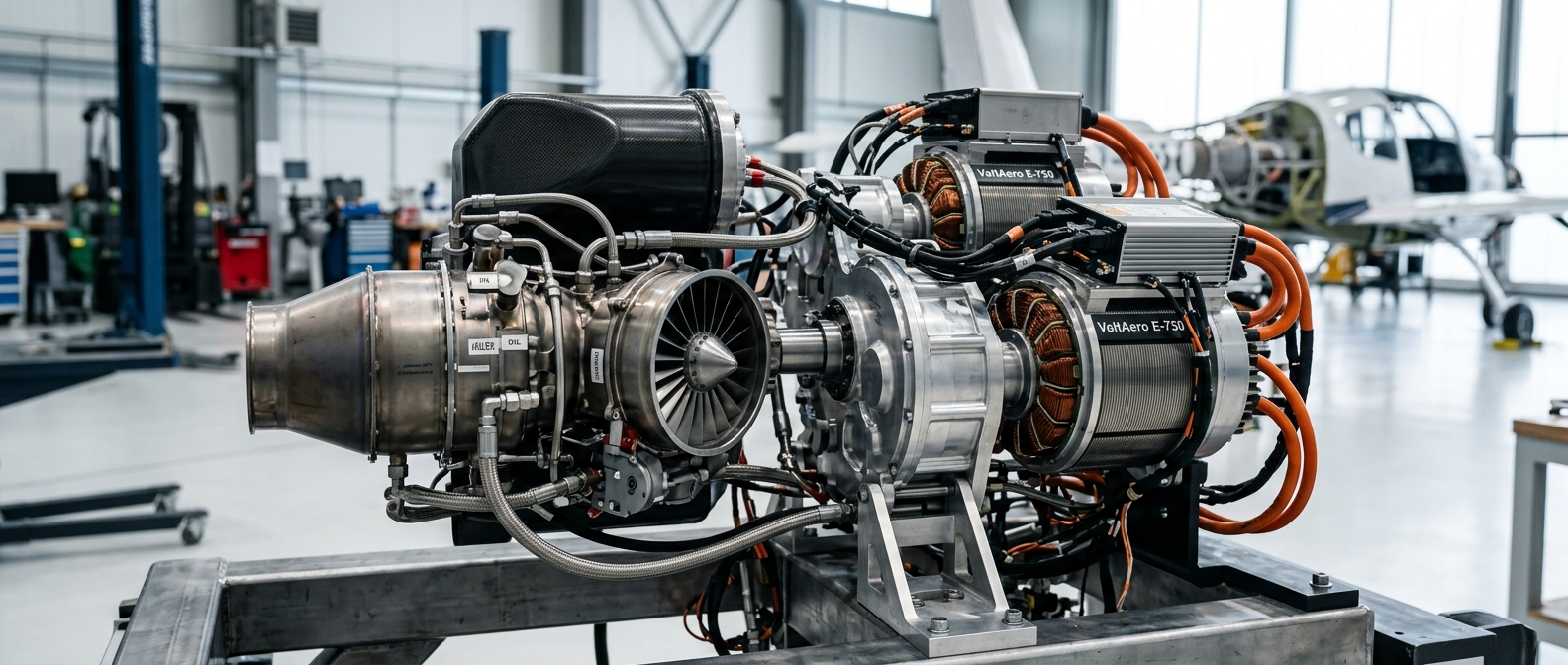
Propulsion technology is the primary focus of research and development efforts within the sector. Hybrid systems typically combine a small internal combustion engine with electric motors and battery packs. This setup allows the aircraft to recharge batteries during flight, which eliminates the need for extensive charging infrastructure at every landing site. The study provides data on how these propulsion choices affect the total cost of ownership for fleet operators.
Safety systems and autonomous flight controls are also seeing major updates as the market progresses. Modern hybrid eVTOLs incorporate multiple layers of redundancy to ensure safe operation in the event of a component failure. Software platforms are being developed to manage complex air traffic in crowded urban environments. These advancements are necessary to gain public trust and meet the stringent requirements of aviation authorities.
Market Applications and Operational Use Cases
The application of hybrid eVTOL technology extends beyond simple passenger transport in urban centers. Military organizations are exploring these aircraft for reconnaissance, resupply, and troop transport in contested environments. The low acoustic profile of hybrid engines makes them harder to detect than traditional rotorcraft. This stealth capability, combined with the ability to operate from unprepared surfaces, provides a strategic advantage on the battlefield.
Commercial logistics is another area where hybrid aircraft are expected to make a significant impact. Companies are testing these vehicles for the transport of high-value goods and time-sensitive cargo between regional hubs. By bypassing congested road networks, businesses can reduce delivery times and improve supply chain reliability. The report highlights how logistics firms are integrating air assets into their existing distribution frameworks.
Public service applications include search and rescue operations and disaster relief efforts. Hybrid eVTOLs can deploy quickly to areas where traditional infrastructure has been damaged or destroyed. Their ability to hover and land in confined spaces allows for the delivery of food, water, and medical supplies directly to those in need. This versatility is a key selling point for municipal governments looking to modernize their emergency response fleets.
The research suggests that the tourism industry may also adopt these aircraft for sightseeing and remote travel. Hybrid models can access scenic locations that are otherwise unreachable by road or traditional aircraft. This creates new opportunities for high-end travel experiences and eco-tourism. The report tracks these emerging use cases to predict long-term revenue streams for manufacturers.
Methodology and Data Collection Standards
The findings presented by HTF Market Intelligence are based on a mix of primary and secondary research. Analysts conduct interviews with industry executives, engineers, and policy experts to gather first-hand insights. This qualitative data is then combined with quantitative figures from financial reports and government databases. This approach ensures that the forecasts are grounded in both current market realities and future projections.
Secondary research involves the examination of patent filings, technical journals, and historical sales data. By tracking patent activity, the firm can identify which technologies are likely to reach the commercial phase in the coming years. The report also accounts for macroeconomic variables such as inflation rates and global trade policies. This broad perspective helps investors understand the risks and opportunities associated with the hybrid eVTOL sector.
The study includes a detailed SWOT analysis for the leading companies in the market. By evaluating strengths, weaknesses, opportunities, and threats, the report provides a clear picture of the competitive landscape. This information is valuable for stakeholders looking to make informed decisions about resource allocation and strategic planning. The firm maintains a rigorous verification process to ensure the accuracy of all data points.
The hybrid eVTOL market is poised for a decade of transformative change as technology and regulation align. With major aerospace players investing billions into research, the transition toward more efficient flight systems appears inevitable. The insights provided by this latest report offer a roadmap for stakeholders to understand the evolving demands of the global transportation sector. As infrastructure matures, these aircraft will likely become a standard feature of the modern urban environment.