
At a Glance
The Sunny Side Comedy Fun series revives the legendary "Ask Doctor Science" radio character as a daily short-form video series on Instagram, TikTok, and YouTube.
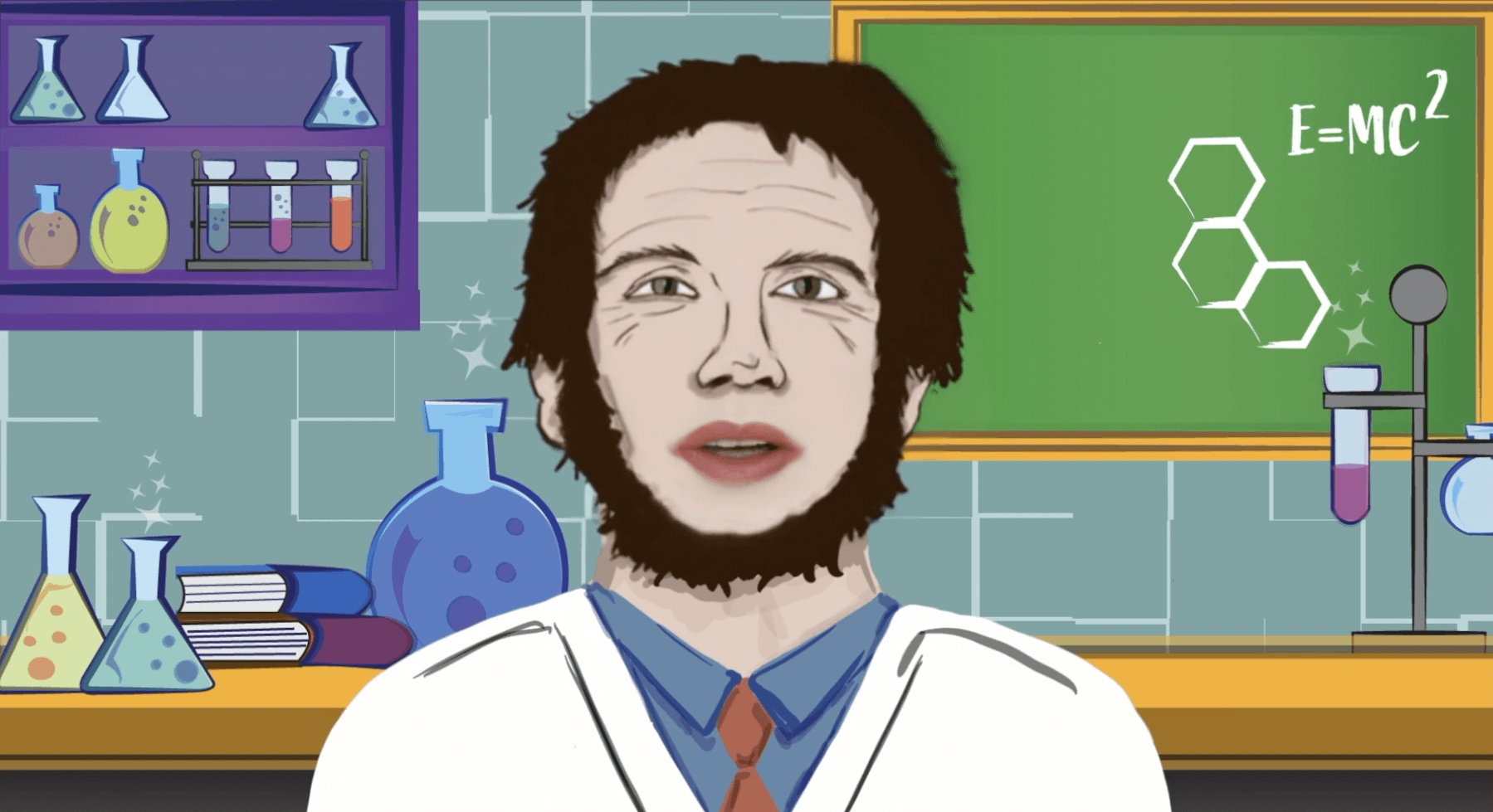
Producer Duck Spots has banned all AI-generated imagery from the series, replacing it with hand-drawn chalk artwork by original character artist Hillary Allard.
"Ask Doctor Science" originally aired on over 200 public radio stations for 25 years, producing more than 2,000 episodes.
The series is produced by Duck Spots, led by Duck's Breath Mystery Theatre co-founder Bill Allard and his son Richard Allard.
If you listened to public radio in America between the 1980s and the early 2000s, there is a good chance you encountered Doctor Science — the man who "knows more than you do." For 25 years, the character's deadpan misinfotainment delighted audiences across more than 200 public radio stations, with Dan Coffey delivering authoritative nonsense and Merle Kessler as his long-suffering lab assistant, Rodney. Now, decades after the original "Ask Doctor Science" radio series aired its last episode, the Doctor is back — five days a week, on your phone — and he just made headlines by banning artificial intelligence from his show entirely.
From Iowa City to the Internet
The story of Doctor Science begins in 1975, in the bars and student union of the University of Iowa, where five students — Bill Allard, Dan Coffey, Merle Kessler, Leon Martell, and Jim Turner — formed Duck's Breath Mystery Theatre. [web:136] The troupe moved to San Francisco in 1976 and built a reputation as a "new vaudeville" act: sharp, absurdist, and unlike anything else in American comedy. By 1980, they were contributing sketches to NPR's All Things Considered, and two of their characters — Coffey's Doctor Science and Kessler's Ian Shoales — were becoming better known than the group itself. [web:136]
"Ask Doctor Science" debuted on San Francisco radio station KQED-FM in 1982. [web:140] The format was deceptively simple: a listener question, read by Rodney, answered by the Doctor with breathless, authoritative, and completely wrong pseudo-scientific reasoning. The show's tagline — "He knows more than you do" — and its cheerful dedication to misinformation made it one of public radio's most distinctive and durable comedy properties. At its peak, it aired on more than 200 stations across the United States and produced over 2,000 episodes. [web:141] It spawned books, a short-lived Fox television series in 1987, and a devoted following that has never quite let go.
"Learning is about blackboards, not computer chips."
— Doctor Science, from his laboratory in the Fortress of Arrogance
Rebuilding the Character for Short-Form Video
Duck's Breath Mystery Theatre held its farewell performance at the Freight and Salvage in Berkeley in 2015. [web:136] But the characters they created have refused to retire. In 2025, Bill Allard — the troupe's co-founder and, via his production company Duck Spots, now Executive Producer of the Sunny Side Comedy Fun series — launched a new daily video series built around the original "Ask Doctor Science" audio recordings. [web:138]
The concept is elegantly straightforward: take the original radio audio, pair it with visual illustrations of whatever topic the Doctor happens to be misexplaining that day, and release it as a short-form video. New episodes premiere every Monday through Friday at 10:30 AM PST on Instagram, TikTok, and the Sunny Side YouTube Channel — all under the handle @sunnysidecomedyfun. The audio is entirely original, drawn from the archive of over 2,000 episodes. As the press release notes, while some references are "obviously dated, most of the comedy remains surprisingly evergreen." [file:133]
Duck Spots is a father-and-son operation: Bill Allard and his son Richard Allard handle production and distribution for the entire Sunny Side Comedy Fun slate. [web:144] The series sits alongside other Duck Spots productions reviving the Duck's Breath archive for a new generation of audiences who never had the chance to hear them on public radio.