

At a Glance
- The global digital map software market is projected to reach over $25 billion by 2033.
- Key growth drivers include autonomous vehicles, IoT integration, and location-based services.
- Asia-Pacific is anticipated to be the fastest-growing region, fueled by urbanization and infrastructure development.
The global digital map software market is on a trajectory of substantial expansion, with industry analysts predicting a market value exceeding $25 billion by 2033. This growth is primarily fueled by increasing demand across diverse applications, from advanced automotive systems to sophisticated logistics and urban planning. The market, which recorded approximately $11 billion in 2023, is expected to exhibit a compound annual growth rate (CAGR) of around 9.5% over the forecast period, according to recent industry assessments.
Market Dynamics and Key Growth Drivers
The digital map software market's robust expansion stems from several interconnected factors. The proliferation of connected devices and the Internet of Things (IoT) is generating vast amounts of geospatial data, requiring advanced software for interpretation and visualization. This data integration supports real-time decision-making in various sectors, enhancing operational efficiency and strategic planning.
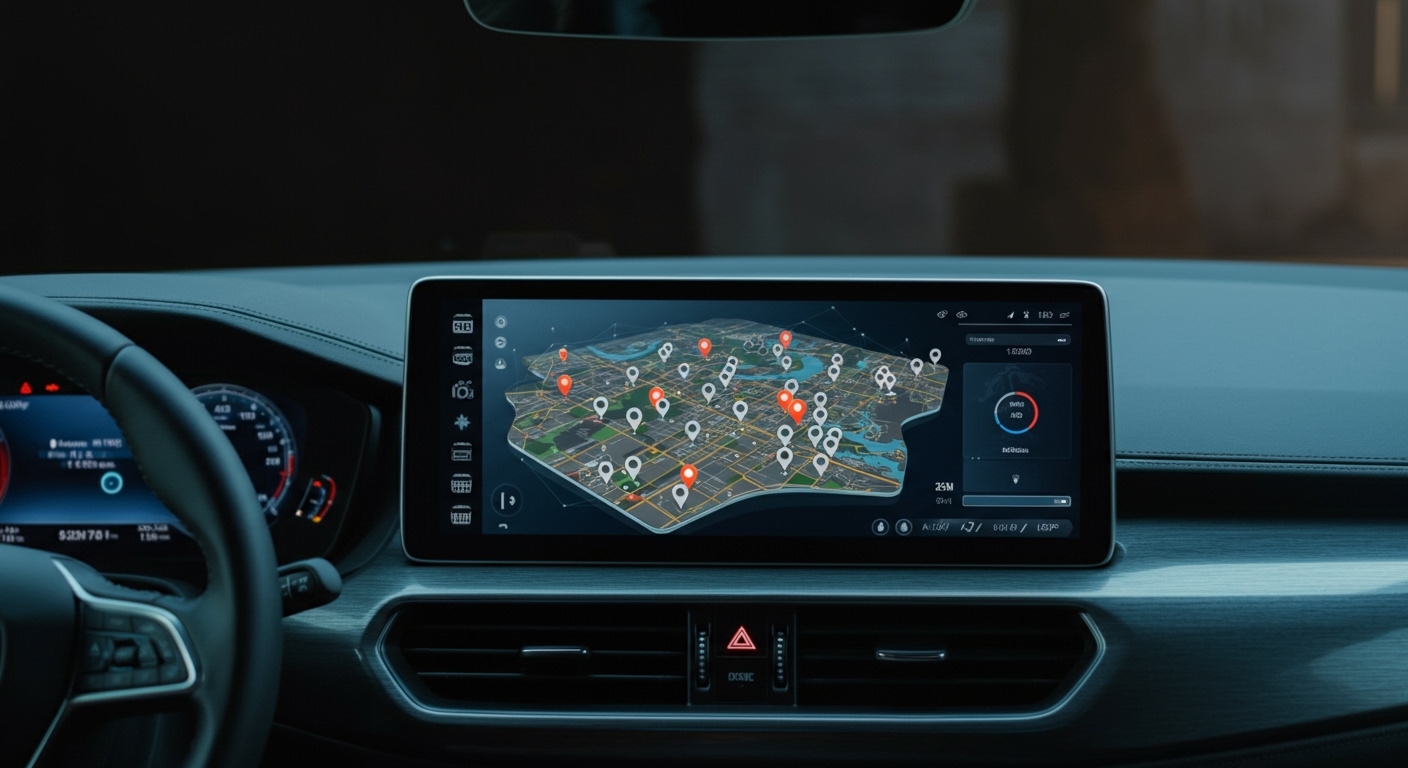
Rapid advancements in autonomous vehicle technology are also a significant catalyst for market growth. Self-driving cars rely heavily on high-definition digital maps for precise navigation, object detection, and path planning. These maps provide critical contextual information that complements onboard sensor data, enabling safer and more efficient autonomous operation.
Furthermore, the rising adoption of location-based services (LBS) across mobile applications and enterprise solutions is driving demand. Consumers and businesses alike utilize LBS for navigation, asset tracking, geomarketing, and emergency services. This widespread utility underscores the foundational role of accurate and dynamic digital mapping solutions.
Urbanization trends and smart city initiatives worldwide are creating new opportunities for digital map software. These initiatives leverage geospatial data for infrastructure management, traffic optimization, public safety, and environmental monitoring. The need for detailed urban mapping and analytical tools is therefore intensifying.
"The convergence of AI, IoT, and high-precision mapping is fundamentally reshaping how industries operate. Digital map software is no longer just about navigation; it's the core intelligence layer for everything from supply chain optimization to advanced robotics and urban resilience planning."
— Dr. Anya Sharma, Lead Geospatial Analyst at GeoTech Insights
Technological Advancements and Application Diversity
Technological advancements are continuously refining the capabilities of digital map software. Artificial intelligence (AI) and machine learning (ML) algorithms are being integrated to improve data processing, predictive analytics, and real-time map updates. This allows for more accurate feature extraction, anomaly detection, and dynamic routing based on changing conditions.
Cloud-based mapping solutions are gaining significant traction due to their scalability, accessibility, and cost-effectiveness. These platforms enable users to access and process large datasets without extensive local infrastructure investments. The shift to cloud environments facilitates collaborative mapping projects and ensures data consistency across multiple users and devices, as highlighted by a recent Grand View Research report on market trends.
The application spectrum for digital map software is remarkably broad and continues to diversify. In the automotive sector, it supports advanced driver-assistance systems (ADAS) and fully autonomous driving. For logistics and transportation, it optimizes routes, manages fleets, and tracks deliveries, leading to significant operational savings and improved customer satisfaction. MarketsandMarkets has consistently noted the growing integration of geospatial analytics in these areas.
Government and defense agencies utilize digital maps for urban planning, disaster management, border security, and military operations. Retail businesses employ mapping software for site selection, supply chain optimization, and personalized customer experiences. Even real estate and construction sectors benefit from 3D mapping and visualization tools for project planning and property management, often leveraging platforms from companies like Esri.
Geographical Outlook and Competitive Landscape
Geographically, North America currently holds a significant share of the digital map software market, driven by early adoption of advanced technologies and substantial investments in R&D. The presence of major technology companies and a mature automotive industry contribute to this dominance. European countries are also strong contributors, with robust smart city initiatives and stringent regulations around data privacy influencing market development.
However, the Asia-Pacific region is projected to emerge as the fastest-growing market during the forecast period. This growth is attributable to rapid urbanization, increasing government spending on infrastructure development, and the burgeoning automotive industry in countries like China, India, and Japan. The expanding e-commerce sector and rising adoption of smartphones further propel the demand for location-based services and digital mapping solutions across the region.
Latin America, the Middle East, and Africa (LAMEA) are also expected to witness steady growth, albeit from a smaller base. Investments in telecommunications infrastructure and the increasing penetration of internet services are opening new avenues for digital map software adoption in these emerging economies. Localized mapping solutions are becoming particularly important to address unique geographical and cultural requirements.
The competitive landscape remains dynamic, characterized by a mix of established technology giants, specialized geospatial companies, and innovative startups. Companies are focusing on strategic partnerships, mergers, and acquisitions to enhance their product portfolios and expand their market reach. Continuous investment in research and development remains key to staying competitive and addressing evolving industry demands.
The digital map software market is poised for sustained expansion, driven by continuous technological innovation and expanding application areas across various industries. As businesses and governments increasingly rely on precise location intelligence for strategic decision-making and operational efficiency, the demand for advanced mapping solutions will only intensify. This trend suggests a future where digital maps are an indispensable component of global infrastructure and economic activity.