
At a Glance
- Deep-water drilling activities drive demand for specialty cement.
- North America and Middle East maintain dominant market positions.
- API Class G and Class H segments see increased adoption rates.
The global oil well cement market is entering a phase of sustained expansion, driven by heightened exploration activities in offshore and deep-water environments. Industry analysts project significant valuation increases between 2026 and 2035 as energy demand necessitates more complex drilling operations. This growth aligns with the resurgence of shale gas extraction and the rehabilitation of maturing oil fields. High-performance cementing solutions are becoming vital for maintaining well integrity under extreme pressure and temperature conditions.
Technological Requirements and Material Specifications
The technical demands of modern drilling require cement that can withstand corrosive environments and high-pressure zones. According to a detailed report by Research Nester, the demand for API Class G and Class H cements is rising due to their versatility in various well depths. These materials provide the necessary sulfate resistance and predictable thickening times required for deep-hole operations.
Operators are increasingly focusing on the chemical stability of cement slurries to prevent gas migration and ensure zonal isolation. As wells reach deeper into the earth's crust, the physical properties of the cement must remain stable despite thermal fluctuations. This shift has led to increased investment in additives that modify setting times and enhance the mechanical strength of the set cement.
The industry is also seeing a move toward sustainable practices in cement production to meet environmental regulations. Manufacturers are developing low-carbon alternatives that do not sacrifice the structural integrity required for oil and gas applications. These advancements help companies comply with stricter emissions standards while maintaining the safety of their extraction sites.
"The expansion of the oil well cement sector is directly linked to the recovery of global oil prices and the subsequent increase in rig counts. We anticipate that specialized formulations will dominate the market as drilling environments become more technically challenging over the next decade."
— John Miller, Senior Research Analyst at Research Nester
Regional Market Dynamics and Production Trends
North America continues to be a primary driver of market growth due to the extensive shale formations in the United States and Canada. The adoption of horizontal drilling and hydraulic fracturing has created a consistent need for high volumes of primary cementing services. Furthermore, the aging infrastructure of older wells in the Permian Basin requires remedial cementing to extend their productive lifespan.
In the Middle East and Africa, the focus remains on massive offshore projects and the development of sour gas fields. National oil companies in Saudi Arabia and the United Arab Emirates are investing in advanced cementing technologies to secure their long-term production targets. These regions benefit from established supply chains and a high concentration of service providers specializing in desert and marine environments.
Asia Pacific is emerging as a significant growth area as China and India increase their domestic energy production to reduce import reliance. The expansion of offshore drilling in the South China Sea is expected to generate substantial demand for specialized cement grades. Local manufacturers in these regions are scaling up production capacities to compete with global suppliers and reduce logistics costs.
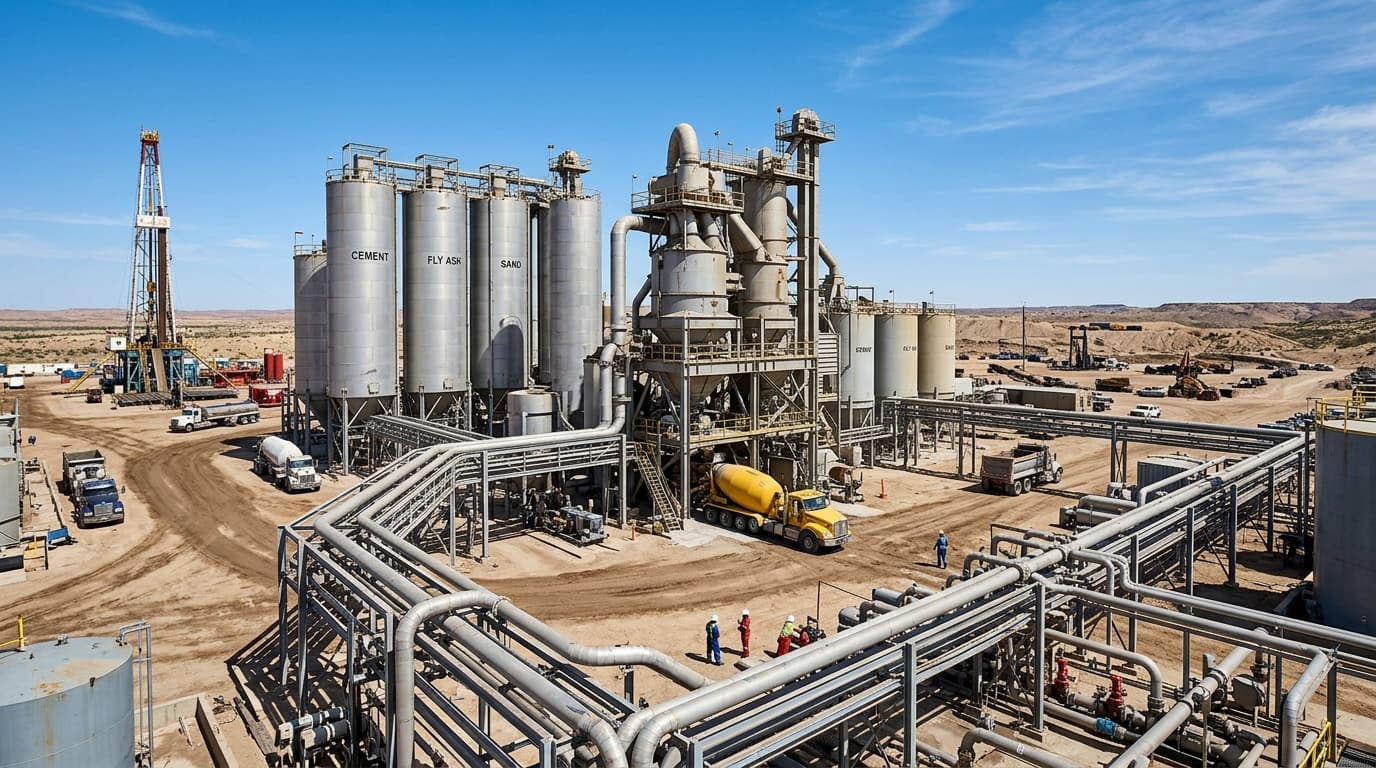
Market competition is intensifying as players focus on strategic partnerships and regional distribution networks. Companies are prioritizing the proximity of cement blending facilities to active drilling sites to minimize transportation delays. This localized approach allows for better customization of cement slurries based on the specific geological characteristics of each well site.
The long-term outlook for the oil well cement market remains positive as the global energy mix continues to rely on hydrocarbons for the foreseeable future. While the transition to renewable energy sources is underway, the immediate need for oil and gas ensures a steady pipeline of drilling projects. Continued investments in well construction technology will be the primary catalyst for market evolution through 2035.