
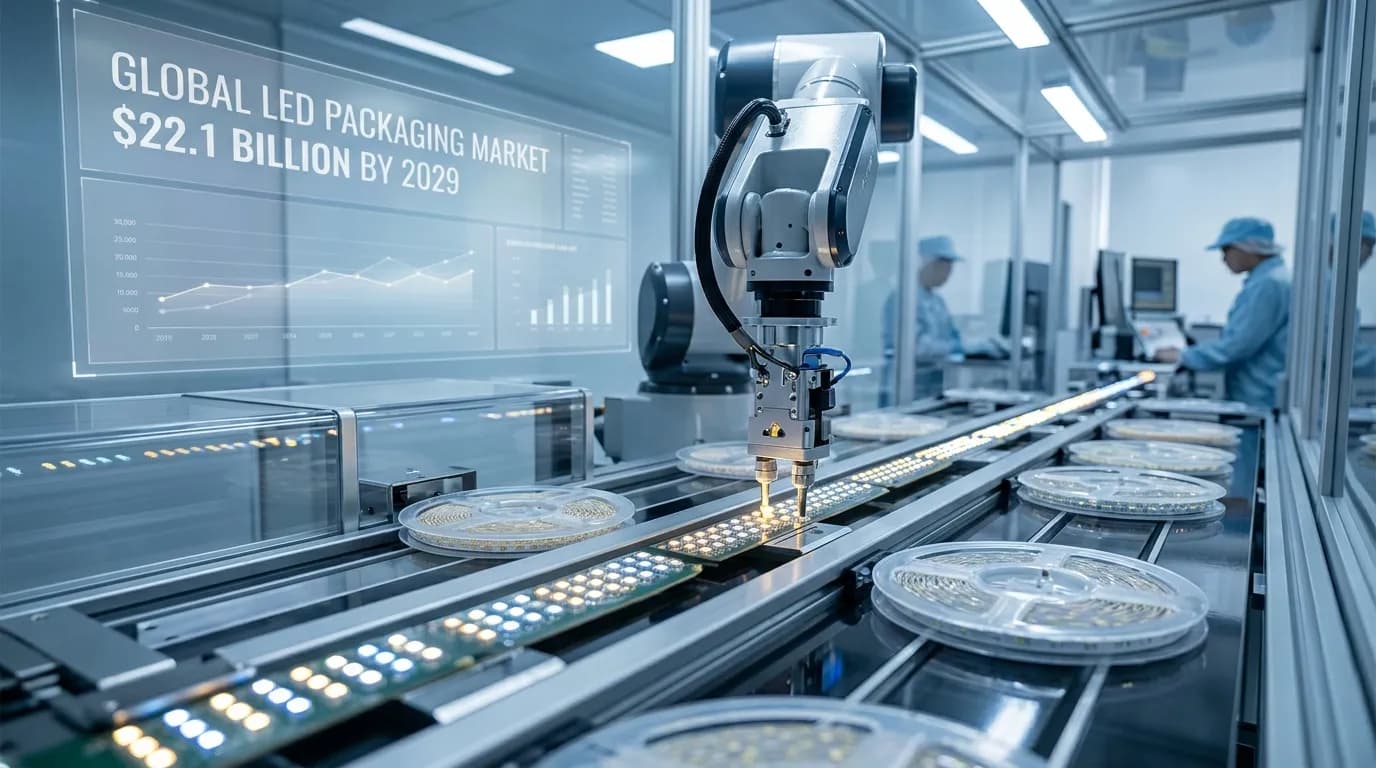
At a Glance
- Global market value expected to rise from $17.6 billion to $22.1 billion by 2026.
- Automotive and smart lighting sectors identified as primary growth drivers.
- Asia-Pacific region maintains dominance in production and manufacturing volume.
The global LED packaging market is projected to grow from USD 17.6 billion in 2021 to USD 22.1 billion by 2026, according to a recent market analysis. This growth represents a compound annual growth rate of 4.6% over the five-year forecast period. Increased adoption of energy-efficient lighting solutions and the expansion of the automotive sector are primary drivers of this trend. Major manufacturers are shifting focus toward high-power LED components to meet the rising demand across industrial and residential sectors worldwide.
Regional Demand and Manufacturing Shifts
The Asia-Pacific region continues to dominate the global production and consumption of LED components. China, Japan, and South Korea remain the central hubs for manufacturing due to established supply chains and government subsidies for green energy. These nations are prioritizing the development of mini-LED and micro-LED technologies to support the next generation of consumer electronics. Local governments are providing incentives for companies that implement energy-efficient manufacturing protocols.
European and North American markets are seeing a steady increase in demand for smart lighting systems. Stricter environmental regulations regarding energy consumption are forcing commercial buildings to upgrade their existing infrastructure. This transition supports the market for high-performance packaging that can withstand diverse environmental conditions. The adoption of the Internet of Things (IoT) in urban planning is further accelerating this trend in major cities.
The automotive industry is another significant contributor to the market's expansion. Research from MarketsandMarkets indicates that LED integration in vehicle headlights and interior lighting is becoming a standard feature. This shift is driven by both aesthetic preferences and the functional benefits of longer-lasting light sources. Electric vehicle manufacturers are particularly interested in these components because they draw less power from the battery system.
Public infrastructure projects in developing nations are contributing to the increased volume of sales. Street lighting upgrades in India and Southeast Asia are replacing older high-pressure sodium lamps with more durable LED alternatives. These large-scale deployments require standardized packaging that can be produced at a high volume. This trend is expected to continue as urbanization rates climb in these regions.
"The shift toward high-power LED packaging is a direct response to the need for higher brightness and better thermal management in outdoor and industrial applications."
— Arjun Singh, Lead Analyst at MarketsandMarkets
Technological Advancements and Key Players
Technical improvements in packaging materials are enhancing the lifespan and efficiency of LED units. Silicone and ceramic materials are increasingly used to improve heat dissipation in high-power applications. These materials help prevent chip degradation, ensuring that the light output remains consistent over thousands of hours of operation. Engineers are focusing on reducing the physical footprint of the package while maintaining high thermal conductivity.
The competitive environment features several prominent global companies. Nichia Corporation,