
At a Glance
- Government PLI schemes drive massive battery manufacturing expansion.
- Lithium-ion technology maintains dominance in energy storage segments.
- Renewable energy integration remains the primary market driver through 2030.
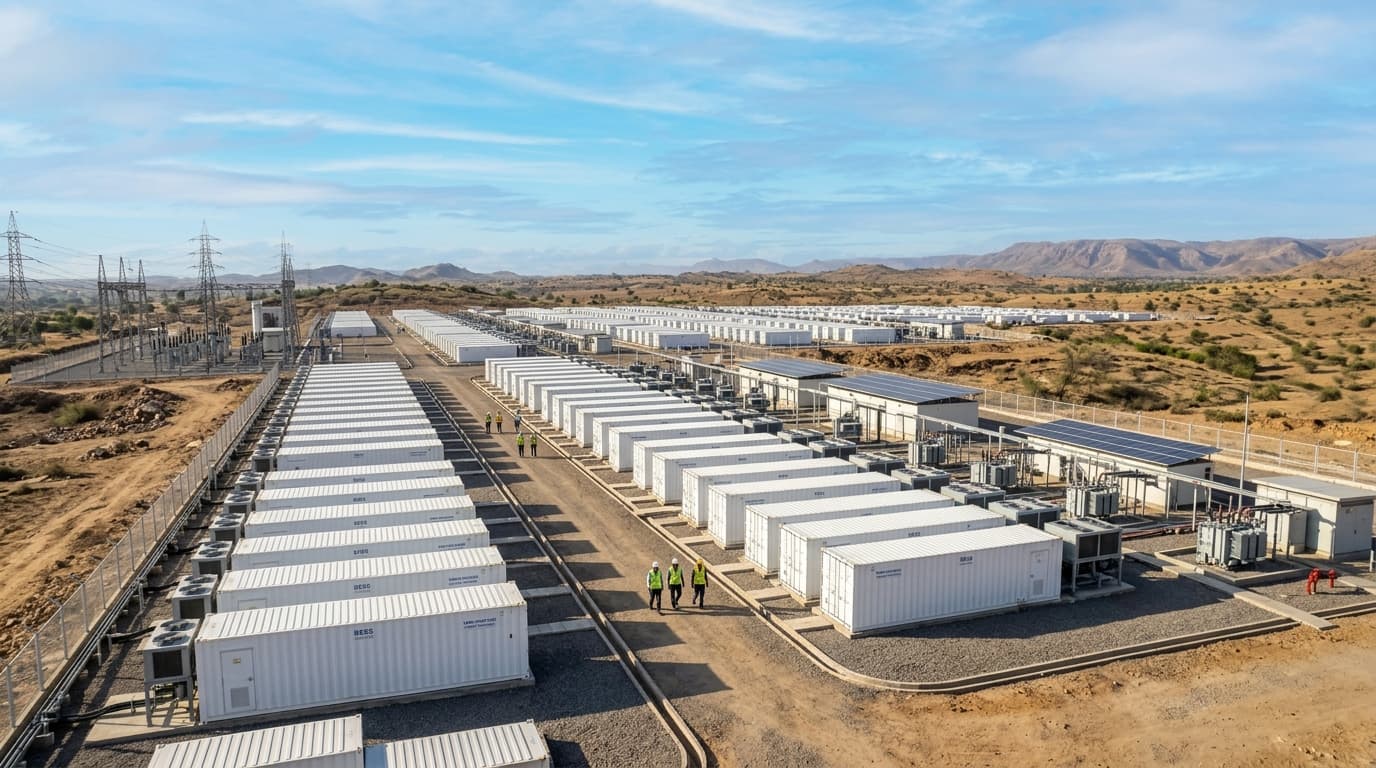
The Indian battery energy storage system (BESS) market is entering a phase of rapid expansion as the nation scales its renewable energy capacity. Recent data indicates the sector will grow at a compound annual growth rate of 11.5% over the next five years. This acceleration stems from the urgent need to stabilize the national grid while integrating intermittent power sources like solar and wind. Government policies are currently prioritizing domestic production to reduce reliance on imports and secure the energy supply chain.
Policy Drivers and Domestic Manufacturing Growth
The Indian government has implemented several strategic frameworks to bolster the energy storage sector. The Production Linked Incentive (PLI) scheme for Advanced Chemistry Cell (ACC) battery storage stands as a central pillar of this strategy. This initiative encourages local manufacturers to set up high-capacity production units within the country to meet rising demand. These efforts aim to transform India into a global hub for battery production and export.
Mordor Intelligence reports that these fiscal incentives are attracting significant private capital into the energy sector. Domestic firms are now competing to establish gigafactories that can meet the rising demand for grid-scale storage. These facilities aim to lower the overall cost of battery systems through massive economies of scale. Increasing competition among local players is expected to drive further technological improvements and price reductions.
Beyond manufacturing incentives, the government has introduced viability gap funding for BESS projects to ensure financial stability. This support helps bridge the gap between project costs and commercial feasibility for utility-scale installations. Such measures are essential for meeting the national target of 500 GW of non-fossil fuel capacity by 2030. The policy environment remains supportive of long-term infrastructure investments across the energy value chain.
Regulators are also focusing on grid codes and standards to ensure the safety and reliability of large-scale battery deployments. These rules provide a clear framework for utilities to integrate storage assets into their daily operations. As a result, the market is seeing a shift from pilot projects to full-scale commercial implementation. Clearer guidelines help reduce the perceived risk for international investors entering the Indian market.
"The Indian energy storage sector is transitioning from a nascent stage to a vital component of the national power infrastructure. Government support through the PLI scheme is the primary catalyst for local manufacturing growth."
— Industry Analyst, Mordor Intelligence

Technological Shifts and Market Segmentation
Lithium-ion batteries continue to lead the market due to their high energy density and declining costs. This technology is particularly favored for short-duration storage applications and frequency regulation in power grids. Most new utility-scale projects in India currently utilize lithium-iron-phosphate chemistries for their superior safety profiles. Industry experts expect this dominance to continue as the supply chain for lithium-ion components matures.
While lithium-ion dominates, other technologies like lead-acid and flow batteries still hold specific positions in the market. Lead-acid systems remain popular in residential and small-scale commercial setups due to their lower upfront costs and established recycling networks. However, the industry is gradually shifting toward longer-duration storage solutions to handle seasonal variations in renewable output. Research into alternative chemistries is gaining momentum to address potential lithium supply constraints.
The competitive environment features a mix of established industrial giants and specialized energy firms. Companies like Tata Power, Exide Industries, and Amara Raja Energy & Mobility are expanding their portfolios to include advanced storage solutions. These players are investing in research to improve battery cycle life and thermal management systems specifically for the Indian climate. Luminous Power Technologies also remains a significant participant in the behind-the-meter storage segment.
Demand from the telecommunications sector and data centers provides an additional boost to the BESS market. These industries require reliable backup power to maintain uptime during grid fluctuations and outages. The integration of storage with microgrids in rural areas also presents significant growth opportunities for regional developers. As urban centers expand, the need for localized energy storage to manage peak loads will likely increase.
Looking ahead, the India BESS market is positioned to become a cornerstone of the country's green energy transition. As battery prices continue to fall globally, the economic case for storage becomes increasingly compelling for state distribution companies. Continued investment in domestic supply chains will be necessary to mitigate risks associated with raw material sourcing. The sector remains a vital area for investors seeking exposure to India's evolving energy infrastructure and decarbonization efforts.