
At a Glance
- Advanced research applications in quantum computing and medical imaging drive demand.
- Supply remains constrained due to reliance on tritium decay from nuclear stockpiles.
- Security agencies prioritize helium-3 for high-efficiency neutron detection systems.
The global helium-3 market is experiencing a significant uptick as advanced research applications and security requirements intensify demand for this rare isotope. Primarily sourced from the decay of tritium, helium-3 serves as a vital component in neutron detection systems and ultra-low temperature refrigeration. Analysts point to the expanding aerospace and medical sectors as primary engines for market growth through the end of the decade. Supply chain constraints remain a central concern for stakeholders as production levels depend heavily on nuclear decommissioning cycles and defense maintenance schedules.
Security Infrastructure and Scientific Applications
National security agencies utilize helium-3 in radiation portal monitors at international borders and ports to identify illicit radioactive materials. These systems detect thermal neutrons with high efficiency while remaining insensitive to gamma radiation. This specific physical property makes the isotope nearly irreplaceable for the security protocols used by customs and border protection agencies worldwide.
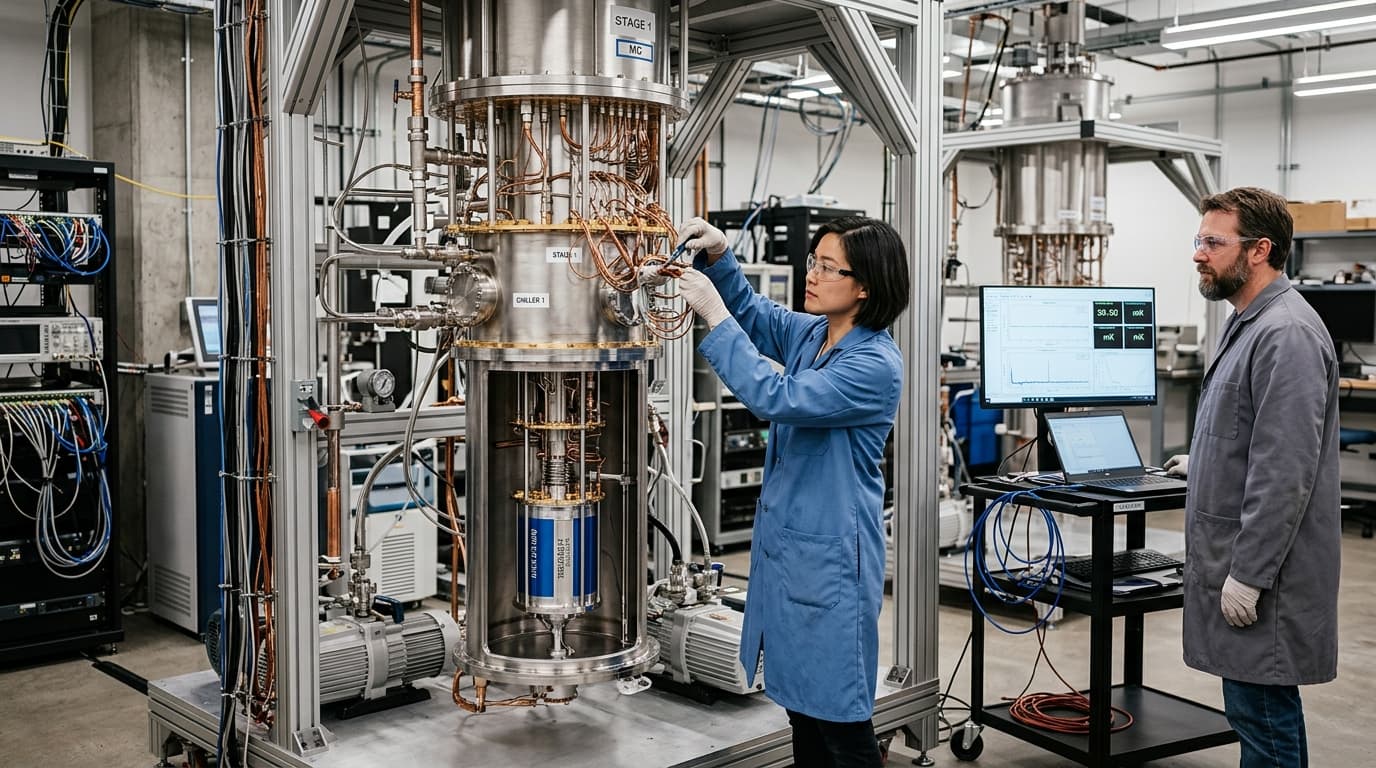
Quantum computing research also relies on helium-3 to achieve temperatures near absolute zero. Dilution refrigerators use a mixture of helium-3 and helium-4 to create the environment necessary for quantum bits to function. As private and public investment in quantum technology increases, the demand for stable isotope supplies continues to climb steadily.
Medical diagnostics represent another growing segment for helium-3 application in the global market. Researchers use hyperpolarized helium-3 in magnetic resonance imaging to produce high-resolution images of human lungs. This technique allows clinicians to visualize ventilation patterns and identify early-stage respiratory conditions that standard scans might overlook.
According to data from Market Research Future, the industrial sector is diversifying its use of rare gases to include more specialized scientific testing. This shift reflects a broader trend toward precision engineering in high-tech manufacturing and aerospace development. Companies are now securing long-term contracts to mitigate potential shortages in the global supply of these isotopes.
"The scarcity of helium-3 necessitates a strategic approach to resource management across the global supply chain. We are seeing a transition where industrial players must balance immediate research needs with long-term security requirements."
— Market Analyst, Market Research Future

Supply Constraints and Economic Outlook
The primary source of helium-3 is the radioactive decay of tritium, which is a byproduct of nuclear weapons maintenance. Because terrestrial production is tied to these specific defense activities, the annual yield remains relatively fixed regardless of market price. This inelastic supply creates a volatile pricing environment for commercial buyers and research institutions alike.
Governments are currently investigating alternative technologies to reduce dependence on this rare isotope. Boron-10 and lithium-6 are under investigation as potential substitutes for neutron detection applications. While these materials offer a more abundant alternative, they often lack the sensitivity and low gamma-ray interference provided by helium-3.
Future market expansion may depend on the development of new extraction methods or even extraterrestrial mining. Some private space ventures cite the abundance of helium-3 on the lunar surface as a long-term incentive for moon missions. However, terrestrial recycling and more efficient capture from existing nuclear facilities remain the most viable short-term solutions for the industry.
The helium-3 market stands at a crossroads of limited supply and expanding technological necessity. As quantum computing and advanced medical imaging move from experimental phases to commercial reality, the pressure on existing stockpiles will likely increase. Stakeholders must prioritize efficiency and look toward alternative isotopes to sustain the current pace of scientific development. The next five years will determine if the industry can adapt to these structural supply challenges while meeting the needs of the global scientific community.