
At a Glance
- Market valuation projected to hit $1.5 billion within the next decade.
- Compound annual growth rate expected to maintain 15.5% through 2035.
- Logistics and defense sectors emerge as primary drivers for adoption.
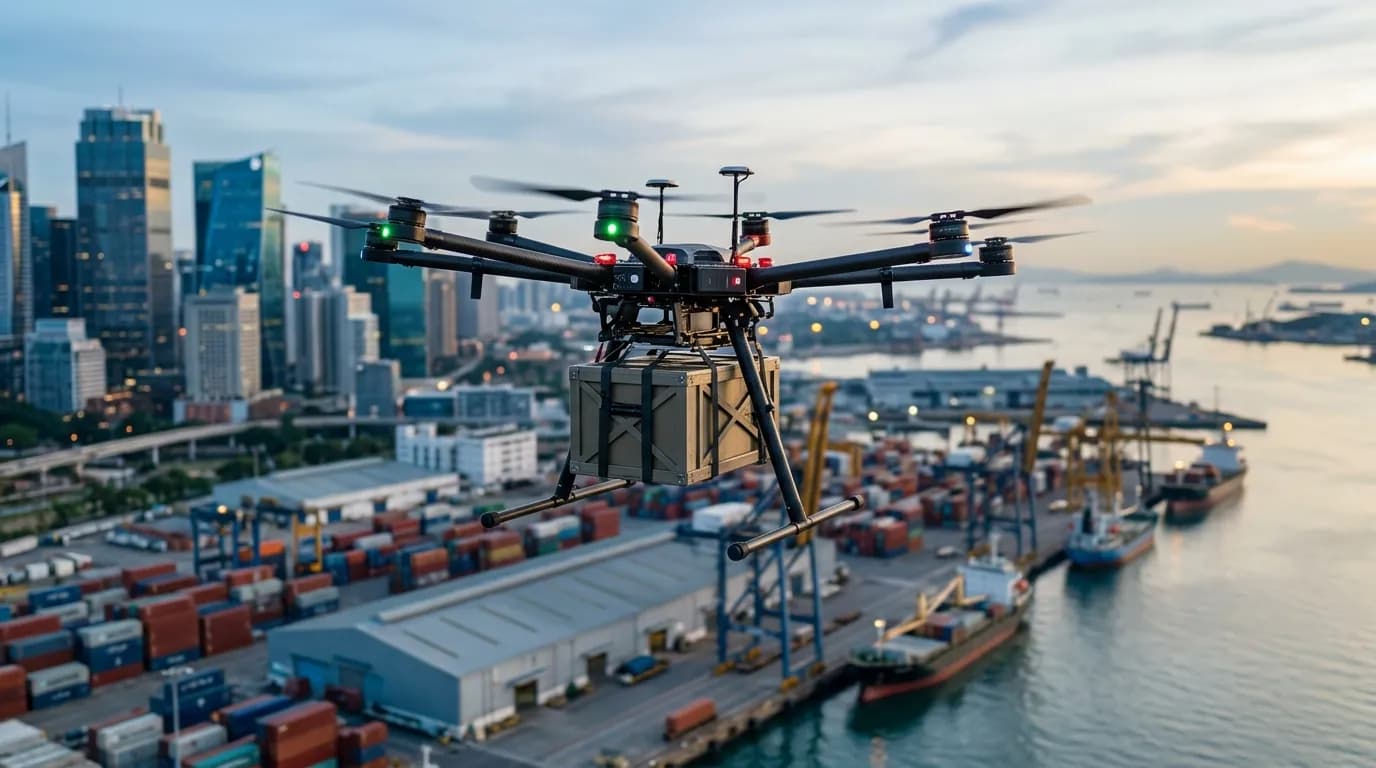
The global heavy-lift drone market is positioned for significant financial expansion, with valuations expected to reach $1.5 billion by 2035. According to a new report, the sector will maintain a compound annual growth rate of 15.5% starting in 2025. This growth reflects an industrial shift as companies seek efficient ways to transport heavy payloads across difficult terrain. The integration of advanced propulsion systems and automated flight controls supports this upward trajectory in the unmanned aerial vehicle space.
Industrial Applications and Growth Drivers
Logistics and delivery services represent a major portion of the current market demand. Companies utilize these high-capacity drones to bypass ground-level congestion and deliver equipment to remote locations. This trend is particularly visible in the construction and mining sectors where traditional transport methods are often slow or expensive.
The defense sector remains a primary adopter of heavy-lift technology for tactical resupply and surveillance missions. Military organizations invest in platforms capable of carrying significant weights while maintaining stealth and endurance. These requirements push manufacturers to develop airframes with higher structural integrity and improved power management.
Agriculture also benefits from the use of drones capable of carrying large volumes of fertilizers or pesticides. These machines allow for precise application over vast areas, reducing manual labor and chemical waste. As battery technology improves, the operational window for these agricultural drones continues to expand.
According to the market data provided by WiseGuy Reports, the push for automation in supply chains is a core factor in this 10-year forecast. Urban air mobility initiatives also contribute to the long-term projections as cities look for aerial transport solutions. Regulatory frameworks are evolving to accommodate these larger aircraft in shared airspace.
"The increasing demand for efficient logistics and the integration of advanced technologies are major factors driving the heavy-lift drone market toward its $1.5 billion valuation."
— Senior Research Analyst, WiseGuy Research Consultants Pvt. Ltd.
Regional Performance and Technical Constraints
North America currently leads the market due to high investment in defense and a mature tech infrastructure. Regional players focus on developing autonomous systems that meet strict aviation safety standards. The presence of major aerospace firms provides a stable base for research and development activities.
The Asia-Pacific region is expected to show the fastest growth rate during the forecast period. Rapid industrialization and the expansion of e-commerce networks in China and India fuel this demand. Local manufacturers are scaling production to meet both domestic and international needs for cost-effective heavy-lift solutions.
Despite the positive outlook, technical challenges such as limited battery life and high initial costs persist. Operators must balance payload capacity with flight duration, which often requires expensive specialized components. Regulatory hurdles regarding beyond-visual-line-of-sight operations also impact the speed of commercial adoption.
Sustainability concerns influence the development of new propulsion types, including hydrogen fuel cells and hybrid systems. These technologies aim to provide the energy density required for heavy lifting without the environmental impact of traditional fuels. Market participants are prioritizing these developments to align with global carbon reduction targets.
The heavy-lift drone sector stands at a pivotal point as it moves from specialized niches into broader industrial use. While technical and regulatory barriers remain, the projected $1.5 billion market size suggests a high level of confidence from investors and end-users alike. Future developments in autonomous flight systems and energy storage will likely dictate the pace of this expansion. Stakeholders should monitor evolving flight standards as the industry prepares for a decade of rapid growth through 2035.