
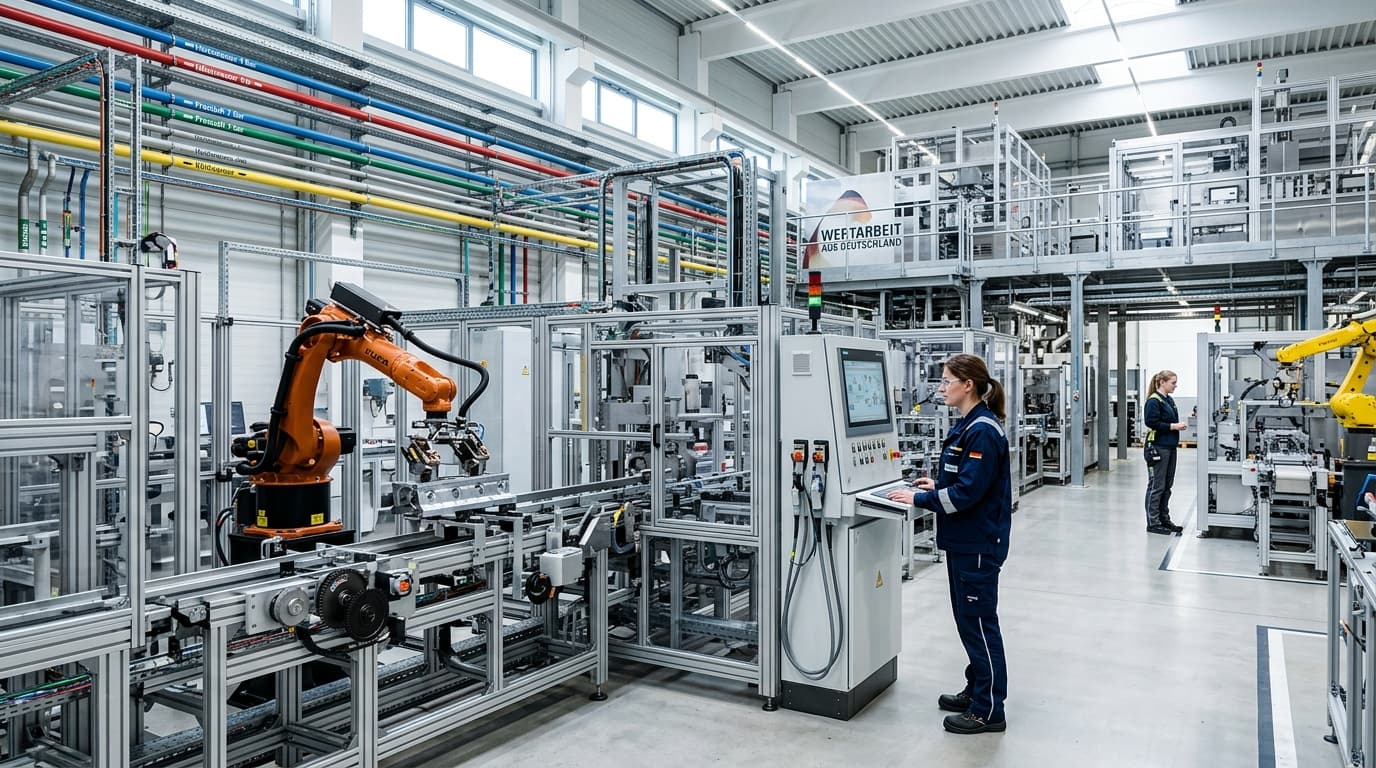
At a Glance
- Industrial automation drives demand across German manufacturing sectors.
- IoT integration becomes standard for predictive maintenance protocols.
- Automotive and chemical industries lead as primary market consumers.
The German industrial sector is currently witnessing a significant shift toward automated fluid control systems, which is driving a steady and measurable expansion in the national solenoid valve market. Recent data indicates that the regional demand for these components is rising as manufacturers prioritize precision and energy efficiency in their production cycles. This growth aligns with the broader adoption of smart factory standards across the country's manufacturing heartland. Stakeholders are now focusing on specialized valve designs to meet rigorous environmental regulations and operational safety requirements.
Industrial Automation and Sector Demand
The automotive and chemical industries remain the primary consumers of solenoid valve technology in Germany. These sectors require high-performance components to manage complex fluid dynamics in high-speed production lines. Increased investment in electric vehicle manufacturing has further spurred the need for advanced control systems that handle thermal management fluids.
Water and wastewater treatment facilities are also contributing to the market's upward trajectory through large-scale modernization projects. Municipalities are upgrading aging infrastructure with automated solutions to reduce manual intervention and prevent costly leakages. This modernization effort supports the steady demand for durable stainless steel and brass valve variants that resist corrosion.
According to Market Research Future, the integration of Internet of Things (IoT) sensors into valve assemblies is becoming a standard practice. These smart valves provide real-time data on flow rates and pressure levels to centralized control units. Maintenance teams use this information to predict hardware failures before they disrupt operations, saving significant repair costs.
Small and medium-sized enterprises are adopting these technologies to remain competitive in the global export market. By reducing waste and improving cycle times, these businesses justify the initial capital expenditure required for high-grade hardware. The move toward modular valve systems allows for easier customization for specific industrial applications, providing greater flexibility for niche manufacturers.
"The German market for solenoid valves is evolving as industries transition toward more precise and energy-efficient fluid control mechanisms."
— Akash Kumar, Lead Researcher at Market Research Future

Technical Specifications and Market Segmentation
The market is segmented based on valve type, including two-way, three-way, and four-way configurations. Two-way valves currently hold a substantial portion of the market share due to their simplicity and reliability in basic on-off applications. However, multi-port designs are gaining popularity in complex chemical processing environments where fluid redirection is necessary.
Material selection plays a vital role in the procurement process for German engineering firms and facility managers. Stainless steel is preferred for corrosive environments, while plastic valves are used in specialized medical and laboratory settings to prevent contamination. Manufacturers are investing in new alloys to extend the lifespan of components under high-temperature and high-pressure conditions.
Operating pressure and orifice size are the primary technical metrics influencing buyer decisions in the current market. High-pressure solenoid valves are essential for the aerospace and heavy machinery sectors where safety is the top priority. Meanwhile, micro-solenoid valves are finding new use cases in the growing domestic medical device industry for portable equipment.
Regional competition among suppliers is intensifying as global players expand their local presence within the European Union. Companies are establishing distribution hubs in industrial centers like Bavaria and North Rhine-Westphalia to better serve local clients. This logistical strategy ensures faster delivery times and better technical support for end-users facing urgent maintenance needs.
The outlook for the German solenoid valve market remains positive as the country continues its transition toward Industry 4.0. While global supply chain fluctuations present occasional hurdles, the underlying demand for precision engineering remains strong across all major industrial categories. Future developments will likely focus on reducing the power consumption of electromagnetic coils to meet new green energy mandates. Industry analysts expect the market to maintain a consistent growth rate through the end of the decade as automation becomes ubiquitous.