

At a Glance
- Global demand for precision motion control drives market growth
- Industrial automation and robotics emerge as primary sector catalysts
- Asia-Pacific region expected to maintain dominant market share
The global ball screw market is preparing for a significant expansion phase between 2026 and 2035. Recent industry analysis indicates that the sector will experience steady growth as manufacturing facilities worldwide prioritize high-precision mechanical components. This upward trend is largely supported by the rising adoption of automated systems in the automotive and aerospace industries. Financial forecasts suggest that the market will reach new valuation peaks as companies invest in advanced machinery to improve production accuracy and energy efficiency.
Industrial Automation and Robotics Demand
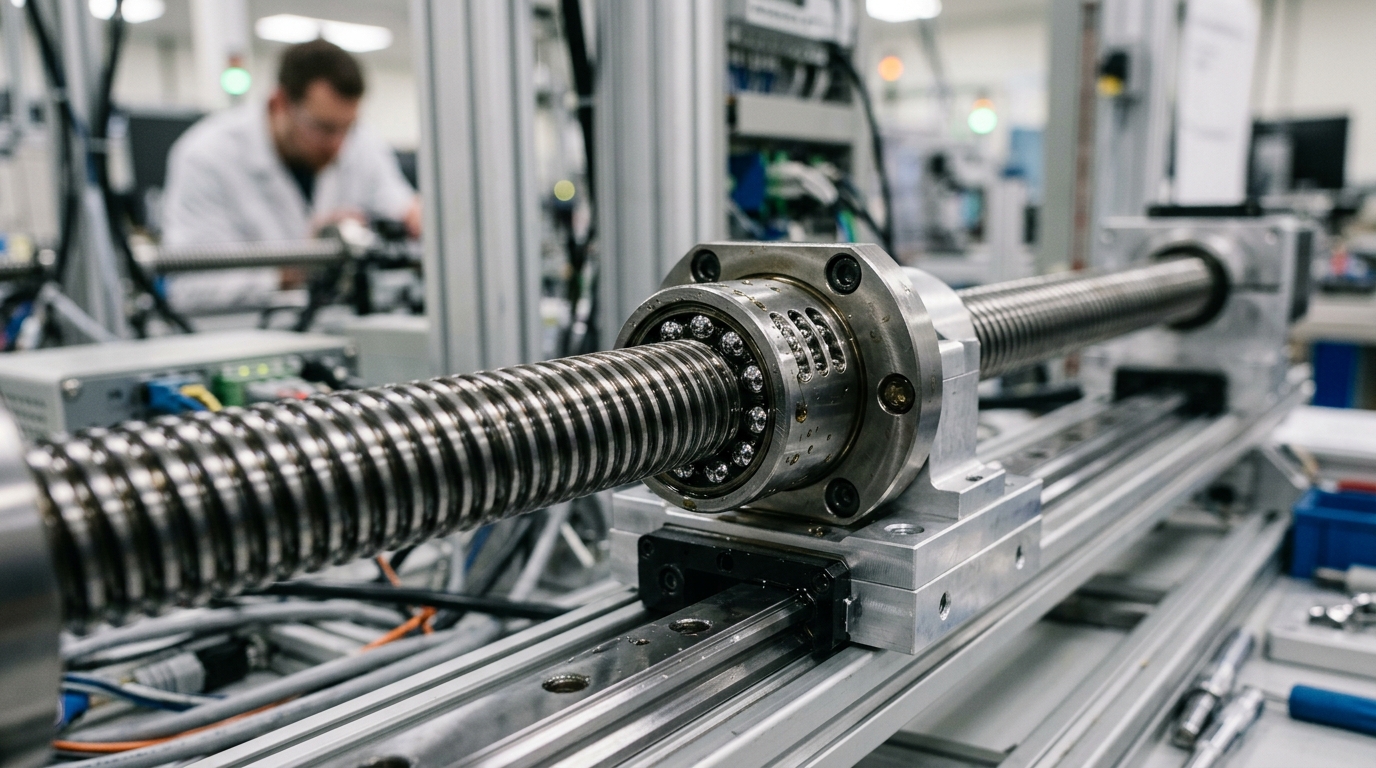
Automation continues to reshape the global manufacturing sector, creating a steady need for reliable mechanical transmission components. Ball screws play a vital role in converting rotational motion into linear motion with high levels of precision. This specific functionality is vital for robotic arms and automated assembly lines that require exact positioning for complex tasks.
The Allied Market Research report highlights that the shift toward smart manufacturing is driving the adoption of high-precision motion control solutions globally. Manufacturers are increasingly replacing traditional lead screws with ball screw assemblies to reduce friction and heat generation during operation. These technical advantages lead to longer machine lifespans and reduced operational costs for large-scale industrial plants.
The automotive industry remains a major consumer of these mechanical parts as vehicle technology becomes more sophisticated. Engineers use ball screws in electric power steering systems and modern brake-by-wire applications to ensure driver safety. As the production of electric vehicles increases, the demand for lightweight and efficient mechanical components continues to grow across international markets.
Medical device manufacturing represents another growing segment for specialized ball screw applications. Surgical robots and diagnostic imaging equipment require the smooth and quiet motion provided by miniature ball screw designs. This diversification into the healthcare sector provides a stable revenue stream that helps protect the market from fluctuations in traditional heavy industry cycles.
"The increasing adoption of automation across diverse industries is a primary factor expected to propel the growth of the global ball screw market."
— David Correa, Lead Analyst at Allied Market Research
Regional Market Trends and Technical Evolution
The Asia-Pacific region currently leads the global market in both production capacity and total consumption. Nations such as China, Japan, and India are investing heavily in domestic semiconductor fabrication and consumer electronics assembly. These high-tech industries require the high-speed capabilities and low-friction performance offered by modern ground ball screw designs.
North America and Europe maintain steady market positions through continuous investments in precision engineering and defense technology. Manufacturers in these regions often focus on the development of rolled ball screws for cost-effective industrial applications. This balance between high-end precision ground screws and more affordable rolled versions allows for broader market penetration across different price points.
Environmental regulations are also influencing the way companies design and manufacture new mechanical components. New designs focus on reducing the amount of lubricant required for operation while increasing the total load capacity of the screw. These improvements help industrial operators meet strict sustainability targets while simultaneously lowering the frequency of required maintenance intervals.
Market competition is intensifying as regional players expand their international distribution networks to reach new clients. Established firms are forming strategic partnerships with local distributors to ensure a steady supply of spare parts in emerging markets. This strategy ensures that global clients receive consistent technical support and rapid delivery of critical components for their production lines.
Looking ahead to 2035, the ball screw industry will likely see further integration of digital monitoring technology. The rise of the Industrial Internet of Things may lead to the development of smart components with built-in sensors for predictive maintenance. These advancements will allow factory managers to monitor wear and performance in real-time, preventing unexpected downtime in critical manufacturing processes. As global manufacturing becomes more automated, the reliance on high-precision motion control will remain a permanent fixture of the industrial economy.